 Inner Sanctum

84 individuals investigated for transnational online frauds
1.
 |
| Director of the Museum of Chăm Sculpture in Đà Nẵng Lê Thị Thu Trang. — Photo courtesy of Thu Trang |
For more than a century, the Đà Nẵng Museum of Chăm Sculpture has preserved the artistic legacy of the ancient Chăm civilisation. Today, its galleries hold more than 2,000 artefacts, including 400 sculptures dating from the 5th to 15th centuries. Museum director Lê Thị Thu Trang told Việt Nam News about new initiatives to bring this heritage closer to contemporary audiences.
Inner Sanctum: How has the museum developed over the past 100 years?
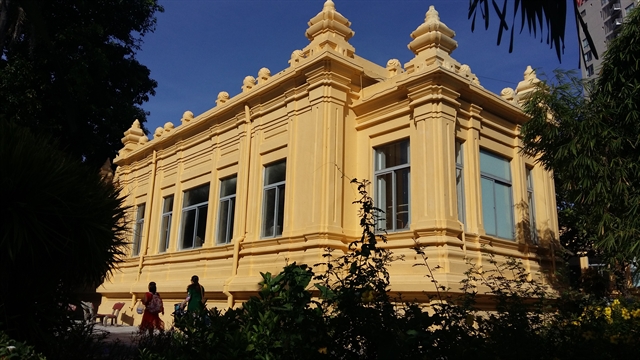 |
| A corner of the Museum of Chăm Sculpture. The museum has preserved its unique architecture for more than 100 years since it was built in 1915. VNS Photo Công Thành |
The Đà Nẵng Museum of Chăm Sculpture was built on the west bank of the Hàn River in late 1915, with significant contributions from Henri Parmentier, a leading archaeologist with L’Ecole Française d’Extrême-Orient (the Far East Archaeological Research Institute, or EFEO) in Hà Nội.
Since then, the museum has undergone upgrades and renovations, completing the work at the end of 2025. It is promoting its refurbished space by diversifying its cultural, educational and experiential activities for the public.
One popular event was the exhibition National Treasures – A Heritage in the Heart of Đà Nẵng last year, which displayed a collection of 19 national treasures to the public for the first time.
These included the famous Trà Kiệu Pedestal, the Mỹ Sơn E1 Pedestal, the statue of Tara/Avalokiteshvara, the Đồng Dương Pedestal and two sandstone statues – Ganesha, one of the best-known and most worshipped deities in the Hindu pantheon, and Gajasimha, a mythical hybrid animal in Hindu mythology.
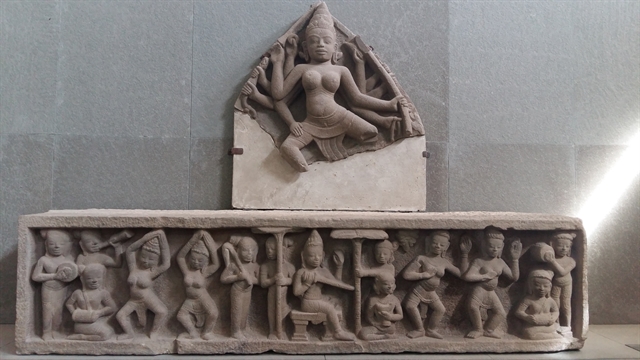 |
| A sculpture from the Chăm culture is on display at the Museum of Chăm Sculpture. The museum displays 400 of the more than 2,000 artefacts in its collection. — VNS |
The museum also signed a memorandum of understanding on research, academic exchange and the expansion of exhibition items with EFEO for the next two years.
Inner Sanctum: What’s the difference between this museum and others in Đà Nẵng?
This museum is dedicated to the preservation and display of Champa arts. It is the only place in the city showing a systematic collection of original Chăm sculptures. The museum is also a large national centre for Chăm heritage research and preservation, and it is one of the very few museums preserving different developed historical layers of Chăm arts from various archaeological sites.
Most of the works displayed at the museum are sculpted from sandstone and terracotta, and were originally brought from archaeological sites. Currently, the museum preserves more than 2,000 artefacts, including 12 listed national treasures, and is the largest exhibition centre with the most national treasures in the country.
Officially opened in 1918, the museum was recognised for its historical significance and its longstanding role in the study, collection and preservation of Chăm art since the early 20th century.
Inner Sanctum: How is the museum planning to go digital?
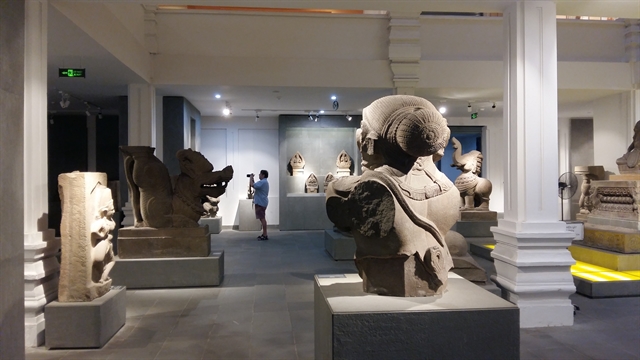 |
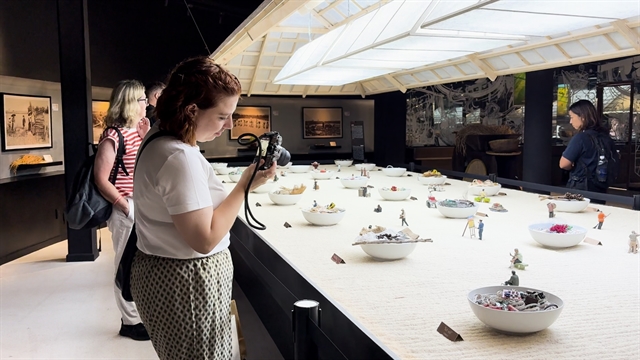
| A visitor takes photos at the Đà Nẵng Museum of Chăm Sculpture. The museum preserves 2,000 artefacts and sandstone statues from the Chăm culture. — VNS Photo Công Thành |
The museum uses a multilingual automated audio guide system, virtual tours and allows visitors to search for artefact information using QR codes.
In 2021, the museum was the first in Việt Nam to be featured on the Google Arts and Culture platform. A multi-platform communication system including a website, Facebook, TikTok and YouTube has also been built to post videos, infographics, images and storytelling content about Chăm artefacts, relics, culture and art.
Artificial intelligence (AI) was also used to design educational facilities for children. We built an automated guide system with an AI chatbot to improve the quality of the visitor experience as well. The museum plans to create a "smart museum" with 2D and 3D artefacts, especially for the 12 national treasures on display.
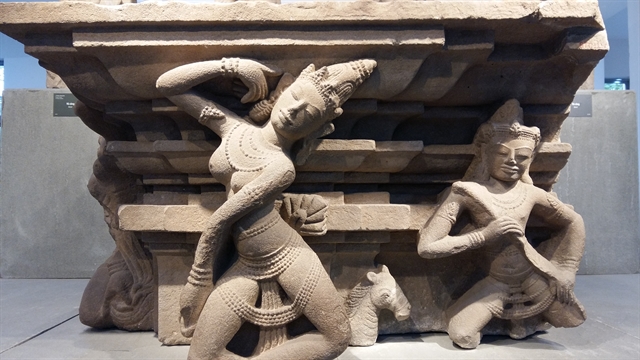 |
| A sculpture of Apsara dancers at the Đà Nẵng Museum of Chăm Sculpture. The museum is the largest exhibition centre for artefacts and sandstone statues from the Chăm culture in Central Việt Nam. — VNS Photo Công Thành |
We plan to build an online exhibition platform for easier access to Chăm cultural heritage for everyone worldwide.
A project integrating AI to improve systems for inventory, preservation and restoration of artefacts will also be developed, along with a monitoring system to control temperature, humidity and light using smart devices.
This system will help detect negative factors that could ruin artefacts early on, before any damage is done. In addition, radio frequency identification technology will be applied in the inventory, management and tracking of artefacts.
The museum has also started developing the Heritage Education Project as a creative space for the public. A Children's Discovery Room will be designed, while a digital database project will be built.
Inner Sanctum: What about long-term development programmes?
We plan to build exhibition spaces for the visually impaired to explore Chăm culture. An exhibition and scientific conference in commemoration of the 100th anniversary of the 1927 Trà Kiệu archaeological excavation will also be organised next year.
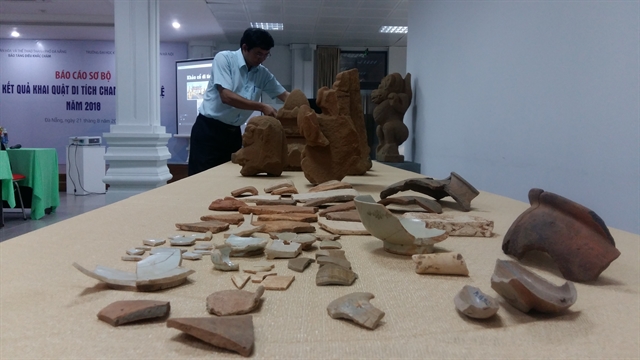 |
| Pieces of ancient ceramics on display at an exhibition on artefacts found at a Chăm tower in Đà Nẵng City. VNS Photo Công Thành |
We have also been enhancing programmes with institutes, universities, EFEO and the University of Science under Huế University to conduct surveys and research on the Chăm inscription system by using photogrammetry techniques.
The museum is currently in discussions with the University of Seville in Spain regarding a collaborative project on preventive conservation of artefacts. — VNS
Inner Sanctum
 Inner Sanctum
 Inner Sanctum
 Inner Sanctum
 Inner Sanctum
 Inner Sanctum
 Inner Sanctum
 Inner Sanctum
 Inner Sanctum
 Inner Sanctum
 Inner Sanctum
 Inner Sanctum
 Inner Sanctum
 Inner Sanctum
 Inner Sanctum