 Inner Sanctum
HCM City honours fallen soldiers with solemn musical tribute
1.
Interactive screens, virtual reality and digital archives are reshaping the museum experience at HCM City’s War Remnants Museum, where technology is being used not only to preserve history but also to deepen emotional connections with younger audiences. Executive Deputy Director Lâm Ngô Hoàng Anh shares the museum’s vision with Văn Bảy.
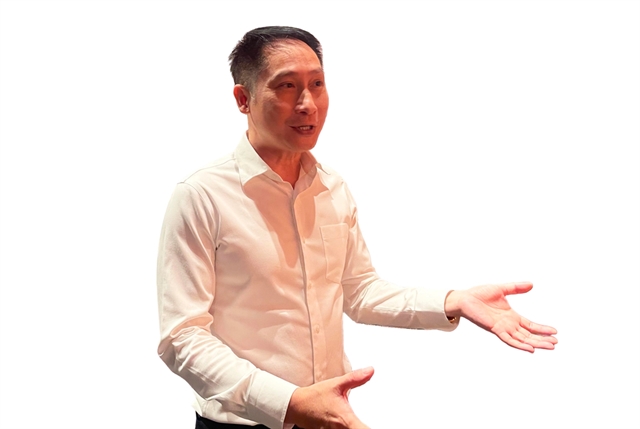 |
| Lâm Ngô Hoàng Anh, executive deputy director of the War Remnants Museum, says digital transformation is helping museums make history more accessible, immersive and engaging for contemporary audiences. — Photo thethaovanhoa.vn |
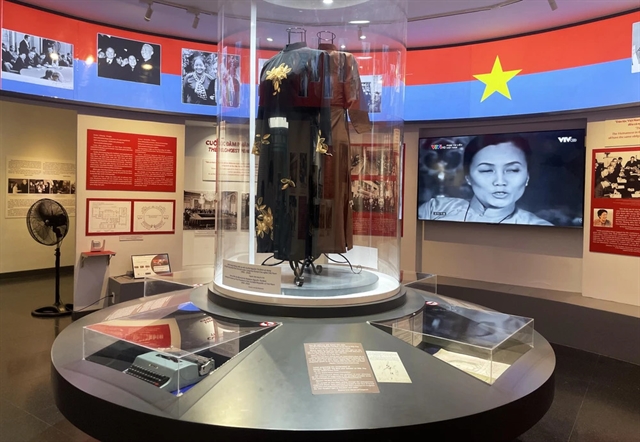 |
| The thematic exhibition on former Vice President Nguyễn Thị Bình combines modern display techniques with virtual reality technology to create a more immersive visitor experience. |
Inner Sanctum: The War Remnants Museum in HCM City welcomed more than 1.6 million visitors in 2025. As museums across Việt Nam accelerate digital transformation, how does the War Remnants Museum view and approach this process?
Since its establishment in 1975, the War Remnants Museum has continuously updated its operations to keep pace with the country’s renewal and international integration while serving the public, particularly international visitors.
Since joining the International Network of Museums for Peace in 1998, the museum has recognised the need to constantly update its collections, exhibition methods and operational model. Digital transformation has therefore become an inherent requirement for us. With guidance and support from the State, we have been able to move forward more strongly in this area.
We view digital transformation not only as the application of technology to management and archival work, but also as an important solution for renewing exhibitions, improving visitor services and making historical content more accessible, engaging and easier for the public to understand.
The results achieved in 2026 so far, together with our plans moving forward, show that the museum is gradually moving from a traditional exhibition model towards one that combines physical artefacts, digital data and interactive experiences.
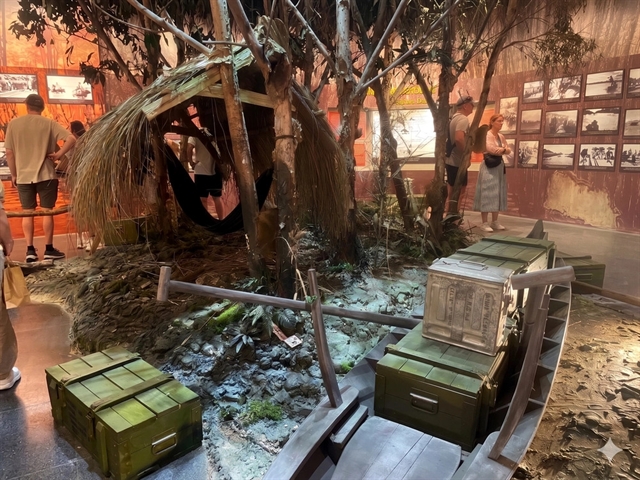 |
| The exhibition 'Youth on the Legendary Route 1C' recreates wartime memories through immersive displays, interactive content and historical artefacts. |
Inner Sanctum: Two thematic exhibitions launched earlier in 2026 have attracted considerable public interest. How has the museum incorporated technology into these exhibitions?
For Youth on the Legendary Route 1C, we invested in visual effects, sound systems and interactive screens to recreate the memories, atmosphere and historical materials associated with this legendary route in a more vivid way.
As a result, visitors are able not only to view artefacts in the conventional sense, but also to listen, observe, interact and access archival materials through a richer and more immersive experience. This demonstrates how technology can support exhibition work, helping historical content become clearer and more engaging for the public.
For the exhibition dedicated to former Vice President Nguyễn Thị Bình, we created a modern exhibition space featuring a recreation of the table used during the signing of the 1973 Paris Peace Accords. We also introduced virtual reality technology, allowing visitors to feel as though they are stepping directly into the historic negotiations and signing ceremony.
This approach is in line with the museum’s goal of increasing interactive technologies and gradually transforming the visitor experience from simply viewing exhibitions to actively participating in them.
Alongside exhibition innovation, we have also expanded digital services through the installation of automated payment and ticket-checking systems at the Lê Quý Đôn entrance, as well as the operation of an online ticketing platform.
These are practical steps that show digital transformation is not only improving internal management but also making services more convenient for visitors while supporting the museum’s financial sustainability as a public institution.
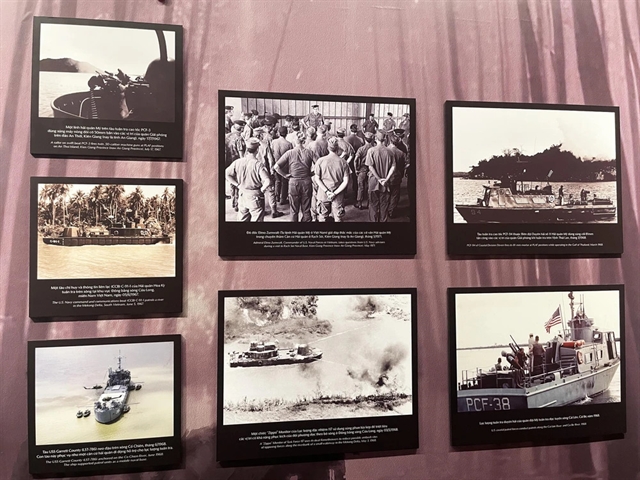 |
| Archival photographs and historical documents remain central to the museum’s storytelling, complemented by digital technologies that broaden public access and engagement. |
Inner Sanctum: Adopting new technologies often comes with challenges. What has been the biggest challenge for the museum as it advances digital transformation?
We always keep one principle in mind: digital transformation should enhance the visitor experience.
If there is a challenge, it lies in ensuring that the museum remains fresh and relevant through its exhibitions, while creating more opportunities for interaction and engagement.
We are proud that many visitors return to the museum more than once. That means there must always be something new and different to attract them. Technology and digital transformation have helped us introduce those new experiences more effectively and reach a wider audience.
Inner Sanctum: What are the museum’s priorities for digital transformation?
We will continue to view digital transformation as a key pillar of our efforts to renew museum activities.
Future exhibition spaces will go beyond simply displaying artefacts. They will place greater emphasis on participation, interaction and deeper engagement with historical stories. In other words, we aim to create spaces where visitors can immerse themselves in history and connect with historical memories through both physical and digital experiences.
At the same time, we will continue strengthening the technological infrastructure that supports exhibitions and communication activities. Since late 2025, the museum has invested in additional display equipment, screens and technical facilities. We will continue this effort by establishing a media centre.
Rather than operating individual screens, projection systems and audio equipment separately, the media centre will allow us to manage, update, schedule and synchronise content across exhibition spaces and visitor service areas from a single platform. This will make it easier to adapt content for thematic exhibitions, special events and communication campaigns, ensuring greater consistency, efficiency and professionalism.
We see this as an important step towards the digitisation of heritage resources and the wider dissemination of historical information through formats that are more accessible and better suited to contemporary audiences.
Digital transformation is not only a response to current demands for innovation. It is also a necessary step to ensure that historical heritage can be preserved, shared and appreciated more broadly and vividly in the future. VNS
Inner Sanctum
 Inner Sanctum
 Inner Sanctum
 Inner Sanctum
 Inner Sanctum
 Inner Sanctum
 Inner Sanctum
 Inner Sanctum
 Inner Sanctum
 Inner Sanctum
 Inner Sanctum
 Inner Sanctum
 Inner Sanctum
 Inner Sanctum
 Inner Sanctum