 Inner Sanctum

Japan successfully launches probe in Martian moon mission
1.
Rather than preserving heritage in static forms, artists today are exploring new ways to make performing arts resonate with modern audiences, particularly younger generations.
Among those at the forefront of this movement is Hồng Hoa, a playwright and director known for her ambitious, large-scale productions inspired by history and epic literature. Her works, including Khát Vọng Đam San (Đam San’s Aspiration) and Hùm Thiêng Yên Thế (The Sacred Tiger of Yên Thế), combine traditional cultural elements with modern stagecraft, creating immersive theatrical experiences that are both visually striking and rich in cultural depth.
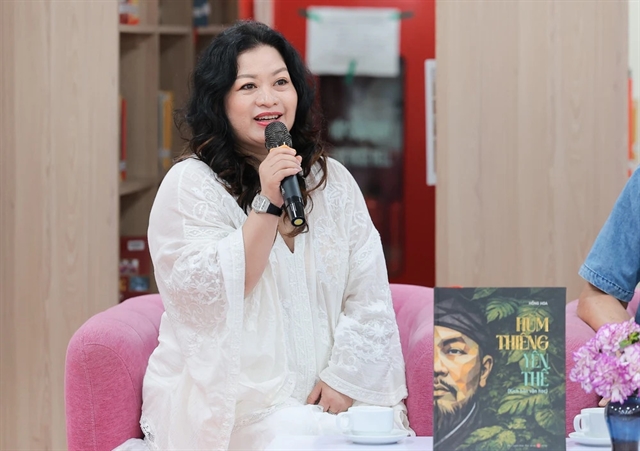 |
| Playwright and director Hồng Hoa, known for her large-scale historical and epic productions, shares her vision of revitalising Vietnamese cultural heritage through contemporary stagecraft. — VNA/VNS Photo |
Inner Sanctum: Resolution 80 (issued by the Communist Party of Việt Nam's Central Committee in early April) highlights the importance of preserving and promoting traditional cultural values. As someone who awakens epics and history on stage, how do you define the boundary between revitalisation and distortion?
“Awakening” is neither reinvention nor dilution. It is about distilling and elevating the essence of heritage. From vast historical narratives or epic works, artists must extract the most defining elements to convey a universal message, one that speaks with human values and creative vision.
I often compare this process to distilling perfume from a garden of flowers. What we do is make the fragrance rise, allowing historical and cultural values to reach audiences in a more vivid and accessible way. At the same time, this process requires sensitivity and discipline, ensuring that the original spirit is preserved even as it is re-expressed through contemporary artistic language.
Inner Sanctum: Art is expected to act as a bridge that reconnects the public, especially younger generations, with tradition. What is the greatest challenge in building that bridge?
Artists are the ones who make that fragrance rise. When heritage is expressed with enough depth and beauty, it naturally draws audiences in, inviting them to engage rather than observe from a distance.
In that sense, Resolution 80 itself becomes a bridge that enables artists, through their works, to awaken cultural values and encourage audiences to stay longer within that cultural space, willingly and with genuine curiosity.
The real challenge lies in creating works that are both emotionally compelling and intellectually meaningful, so that audiences feel a lasting connection rather than a fleeting impression.
Inner Sanctum: The resolution also encourages the development of cultural industries and selective adoption of global technologies. How do you integrate modern stage technology without overshadowing the cultural soul of your work?
For us, the core principle is that the work itself must be strong enough to stand on its own. Strength lies in its theme, its message, and its artistic integrity. Without that foundation, technology can easily become overwhelming rather than supportive.
Everything from music and staging to costumes and dramaturgy must retain a strong folk essence while embracing a universal artistic language. Technology is therefore used selectively, as an accent rather than a replacement, enhancing key moments instead of dominating the narrative.
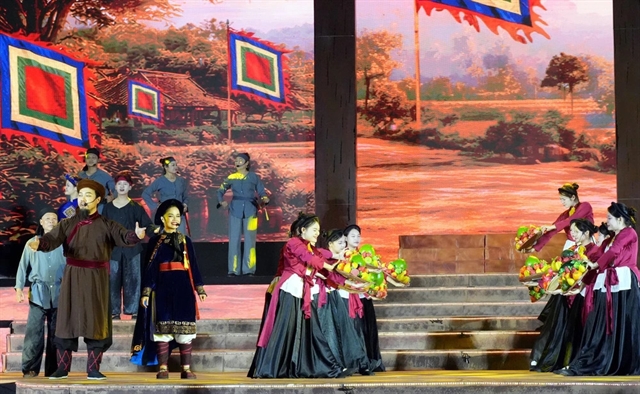 |
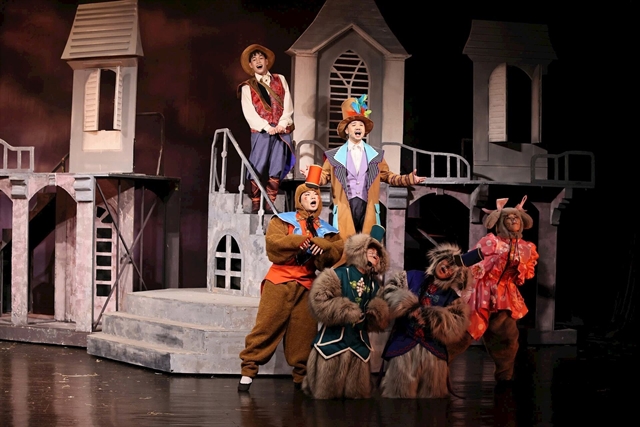
| A scene from the musical drama 'Hùm Thiêng Yên Thế' (The Sacred Tiger of Yên Thế), staged during the 142nd anniversary of the Yên Thế Uprising at the Hoàng Hoa Thám historical site in Bắc Ninh Province. — VNA/VNS Photo |
In Khát Vọng Đam San (Đam San’s Aspiration), for instance, lighting effects were used to depict the hero’s journey through darkness towards light, reinforcing the symbolic transition from struggle to aspiration. In Hùm Thiêng Yên Thế (The Sacred Tiger of Yên Thế), LED projections enhanced scenes of conflict and historical upheaval, adding intensity while remaining anchored in historical context.
If the artistic vision is strong, technology becomes a supportive and generous companion that amplifies, rather than diminishes, the cultural depth of the work.
Inner Sanctum: Cultural identity is described as a core internal strength in Resolution 80. When portraying historical figures like Hoàng Hoa Thám or epic heroes like Đam San, how do you approach character-building?
Again, it comes back to that process of distillation. The artist must first “sense the fragrance” of the subject: its ideological core, its emotional resonance and its message for contemporary audiences.
From there, we define the character’s position and significance within the broader narrative. Historical records and literary sources serve as important materials, but interpretation depends on each artist’s perspective and depth of understanding.
That is why works on the same subject can feel entirely different. Each creative approach reflects a unique way of connecting the past with the present, allowing audiences to rediscover familiar figures through new emotional and intellectual lenses.
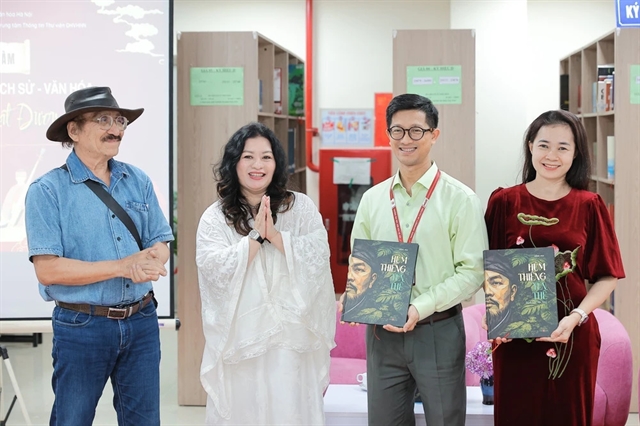 |
| Director Hồng Hoa (2nd left) and musician Nguyễn Cường (left) present the literary script of 'Hùm Thiêng Yên Thế' to representatives of Hà Nội University of Culture. —VNA/VNS Photo |
Inner Sanctum: You are currently developing a new project on Lạc Long Quân and Âu Cơ, the mythical progenitors of the Vietnamese people. Could you share more about this upcoming work?
This is a project we have been nurturing for about five years, with careful attention to both artistic concept and cultural depth. It is not only about retelling a familiar origin myth, but about exploring how that story can be experienced anew on a contemporary stage.
Beyond the script and music, we are experimenting with a new stage language that combines sculptural installation, visual arts and lighting design to create a multi-dimensional theatrical space. Through this approach, we hope to evoke a sense of cultural essence that goes beyond narrative alone.
We expect the production to premiere in late this year or early next year, and hope it will offer audiences a fresh yet meaningful way to reconnect with the origins of Vietnamese identity. — VNS
Inner Sanctum
 Inner Sanctum
 Inner Sanctum
 Inner Sanctum
 Inner Sanctum
 Inner Sanctum
 Inner Sanctum
 Inner Sanctum
 Inner Sanctum
 Inner Sanctum
 Inner Sanctum
 Inner Sanctum
 Inner Sanctum
 Inner Sanctum
 Inner Sanctum