 Inner Sanctum
SBV to curb property price inflation, enforce lending rate rules
1.
Despite having no inherited ties to pottery, 24-year-old Lê Trung Hiếu from Thuận An Ward in HCM City has chosen clay over screens. In a digital age, he has immersed himself in Biên Hoà ceramics, turning personal passion into a quiet mission to preserve and renew a fading craft tradition. Việt Nam News talks with Hiếu about his journey into ceramics and his vision for the future of Biên Hoà pottery.
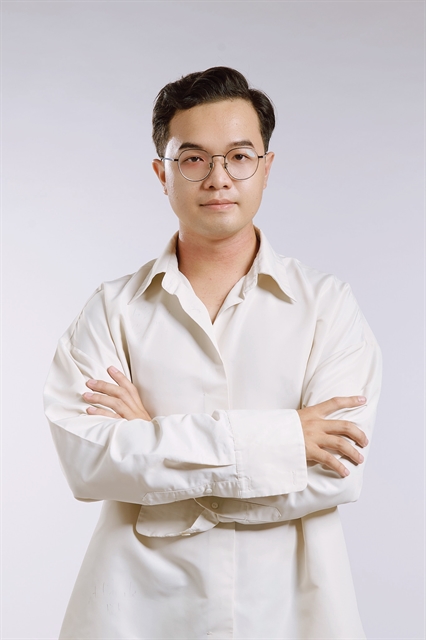 |
| Lê Trung Hiếu. Photo courtesy of the artist |
Could you please introduce yourself and share what inspired you to create ceramic artworks?
Through my studies and life within the church, I have been nurtured by the beauty of sacred architecture, religious artworks, and the narratives found in Scripture and church history. These experiences gradually stirred within me a desire to explore the extraordinary capacity of the human mind and hands to create – both as an act of reverence toward God and as a way to enrich the earthly world in which we live.
Alongside my academic background and professional experience in fashion design, I began learning to work with earth, water, and fire to create ceramics. To me, clay is a particularly meaningful material. Though it stands in contrast to fabric, both demand patience, precision, and the complete dedication of time, energy and spirit in order to bring forth works of lasting value.
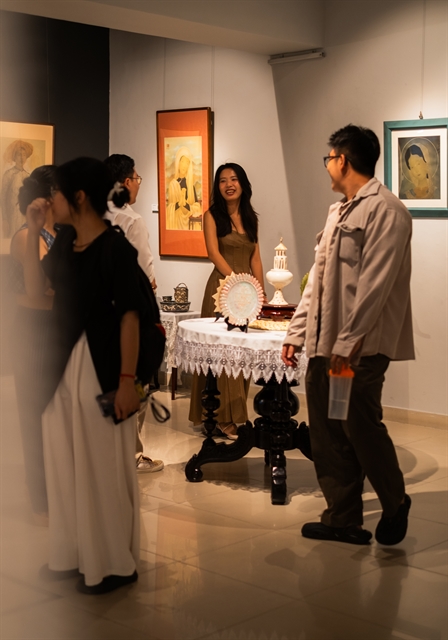 |
| Visitors at an exhibition displaying Hiếu's products. Photo courtesy of the artíst |
Why do you have a preference for Biên Hoà ceramics? Can you discuss the Biên Hoà ceramic pieces you have crafted so far, the themes you have focused on, and the reasons behind your choices?
From its earliest formation, Biên Hoà ceramics emerged as a unique synthesis of aesthetic sensibility, kiln technology, glaze formulation, and the rich cultural interaction of three communities: Vietnamese, French, and Chinese. It was precisely this cultural and technical hybridity that drew me to Biên Hoà ceramics.
As I practise this ceramic tradition, I devote significant time to research and experimentation in order to understand how the early artisans thought, what they longed for, and how they perceived beauty. This process has been both intellectually rigorous and deeply emotional.
My early works centred on traditional themes such as nature and decorative motifs, which I reinterpreted through Biên Hoà ceramic techniques. Gradually, my artistic focus expanded toward Vietnamese Catholic sacred art.
Your family has no background in the ceramic industry. Have you encountered many challenges during your career?
It is true that I do not come from a family with a ceramic-making heritage. However, with the guidance and support of artisans, clients, and specialists, I have gradually developed both design thinking and technical skills within the Biên Hoà ceramic tradition.
The greatest challenge has been researching and reconstructing historical glaze formulas and craft knowledge that have been lost over time. This process requires constant experimentation, patience, and a willingness to embrace failure as part of learning.
It has been said that you have challenged the perception that Christian aesthetics are exclusive to the West by incorporating Catholic symbols into traditional Vietnamese ceramics with an Eastern sensibility. Could you elaborate on this concept?
History shows that Vietnamese Christians have deeply internalised church teachings, theology, and liturgical life, giving rise to martyrs, scholars, and gifted artisans -- people who devoted their talents and labour to the glory of God.
I see myself as simply following in their footsteps. I continually remind myself to study Scripture and theology seriously, so that my works may serve as material expressions that awaken devotion and gently remind viewers of God’s presence and boundless love.
When one enters places such as Ba Chuông Dominican Church or the Phát Diệm Stone Cathedral complex, it is difficult not to be moved by the theological depth and symbolic richness through which our predecessors expressed Christian faith using Eastern philosophy and visual language.
Every flower, animal, drifting cloud, and flowing stream carries multiple layers of meaning, strongly associated with virtue and blessing, sin and moral disposition, and the sense of the sacred. This constitutes a vast reservoir from which I draw material for my works. Yet, it is also potentially dangerous if such symbols are overused or combined in a superficial manner without rigorous study, especially when one’s knowledge and faith remain insufficient.
These legacies have profoundly inspired works of mine such as The Holy Name, The Holy Name of Mary and The Descent of Glory.
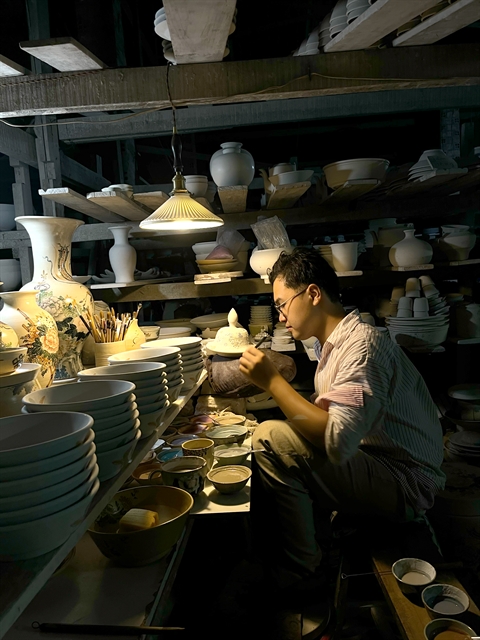 |
| Lê Trung Hiếu at work. Despite not coming from a family with a ceramic-making heritage, Hiếu has a strong passion for developing the prestigious Biên Hoà pottery heritage. Photo courtesy of the artist |
In your opinion, what steps should be taken to preserve the legacy of Biên Hoà Ceramics?
To preserve the integrity and authenticity of Biên Hoà ceramics, it is essential to uphold rigorous craft standards: precision in glaze colour, disciplined use of materials, and uncompromising quality control.
At the same time, artisans must continuously refine their artistic vision, allowing new design perspectives to emerge without compromising the core spirit and aesthetic identity of the tradition.
In addition, a spirit of experimentation and the courage to seek new perspectives are equally vital. Approaches that are unprecedented or pioneering often provoke debate and mixed reactions. Yet, when such efforts are the fruit of deep contemplation, disciplined craftsmanship, and a steadfast faith, they carry enduring value and possess a profound capacity to resonate and spread.
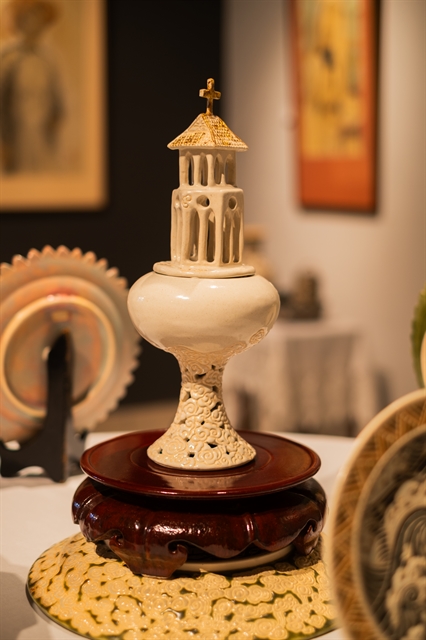 |
| An artwork by Lê Trung Hiếu. Beyond creating ceramic artworks, Hiếu wants to bring Biên Hoà ceramics closer to contemporary life by integrating them with graphic design, consumer products and fashion. Photo courtesy of the artist |
Could you please share your upcoming plans and aspirations for the future?
Beyond creating ceramic artworks, I aspire to bring Biên Hoà ceramics closer to contemporary life by integrating them with graphic design, consumer products, and fashion.
I hope that this distinctive Vietnamese ceramic tradition will be appreciated not only by younger generations, but also on an international scale. I am deeply grateful that my works have been received and valued by collectors, the public, and professionals alike.
For me, this is a way to share my love for Vietnamese culture and art, and above all, to glorify God through the small and humble works I am able to do. VNS
Inner Sanctum
 Inner Sanctum
 Inner Sanctum
 Inner Sanctum
 Inner Sanctum
 Inner Sanctum
 Inner Sanctum
 Inner Sanctum
 Inner Sanctum
 Inner Sanctum
 Inner Sanctum
 Inner Sanctum
 Inner Sanctum
 Inner Sanctum
 Inner Sanctum