 Inner Sanctum

AI and EV Boom Draws $690 Million in Advanced Materials Investment Plans to Thailand
1.
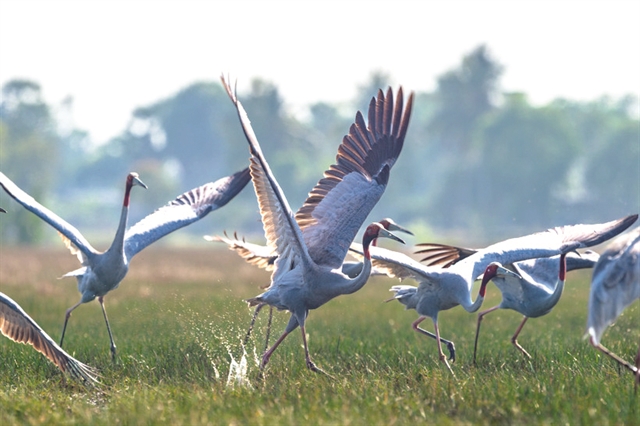 |
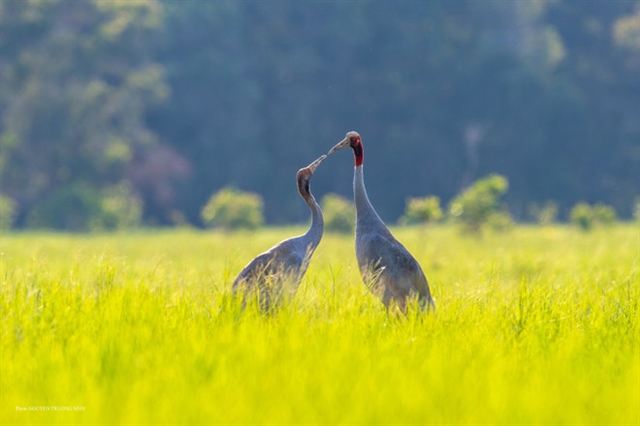
| Eastern sarus cranes gather momentum, their wings poised for flight above the wetlands of Kampot Province, Cambodia.Photo courtesy of Nguyễn Trường Sinh |
Photographer Nguyễn Trường Sinh brings home a decade-long journey with the sarus crane through the exhibition Waiting for the Cranes to Return and the launch of The Sarus Crane in HCM City. On this occasion, Trọng Thịnh speaks with him about documenting one of the world’s rarest birds and the fragile wetlands they call home.
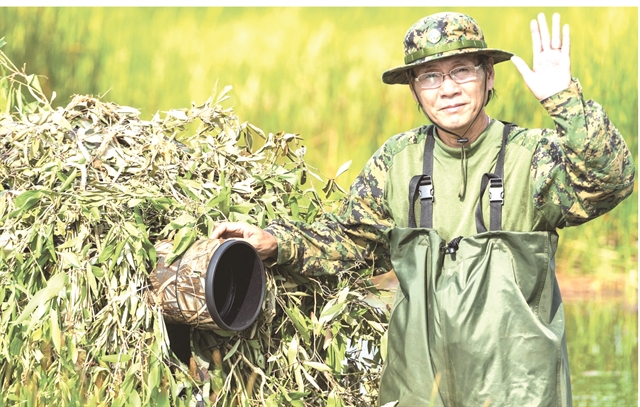 |
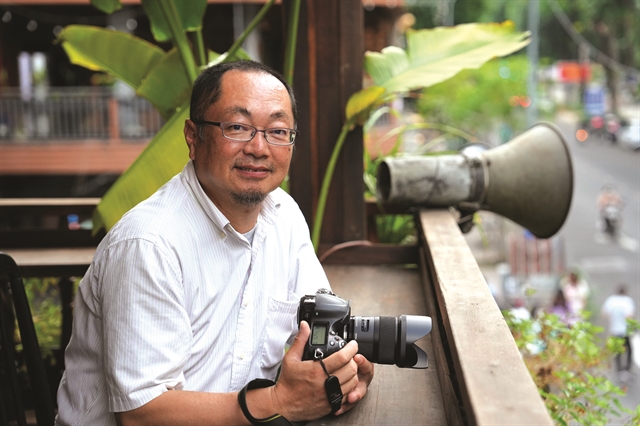
| Photographer Nguyễn Trường Sinh approaches nature as a quiet companion – observing, understanding and sharing in the breath of life. Photo courtesy of Nguyễn Trường Sinh |
Inner Sanctum: What led you to devote nearly a decade to following a single species, the sarus crane?
The sarus crane is among the world’s rarest birds and is listed in the Red Book. There was a time when they appeared in great numbers across the Đồng Tháp Mười wetlands, or the Plain of Reeds, inseparable from vast flooded fields and their haunting calls during the flood season. Gradually, however, they faded from sight.
In the dry season of 2014, I travelled to Đồng Tháp Mười, once regarded as a paradise for sarus cranes. I still remember the first time I saw a pair gliding against the sunset sky – so beautiful it felt as if my heart stopped beating. From that moment, I knew I wanted to devote myself entirely to this species.
I was captivated by their beauty – tall, proud and remarkably pure – but more than that, I sensed the fragility of a symbolic species on the brink of disappearance. I thought that if we failed to preserve their images today, one day they might exist only in memory.
For me, photographing sarus cranes is not merely an artistic pursuit but a human journey – a way to understand nature, to understand myself, and to learn patience and quiet hope. I photograph them not only to preserve beauty, but to help safeguard life itself.
Inner Sanctum: Beyond Đồng Tháp Mười and the Mekong Delta, which countries did you follow the cranes to?
I followed the cranes along their migratory routes. Untouched reed fields are ideal habitats for feeding and breeding, and I traced their wings beyond Việt Nam’s borders to places such as Anlung Pring in Cambodia, the Ayeyarwady Delta in Myanmar, Dhanauri Wetlands in Uttar Pradesh, India, and most notably the Atherton Tablelands in northern Australia – often described as the last sanctuary of this species.
Each journey was a demanding photographic expedition, requiring patience, ecological understanding and, above all, empathy with nature.
 |
| A mother crane and her chick, as if longing to return to Tràm Chim National Park, a place generations of sarus cranes once called home. Photo courtesy of Nguyễn Trường Sinh |
Inner Sanctum: What were the greatest challenges over those years, and did you ever consider giving up?
There were many moments of exhaustion. Over a decade, with nearly 100,000 image files and thousands of trips, I endured scorching heat for days on end, mosquito-filled nights, venomous snakes lurking near my camouflage tent, and long hours submerged in wetlands.
I lived alongside local communities in Cambodia and India to learn how to track the birds, and followed crane flocks across some of Australia’s harshest and most dangerous terrains. Returning home meant another demanding phase of editing, selecting and designing the book.
Wildlife photography is often a solitary experience, and there were times when I felt discouraged and wanted to quit. But whenever I faltered, I recalled the image of cranes standing silently yet proudly in flooded fields. They reminded me that as long as there is faith and hope, life continues.
It was love for nature and the meaning of conservation that carried me through. These photographs are not merely frozen moments; they are testimonies to the fragile existence of a rare species, reminding us that nature survives only when humans choose to cherish and protect it.
Inner Sanctum: Over this time, what changes have you observed in conservation efforts and public awareness in Việt Nam?
Ten years ago, when I began this journey, conservation of the sarus crane in Việt Nam lacked determination, and there were even missteps, particularly in preserving natural food sources. Public awareness was limited, and many people were unfamiliar with the species.
Today, thanks to media coverage, conservation projects and especially visual storytelling, more people know, love and care about sarus cranes. Conservation efforts have become more consistent and resolute.
The most significant change is not the number of cranes returning, but a shift in social awareness. Communities, students and the wider public now view environmental protection as something tangible and close to everyday life, rather than a distant concept.
Inner Sanctum: What can you tell us about the exhibition 'Waiting for the Cranes to Return' and the launch of 'The Sarus Crane' book?
The Sarus Crane is the result of careful selection from more than 100,000 photographs, alongside extensive reference to international materials and collaboration with scientists. Each image tells a story – from cranes performing courtship dances in the dry season, to solitary eggs resting on straw; from flocks flying over wild fields to the contemplative gaze of forest rangers.
All are captured with sincerity and empathy, conveying a message: protect wetlands, protect green life for future generations.
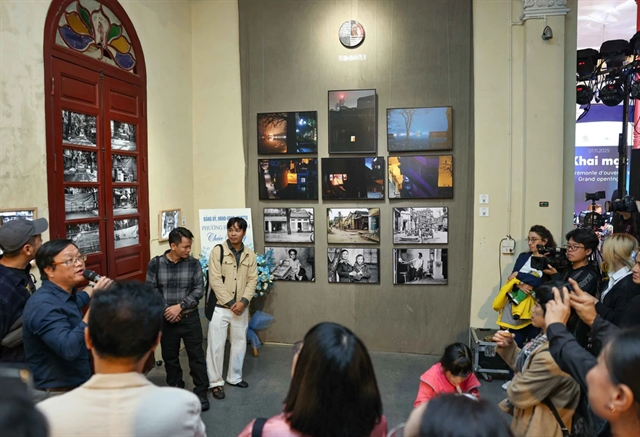
The exhibition Waiting for the Cranes to Return extends the book’s emotional reach, featuring 56 large-format photographs. Each image is accompanied by bilingual Vietnamese-English captions, portraying the cranes’ mythical stature in Asian folklore while recounting their survival, migration and breeding journeys – from pairs dancing in the mist to solitary silhouettes crossing the sunset.
I hope the exhibition awakens affection, remembrance and a longing for revival, so that one day the call of cranes may once again echo across Việt Nam’s grasslands. Only when wetlands are restored, and when humans continue to cherish and protect nature, can that sound truly return. VNS
Inner Sanctum
 Inner Sanctum
 Inner Sanctum
 Inner Sanctum
 Inner Sanctum
 Inner Sanctum
 Inner Sanctum
 Inner Sanctum
 Inner Sanctum
 Inner Sanctum
 Inner Sanctum
 Inner Sanctum
 Inner Sanctum
 Inner Sanctum
 Inner Sanctum