 Inner Sanctum
SBV to curb property price inflation, enforce lending rate rules
1.
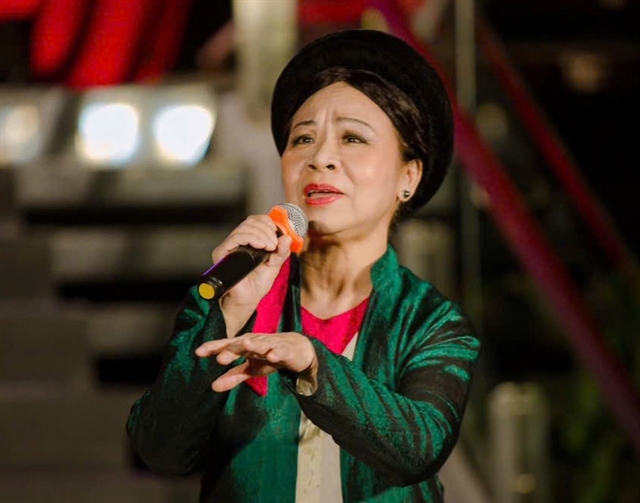 |
| People's Artist Đoàn Thanh Bình has dedicated decades to promoting chèo art. Photos courtesy of Thanh Bình |
Having spent more than half her life on stage and in the classroom, People’s Artist Đoàn Thanh Bình has witnessed the changing fortunes of chèo folk theatre, from fading audiences to renewed interest. In this conversation, she shares her thoughts with Inner Sanctum on endurance, identity and why faith in the next generation still matters.
Inner Sanctum: Having dedicated decades to traditional Vietnamese chèo opera, what has kept you committed to this art form during its most challenging periods?
I have been deeply in touch with chèo from a young age, as I was born in a family with a long-standing art tradition. As a child, I listened to the music and singing of my parents and relatives. When I grew up and learned the singing art, it was like continuing our family tradition.
To call it a heavy responsibility might be too much, but once you've entered the profession, you truly love and are passionate about it. You just want to do it right, to bring out the essence that your ancestors left behind.
More than a sense of duty, it is my deep love for chèo that has sustained me. It is true that once you are immersed in this form of singing, you become profoundly passionate about it, always striving to perform it properly and capture the essence passed down by our ancestors.
My hardest time was in the 1980s, when I had just given birth to my first daughter. Life was difficult, salary was meagre, and neither my husband nor I had any other source of income.
Chèo was our only profession; we couldn't bear to give it up, but we didn't know what else to do.
In the evenings, my husband and I would wear headphones to learn the singing styles of the seniors and elders. Then in the mornings we would go to the theatre for practice and performance. Our entire extended family was involved in this profession, so we felt even more compelled to preserve it.
The job is tough, but the harder it gets, the more I want to stick with it, because I truly love it and also because I want to continue the path that generations in my family have followed. Perhaps it is this love and perseverance that has kept me involved in traditional opera until now.
Inner Sanctum: Compared to when you started your career, how have the tastes of traditional Vietnamese opera audiences changed?
I can clearly see that the audience for chèo is increasing, especially young people. They are returning to watch chèo.
Previously, our performances mainly attracted older or middle-aged audiences, but now shows are usually very mixed, with many young people actively seeking them out.
I believe that when audiences are presented with a well-crafted performance – featuring refined singing and expressive acting while preserving the traditional spirit of chèo – they can truly be won over. Many first-time viewers have shared their surprise at how captivating chèo can be.
Conversely, when a performance becomes a mixed blend that causes chèo to lose its distinctive character, it is easy for audiences to turn away.
This places a responsibility on theatres to preserve and elevate the art form. Many troupes, such as the Military Chèo Troupe, have added modern themes to their performances, but for traditional theatres, preserving the essence of chèo remains a crucial task. I believe that this seriousness is what allows chèo art to continue reaching audiences today.
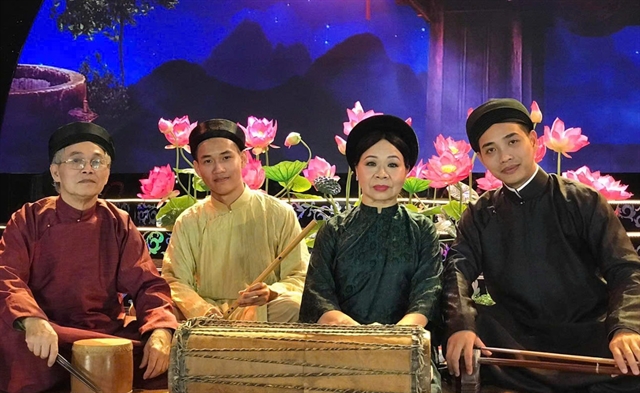 |
| Đoàn Thanh Bình (second right) and musicians participate in a recent show on VTV. |
Inner Sanctum: Currently many changes face traditional chèo. What are your biggest concerns regarding the preservation and promotion of this art form?
My biggest concern is the living conditions and working environment of young artists today. Insufficient and unstable income forces them to take on extra work, while singing chèo demands daily practice and dedication to honing their skills.
When they have to juggle multiple outside jobs, their professional quality is easily affected. In my time, artists almost exclusively focused on their career, but now economic pressure makes it difficult for them to maintain a consistent training schedule.
I'm also worried about training activities. In the past, I studied at a vocational school from a young age, so my voice was fresh and I was able to learn quickly.
Today, students often begin their studies at university at an older age and must study many foundational subjects at the same time, which limits the amount of time they can devote to specialised chèo singing training.
To sing chèo well and authentically, students need sufficient time to absorb the material and carefully refine each phrase and word. When training time is limited, it is hard to ensure the quality of graduates.
Inner Sanctum: What needs to change for chèo to survive in modern life?
The most important thing is to create conditions that allow chèo performers to make a living from their jobs. When artists have a stable income and don't have to worry about taking on extra jobs, they will have time to practise and maintain the quality of their performances.
Another factor is the seriousness in staging and performance. When young audiences watch a well-produced and authentic play with good singing and acting, they will naturally appreciate the value of traditional art.
Inner Sanctum: You are the teacher of multiple celebrated artists. What are the key factors for young artists to continue singing chèo while preserving its traditional essence?
To stay connected to chèo while preserving its essence, the most important thing is a commitment to rigorous training. Chèo is not an easy art form.
Although artists have better salaries, stronger government support and less pressure than before, the love for the profession and the seriousness towards the job must remain unchanged.
In terms of training, four years of formal training at school is just the foundation. Passion is the first element but not enough because the art of chèo requires perseverance, a keen sense of perception and strong self-learning ability.
Inner Sanctum: What message do you want to convey to the young generation who may be your successors to promote this art form?
I only hope that they truly love the profession and keep the flame of chèo alive in their hearts. They should always maintain high standards and quality, even in small roles.
This profession demands sacrifice. Many artists may earn high money elsewhere, but at the theatre they work with passion and responsibility to preserve this national heritage. — VNS
Inner Sanctum
 Inner Sanctum
 Inner Sanctum
 Inner Sanctum
 Inner Sanctum
 Inner Sanctum
 Inner Sanctum
 Inner Sanctum
 Inner Sanctum
 Inner Sanctum
 Inner Sanctum
 Inner Sanctum
 Inner Sanctum
 Inner Sanctum
 Inner Sanctum