 Inner Sanctum
SBV to curb property price inflation, enforce lending rate rules
1.
As Việt Nam pushes cultural development under Resolution 80, theatre artists are finding new ways to connect with younger audiences. Among them, director and Meritorious Artist Lê Ánh Tuyết of the Youth Theatre stands out for her work in children’s musicals. In a conversation with Thanh Mai and Mỹ Trang, she reflects on her journey, the challenges of directing and her passion for meaningful theatre.
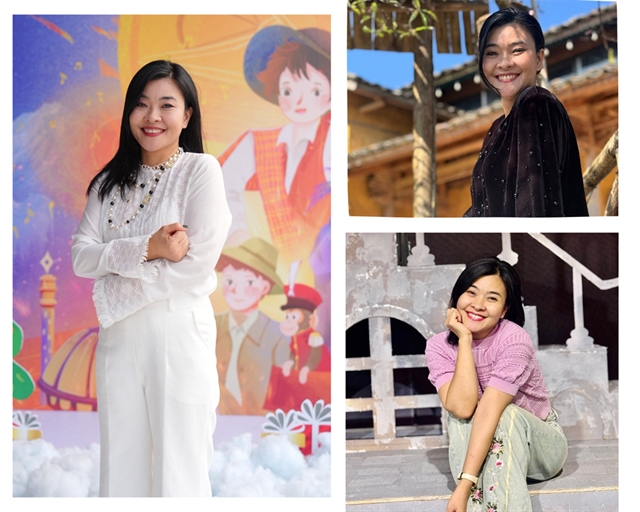 |
| Meritorious Artist Lê Ánh Tuyết — a director, wife and mother — is dedicated to creating meaningful stage productions for children. — Photo baovanhoa.vn |
Inner Sanctum: At what point did you decide to move from performing to directing?
My journey into directing began with a desire to challenge myself. As a performer at the Youth Theatre, I was used to standing on stage, singing and expressing emotions. But the longer I stayed in the arts, the more I wanted to go deeper – not just to perform, but to build entire stage worlds, from space and storytelling to the audience’s experience.
In 2015, I decided to study stage directing at the Hà Nội Academy of Theatre and Cinema. It was a demanding period, but it opened new doors for me. Fortunately, my graduation production, Trại Hoa Vàng (Yellow Flower Farm), was later funded and officially staged by the theatre.
That milestone made me realise that directing is not just a profession, but a space where I can fully express my imagination, guide stories and take responsibility for every world I create on stage.
Inner Sanctum: Directing is often seen as a high-pressure job, traditionally dominated by men. What challenges have you faced as a female director?
Directing requires courage, decisiveness and the ability to oversee the entire creative process. As a woman, I sometimes have to work harder to prove my capability, especially when leading teams that include many male colleagues.
There are moments when I need to be very strong – working late nights with the crew, making final decisions and taking responsibility for every stage of the production.
These experiences have taught me that directing is not for the hesitant. It demands intellect, persistence and a willingness to commit fully. It is also a profession that requires constant learning, as it connects with many different fields.
I previously studied journalism at the University of Social Sciences and Humanities, which has helped me analyse and distil information and approach storytelling from a broader perspective.
At the same time, I have learned to listen and respect collective ideas. While the director shapes the overall vision, I always try to create space for actors and collaborators to explore their roles. When each individual can bring out their strengths, the final work becomes a true collective creation.
Inner Sanctum: How do you balance such a demanding career with family life?
Directing is a job without fixed hours. It can start early in the morning and stretch late into the night, from rehearsals and coaching actors to handling countless stage details.
That is why I feel very fortunate to have a supportive family. My husband and children understand and respect the time I dedicate to my work.
From the beginning, I was very open with my husband about the demands of this career. I am grateful that he and the children are always willing to share responsibilities at home when I am busy with productions.
I also try to organise my schedule wisely, setting aside time – especially weekends – to be with my family. When I step away from the stage, I return fully to my role as a wife and mother. Their understanding is what allows me to pursue my passion with peace of mind.
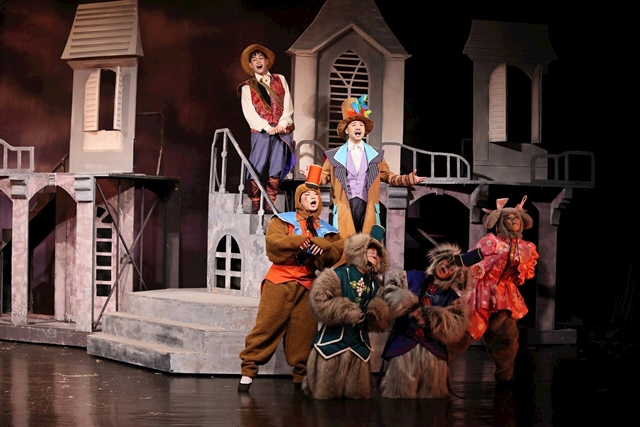 |
| A scene from the musical 'Không Gia Đình' (Sans Famille), directed by Lê Ánh Tuyết. — Photo baothainguyen.vn |
Inner Sanctum: Your name is associated with many children’s musicals. What messages do you hope to convey through these works?
Children are a very special audience. Through theatre, they can encounter familiar stories from life or books, brought vividly to the stage. This offers them new experiences and ways of understanding the world.
Being a mother also deeply influences my creative direction. As a director at the Youth Theatre, I always aim to create works for children and teenagers that are not only aesthetically rich but also meaningful.
For me, children’s theatre cannot be done superficially. Even though young audiences may not have extensive life experience, they are highly sensitive to beauty and genuine emotions.
Each production must be carefully crafted, not just to entertain but to nurture the soul and help shape positive values such as love, growth and responsibility.
Inner Sanctum: Beyond children’s theatre, you have also worked on cultural and tourism-related projects. Could you tell us more about that?
Yes, besides children’s productions, I have been involved in several artistic projects linked to tourism and cultural experiences.
Some notable examples include the real-scene show Chuyện Phố Hàng (The Old Quarter Stories) at the heritage house at 87 Mã Mây Street in downtown Hà Nội and the rock show Tinh Thần Đá (The Spirit of Stone) in Hà Giang Province.
Art has a unique way of telling stories about places, people and history. When performances are staged in heritage sites or distinctive landscapes, they offer audiences a deeper cultural experience.
This is a promising direction where art can accompany tourism, helping to promote destinations and enrich local cultural life.
Inner Sanctum: What message would you like to send to young women pursuing careers in the arts, especially directing?
The artistic path is never easy, but women can stand strong and shine if they have sufficient passion and courage.
Be bold in dreaming, willing to challenge yourself and steadfast in your choices.
Directing demands determination, endurance and great responsibility, but it also offers the opportunity to create unique artistic spaces, where your emotions can reach the hearts of audiences.
Every challenge is a lesson and every production becomes your personal mark. It not only affirms your professional ability but also reflects the strength and value of women in the arts. — VNS
Inner Sanctum
 Inner Sanctum
 Inner Sanctum
 Inner Sanctum
 Inner Sanctum
 Inner Sanctum
 Inner Sanctum
 Inner Sanctum
 Inner Sanctum
 Inner Sanctum
 Inner Sanctum
 Inner Sanctum
 Inner Sanctum
 Inner Sanctum
 Inner Sanctum