 Inner Sanctum
Rural tourism needs to cash quantities over goods sold
1.
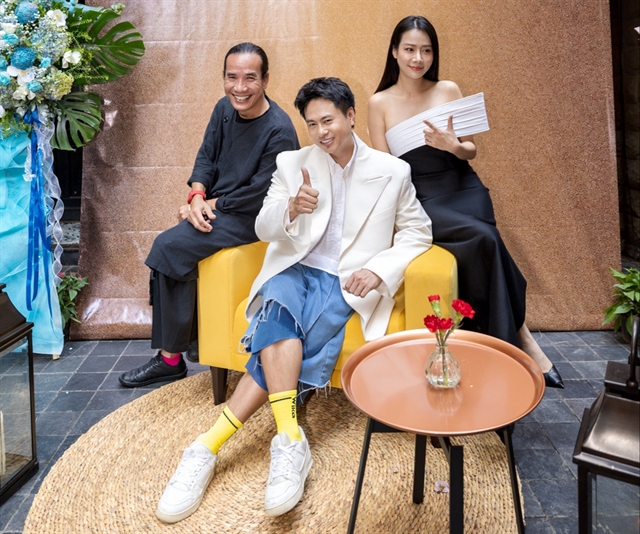 |
| The "Three Generations’ Living Room" programme series is directed and produced by Dương Cầm (centre). — Photo courtesy of Dương Cầm |
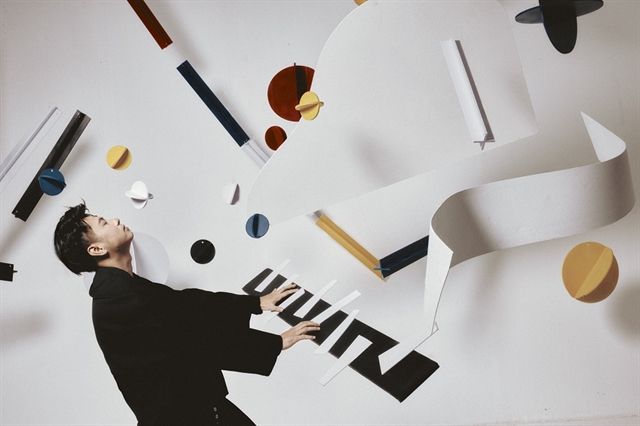
In an era of fleeting hits and fast-changing trends, musician and producer Dương Cầm has built a lasting artistic identity rooted in cultural depth. Fresh from receiving the Impressive Devotion honour at the 20th Devotion Awards held in Hà Nội in April, he speaks about Vietnamese musicals, artistic individuality and the importance of creating works with enduring cultural value.
Inner Sanctum: There has been a persistent effort to create Vietnamese-made musicals such as Giấc Mơ Chí Phèo, which has premiered and been performed in Hà Nội and HCM City. How did this journey begin?
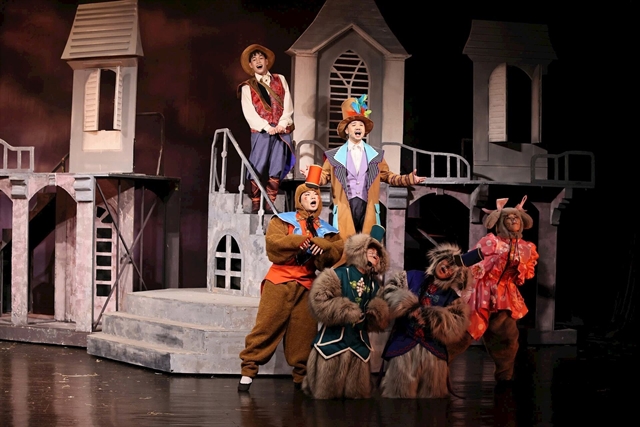
Giấc Mơ Chí Phèo (Chí Phèo's Dream) is a major milestone, and when people talk about Vietnamese musical theatre, this is often the first work they recall. The production was officially staged at the end of 2024 and performed continuously throughout 2025. However, the real journey began 10 years earlier.
Musical theatre in Việt Nam had very limited resources, so everything had to be built from scratch in terms of training performers, developing artistic knowledge, and gradually shaping professional discipline. Artists had to master singing, dancing, and acting simultaneously, which are core but demanding requirements of this genre.
At that time, Việt Nam did not yet have a structured training system for musical theatre, so it took a decade of continuous effort from me and my collaborators to reach a level where we could confidently create Giấc Mơ Chí Phèo.
The production is not the achievement of a small group but the result of a large collective effort, from the Việt Nam Contemporary Arts Theatre to the performers, artists, and my company’s production team. We worked together to bring the show closer to audiences and operate it in a more professional, market-oriented way.
In Việt Nam, staging performances is not difficult, but developing a musical into a structured cultural product that can reach wide audiences is an entirely different challenge. Its success lies not only in artistic quality but also in how it is organised and operated. I am deeply grateful to everyone involved behind the scenes.
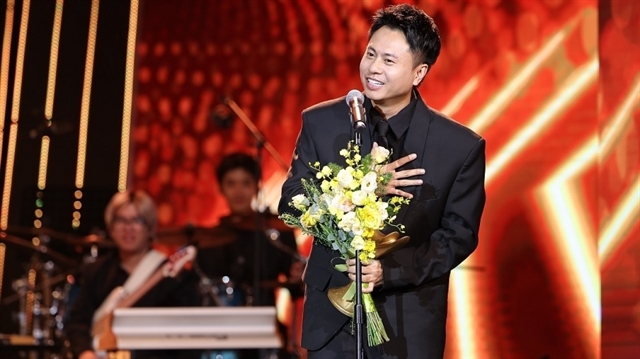 |
| Musician and producer Dương Cầm at the 20th Devotion Awards held in Hà Nội in April. — VNS Photo Hạnh Trang |
Inner Sanctum: What led you to pursue musical theatre despite its many challenges?
I wanted to create something deeper for Vietnamese culture rather than focusing solely on commercial music products. Musical theatre in Việt Nam remains an “open door”, while many countries in Asia have already developed it strongly. I wanted to explore this path not only as a personal passion but also as a way to contribute to the country’s cultural industry.
Inner Sanctum: From your early works to Giấc Mơ Chí Phèo, what opportunities do you see for Vietnamese musical theatre?
Musical theatre helped me discover my own creative strengths, especially the ability to translate raw, real-life emotions into music and stage language. Over the years, my team and I have accumulated experience in staging and production, allowing us to create works with a distinctly Vietnamese identity.
Although it is difficult to compare Việt Nam with Broadway or the West End due to differences in development history, the important thing is to create authentic Vietnamese works and continuously improve toward international standards. With Giấc Mơ Chí Phèo, we constantly updated staging techniques and applied new technology across different versions.
One major challenge is that musical theatre is not yet a widely familiar form for Vietnamese audiences, making it difficult to maintain long-running shows. That is why we adopted a hybrid model, combining state and private sectors, where Thăng Long Music and Dance Theatre collaborates with my company to operate more professionally, from communication and marketing to ticket sales.
For musical theatre to develop sustainably, it needs strong intellectual property in the form of authentic Vietnamese works, Vietnamese artists and systematic operations to form a true cultural industry.
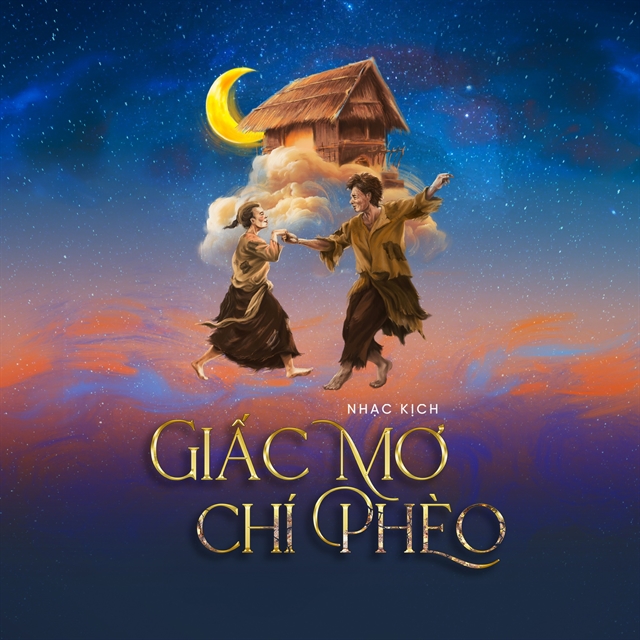 |
| The poster of Giấc Mơ Chí Phèo, which premiered in late 2024 and continued to run throughout 2025. — Photo courtesy of Dương Cầm |
Inner Sanctum: Your projects often create space for young artists. What does mentoring the younger generation mean to you?
This is extremely meaningful to me. I feel happy when I can support young people who are passionate but still uncertain about their direction. I myself went through many difficulties in the beginning when it came to finding collaborators, a community and a place to develop my passion.
Even forming a band in the early days was not easy. Finding people with shared interests and commitment takes time. But once you do, the artistic journey becomes much more meaningful. For me, art is a source of joy and a way to make life more beautiful.
Inner Sanctum: In today’s fast-changing music industry driven by social media, how can young artists maintain their identity?
The most important thing is to clearly understand their own identity, strengths, and passions. Artists can still do commercial work to sustain themselves, but they should not lose sight of their personal artistic path or chase short-term trends.
To build long-term value, they must combine individuality with cultural depth, while continuously improving their skills and creating new works to avoid becoming outdated.
Inner Sanctum: How can artists build a strong foundation while maintaining a distinct artistic identity?
By doing less. Music arrangement, for example, requires a great deal of creative energy. If I take on too many projects, I risk repetition and lack the depth needed for each work. That is why I only choose projects that give me creative freedom and where I am trusted to fully express my craft.
Once I commit, I dedicate myself completely. For an artist, every note on stage represents their identity and reputation. Therefore, quality and individuality must always come first, even if it means doing fewer projects.
Inner Sanctum: What role does your family play in your artistic journey?
My family plays a very important role, giving me peace of mind to focus on creativity. Without that support, it would be difficult to think freely as an artist.
My wife, in particular, has become directly involved in production. In Giấc Mơ Chí Phèo, she serves as the main co-ordinator, handling most behind-the-scenes operations such as audience engagement, communication, and ticket sales to ensure the show runs smoothly and delivers the best experience.
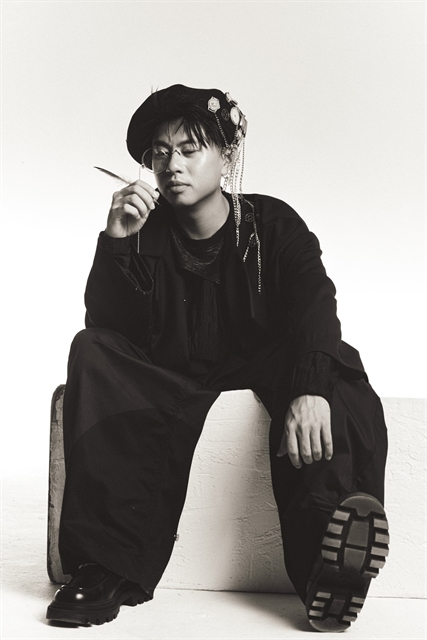 |
| Musician and producer Dương Cầm believes artists must cultivate a distinct identity and incorporate cultural values to achieve lasting relevance. — Photo courtesy of Dương Cầm |
Inner Sanctum: How do you view your current creative phase and upcoming plans?
I am currently in a very active phase, not only producing successful songs but also expanding further into musical theatre. I will continue pursuing this direction and develop new works to introduce to Vietnamese audiences, contributing to the growth of the field.
At the same time, I am returning to music with a new project titled Three Generations’ Living Room, a concert series designed to reconnect family generations. The show is planned as eight performances, each lasting 120 minutes, featuring artists from different age groups.
The idea comes from a simple concern: in modern life, people are becoming increasingly disconnected. Each person lives in their own space, surrounded by their own devices and concerns. Even within families, generations are drifting apart.
This programme creates a shared living space where people can sit together, talk, and understand one another. Children can learn more about their parents, and grandparents can find common ground with grandchildren. If three generations can sing the same melody together, it becomes a meaningful moment of connection.
The stage is designed like a real living room so audiences can see reflections of their own families. The programme does not aim to instruct, but to invite reflection: when was the last time we truly sat together like this? That is the most special message of the project. — VNS
Inner Sanctum
 Inner Sanctum
 Inner Sanctum
 Inner Sanctum
 Inner Sanctum
 Inner Sanctum
 Inner Sanctum
 Inner Sanctum
 Inner Sanctum
 Inner Sanctum
 Inner Sanctum
 Inner Sanctum
 Inner Sanctum
 Inner Sanctum
 Inner Sanctum