 Politics & Law

Vingroup Announces the Establishment of VERTA – A New Educational Model for a Generation Growing Up in the Age of AI
1.
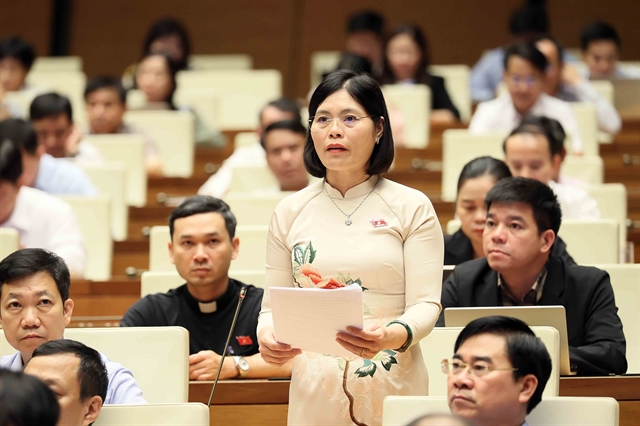 |
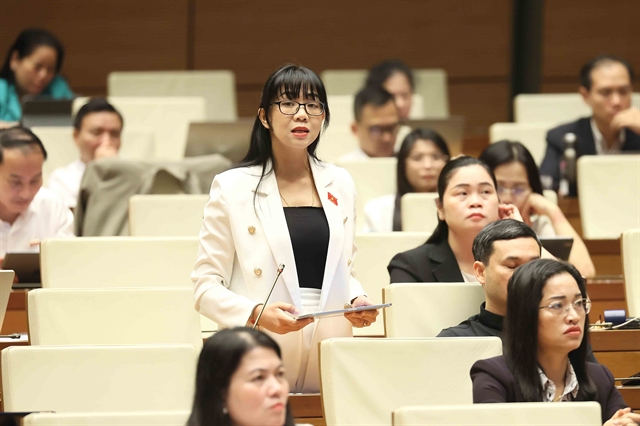
| National Assembly (NA) deputy Nguyễn Thị Oanh from Lâm Đồng Province speaks at the first session of the 16th NA discussing on the revised Law on the Capital on Sunday. VNA/VNS Photo |
HÀ NỘI — National Assembly (NA) deputies have voiced broad support for stronger decentralisation and delegation of powers to Hà Nội under the revised Law on the Capital, while stressing that expanded authority must go hand in hand with strict oversight.
Speaking at the first session of the 16th NA on Sunday, Deputy Tạ Văn Hạ from Đà Nẵng City expressed strong backing for the draft law’s policy directions, particularly provisions granting the capital greater autonomy in law-making, issuance of legal documents and piloting special mechanisms and policies.
However, he emphasised that enhanced decentralisation must be matched by robust power control. Hà Nội, he said, should comprehensively assess the capacity of its administrative apparatus, especially policy advisory staff who must possess the expertise, experience and strategic thinking required for expanded responsibilities.
He also called for concrete plans to train, attract and retain high-quality human resources, alongside effective inspection and supervision mechanisms to ensure transparency and accountability, particularly at the leadership level.
Clear criteria for evaluating pilot policies should be established, with timely reviews to refine and scale up effective models.
Hạ also highlighted the importance of regional linkage and development, as outlined in Chapter 7 of the draft law. He urged careful consideration of social factors such as welfare, prices and labour dynamics, describing them as critical variables.
“If not managed properly, Hà Nội could become an overly strong ‘magnet’, creating imbalances,” he warned, adding that deeper regional integration could drive up real estate prices, affecting low-income groups’ access to housing.
Rising living standards in the capital could also spill over into surrounding areas, pushing up the cost of goods and services.
On decentralisation provisions, Deputy Nguyễn Thị Thủy from Thái Nguyên noted that the draft law assigns 192 specific powers to Hà Nội, underscoring the need for tailored and exceptional mechanisms to enable the capital to fulfil its strategic role as mandated by the Party and the State.
Regarding Article 17, which empowers the municipal People’s Council to define responsibilities of healthcare facilities in supporting the capital’s medical system, she expressed general support but called for further alignment with Chapter 11 of the Law on Medical Examination and Treatment.
She also raised the question of whether Hà Nội would be authorised to mobilise healthcare facilities under the armed forces stationed in the city. If so, she stressed, consultations with the Ministry of Public Security and the Ministry of National Defence would be necessary to ensure consensus and facilitate implementation.
Contributing to discussions on procedures for major and critical projects in the capital, Deputy Đỗ Đức Hồng Hà from Hà Nội pointed out that while Resolution No 258/2025/QH15 on piloting special mechanisms has helped accelerate project implementation, practical challenges remain, particularly the requirement to complete project documentation within six months of commencement.
He argued that such a deadline is unrealistic for large-scale projects and proposed introducing a framework provision allowing flexibility in setting timelines. Specifically, he suggested granting the municipal People’s Council authority to determine appropriate deadlines on a case-by-case basis, based on project scale, nature and actual conditions.
This, he said, would give investors and relevant authorities sufficient time to complete procedures thoroughly, ensuring accurate assessments of investment efficiency, financial feasibility, implementation schedules and planning design, thereby minimising risks of waste and errors caused by rushed processes. — VNS
Politics & Law
 Politics & Law
 Politics & Law
 Politics & Law
 Politics & Law
 Politics & Law
 Politics & Law
 Politics & Law
 Politics & Law
 Politics & Law
 Politics & Law
 Politics & Law
 Politics & Law
 Politics & Law
 Politics & Law

.jpeg)