 Politics & Law
Vietnamese Prime Minister meets Cambodian National Assembly President
1.
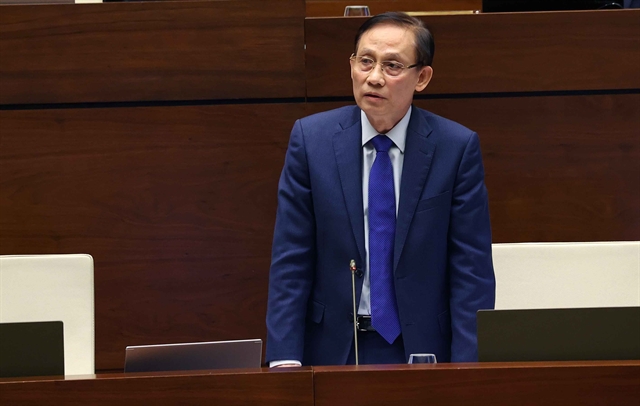 |
| Minister of Foreign Affaris Lê Hoài Trung speaks to clarify some issues raised by National Assembly deputies on Saturday afternoon in Hà Nội. — VNA/VNS Photo Văn Điệp |
HÀ NỘI — Amendments to the Law on Overseas Representative Missions of the Socialist Republic of Việt Nam must ensure adequate protection and entitlements for Vietnamese officials working in conflict zones, areas hit by natural disasters and regions affected by epidemics abroad.
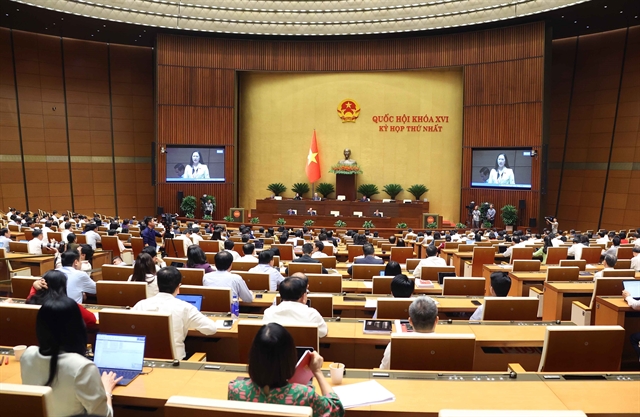
Addressing the first sitting of the 16th National Assembly (NA) in Hà Nội on Saturday afternoon, NA deputy Đinh Ngọc Quý of the central province of Gia Lai’s delegation urged the drafting body to carefully align the bill with the Law on Civil Defence, particularly regarding the definition of “disaster”.
Under the Civil Defence Law, the concept of “disaster” encompasses not only natural events but also human-induced crises and the consequences of war. However, the current draft appears to adopt a narrower interpretation.
Regarding provisions on travel and medical expense allowances in third countries in cases of severe natural disasters, dangerous epidemics or civil war, Quý argued that the terminology remains insufficiently comprehensive.
Citing ongoing conflicts in the Middle East, which may not strictly qualify as civil wars but still pose direct threats to personnel, he called for broader wording to ensure the safety, health and legitimate rights of staff serving in particularly challenging environments, and to prevent them from being disadvantaged.
Also focusing on policies for members of overseas missions and their accompanying dependants, NA Deputy Lý Thị Lan of the northern province of Tuyên Quang’s delegation expressed support for proposals to strengthen resources for foreign affairs.
However, she noted that definitions of “hardship postings” in the draft remain largely qualitative.
She recommended clearer criteria for areas affected by armed conflict, natural disasters or epidemics, warning that vague definitions could lead to inconsistent implementation and practical difficulties.
Lan proposed establishing a set of criteria or an official list of applicable locations, to be regularly published and updated by the Ministry of Foreign Affairs, with reference to classification standards used by international organisations such as the United Nations to ensure objectivity, consistency and alignment with international practices.
She further suggested clarifying the concept of “concurrent postings”, including clear principles and allowance levels commensurate with actual workloads.
If detailed provisions cannot be included in the law, she recommended assigning the Government to issue specific regulations to ensure feasibility.
Lan said that the overarching objective of the amendments should be to make Việt Nam’s overseas representative bodies truly effective “extended arms” of the State.
“These bodies must serve as a practical pillar of support for local authorities, businesses and citizens in the process of international integration,” she said, urging the drafting body to continue refining the bill to maximise the mobilisation of international resources for national development.
On policies for mission members and their dependants, NA Deputy Trần Việt Anh acknowledged the Government’s efforts to improve benefits, including additional allowances for concurrent duties, support for travel and medical treatment in third countries under high-risk conditions, and tuition support for accompanying children.
These measures are expected to provide greater reassurance for officials, enabling them to fulfil their duties effectively amid deepening international integration.
However, he pointed to a key practical concern that the current annual health insurance coverage of US$500 per person is no longer adequate given healthcare costs in host countries and fails to meet the needs of staff and their families.
“We need to draw on international experience to improve the policy, ensuring that officials and their dependants benefit from more suitable insurance coverage aligned with real-world conditions,” he said.
Responding to deputies’ comments, Foreign Minister Lê Hoài Trung said the amendments are urgently needed to institutionalise resolutions of the Politburo and to incorporate lessons from foreign affairs practice in safeguarding peace and promoting rapid, sustainable development amid global uncertainties.
The foreign affairs sector remains guided by a consistent principle of placing businesses and citizens at the centre of service.
Accordingly, overseas representative bodies will strengthen their role in supporting localities and domestic organisations, while protecting the legitimate rights and interests of Vietnamese entities and individuals abroad.
Trung pledged to fully consider deputies’ feedback and continue refining the draft law before submitting it to the NA for approval, ensuring that overseas missions truly function as effective extensions of the State abroad. — VNS
Politics & Law
 Politics & Law
 Politics & Law
 Politics & Law
 Politics & Law
 Politics & Law
 Politics & Law
 Politics & Law
 Politics & Law
 Politics & Law
 Politics & Law
 Politics & Law
 Politics & Law
 Politics & Law
 Politics & Law