 Politics & Law

Tighter controls on livestream sales
1.
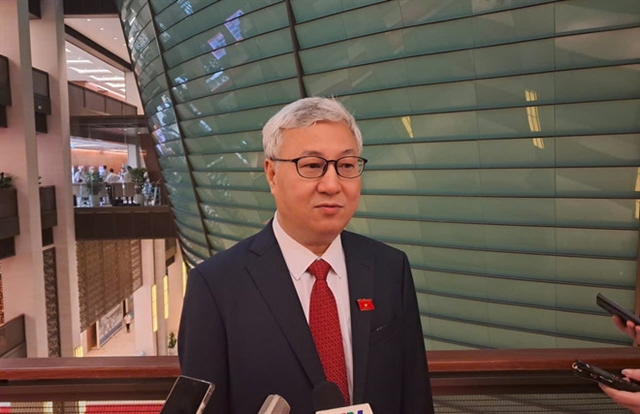 |
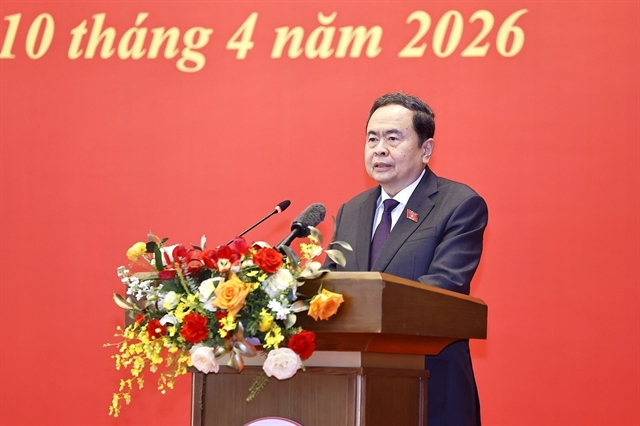
| Trần Văn Lâm, National Assembly deputy for Bắc Ninh Province. — VNA/VNS Photo |
Speaking on the sidelines of the first session of the 16th National Assembly, Trần Văn Lâm, a deputy for Bắc Ninh Province, expressed confidence in the Government’s resolve to act decisively, saying the foundations for high growth are firmly in place but must be matched by stronger discipline, effective power control and tangible improvements in people’s quality of life.
In his inaugural address, newly elected Prime Minister Lê Minh Hưng outlined five major orientations and a resolve to get to work immediately. As a National Assembly deputy, what are your expectations of these orientations?
The Prime Minister’s inaugural remarks clearly demonstrate a strong commitment to driving high-speed growth during this term. This is a very positive signal, reflecting determination to realise the goals and tasks set out in resolutions.
I believe these objectives are entirely feasible, as we have built very solid foundations over the previous term. First and foremost is the robust institutional reforms. The National Assembly has continuously improved policies and laws to remove bottlenecks.
In particular, the reorganisation of the administrative apparatus and the restructuring of local government into a two-tier model have brought administration closer to the people, enabling more timely resolution of issues faced by citizens and businesses.
Another key prerequisite is the availability of development resources. Despite domestic and international challenges stemming from global economic and political fluctuations, natural disasters and pandemics, Việt Nam has maintained strong growth, ranking among the faster-growing economies.
More importantly, we have created room for the next phase of development in the form of macro-economic stability and major economic balances for financial resources and capital.
At present, public debt headroom and national financial security remain solid, allowing for greater mobilisation of resources for development in the coming period.
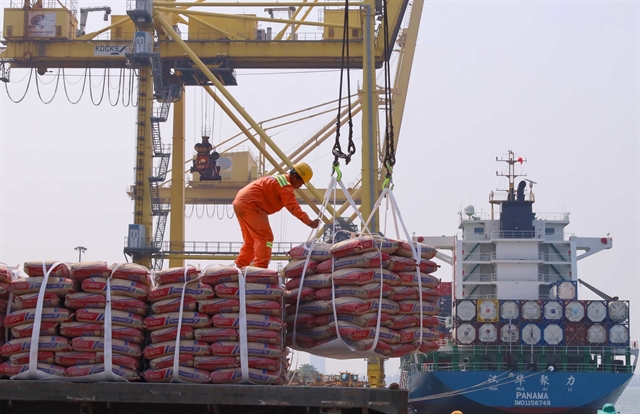 |
| ON WITH THE JOB: A worker loads cargo onto a ship at Tiên Sa Port in Đà Nẵng. VNA/VNS Photo Trần Lê Lâm |
In addition to resources, the ruling Communist Party of Việt Nam has issued numerous strategic resolutions that open up new development directions, particularly in science and technology, human resource quality, education, healthcare, and public health. These are fundamental drivers of productivity and quality-led growth.
It can be said that we are now at a point where the necessary conditions have largely converged to generate strong momentum for high growth in the years ahead.
With a target of double-digit growth, I believe this is achievable during this term and beyond. However, it must be stressed that high growth is not the sole objective. Growth must go hand in hand with environmental protection, improved living standards, and the assurance of security, order, and social safety.
The fruits of growth must ultimately translate into better living conditions, greater happiness, and tangible benefits for the people. That is the highest goal of development.
Moving towards double-digit growth will be challenging, and one solution has been to assign growth targets and key performance indicators to each locality. Should this approach be taken?
Assigning development targets to each locality is a necessary measure to enhance responsibility and effort in achieving overall growth objectives. When all localities strive for high growth, their combined results will contribute to a strong overall performance in the national economy.
However, this is only one of many solutions. Macroeconomic management cannot be fragmented; it requires coordinated and comprehensive alignment across regions and localities to generate collective momentum.
Therefore, this approach should continue, but within the broader framework of regional linkages and unified, tightly coordinated governance by the Government.
What should the Government of the 16th National Assembly do to realise the adopted resolutions and strategies?
The Government must be an action-oriented government. The major objectives and strategies have already been defined by the Party and decided by the National Assembly. The key task now is implementation, and this places significant responsibility on the Government.
This requires, first and foremost, strong determination; secondly, a methodical and scientific approach; and at the same time, flexibility and timeliness.
It is particularly important to promptly identify obstacles and constraints, including those related to institutions and legislation, in order to propose timely solutions to the National Assembly and competent authorities, thereby unlocking resources for development.
This will be a key measure of the Government’s governance capacity, and we expect it to perform well in this regard in the coming period.
The new Government leader stressed that rapid development requires a clean apparatus and integrity among officials. How can this be realised?
Indeed, for any policy or plan to be effectively implemented, the human factor is decisive.
In recent years, the Party has placed strong emphasis on cadre work, from planning, training, and evaluation to appointment and anti-corruption efforts. As a result, we have been able to screen and select personnel who truly possess integrity, competence, capability, and resilience to undertake major responsibilities.
The outcomes of the 14th National Party Congress of the Communist Party of Việt Nam and the recent National Assembly elections show that personnel work has been highly appreciated by voters and the public, with those nominated receiving strong levels of confidence.
This is the result of a rigorous, systematic and serious process of cadre development and selection. I believe this will be a decisive factor in ensuring the success of the 16th National Assembly and the Government’s performance in the coming years.
Beyond selecting capable and ethical officials, is it necessary to strengthen administrative inspections to control power and uphold discipline?
Certainly. Delegation of authority must go hand in hand with power control and oversight of implementation.
Selecting the right people is only the initial condition. We cannot assume that someone who performs well today will continue to do so indefinitely; therefore, regular and rigorous monitoring mechanisms are essential.
Oversight must come from the legal system, the administrative apparatus, as well as from voters and the public.
More importantly, the legal framework must continue to be improved so that officials can perform their duties within clear legal boundaries, fully utilising their capabilities and strengths.
Supervision must be closely linked with institutional and policy improvements to ensure that officials act properly, effectively, and with the highest level of accountability. — VNS
Politics & Law
 Politics & Law
 Politics & Law
 Politics & Law
 Politics & Law
 Politics & Law
 Politics & Law
 Politics & Law
 Politics & Law
 Politics & Law
 Politics & Law
 Politics & Law
 Politics & Law
 Politics & Law
 Politics & Law