 Politics & Law
Press release on fourth working day of 14th Party Central Committee's third plenum
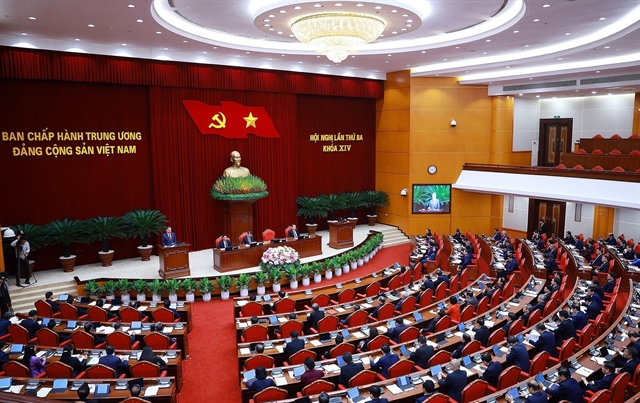
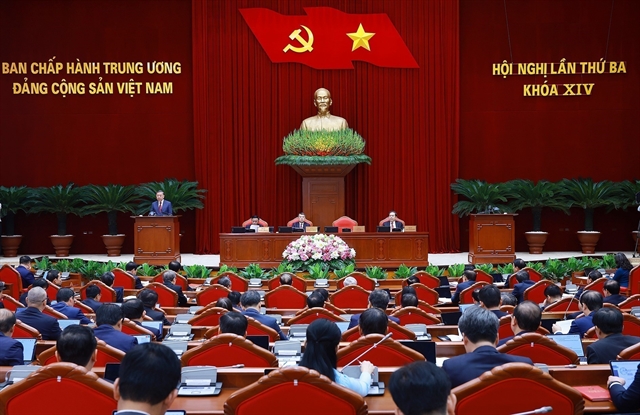
The third plenum of the 14th Party Central Committee entered its fourth working day on Thursday.
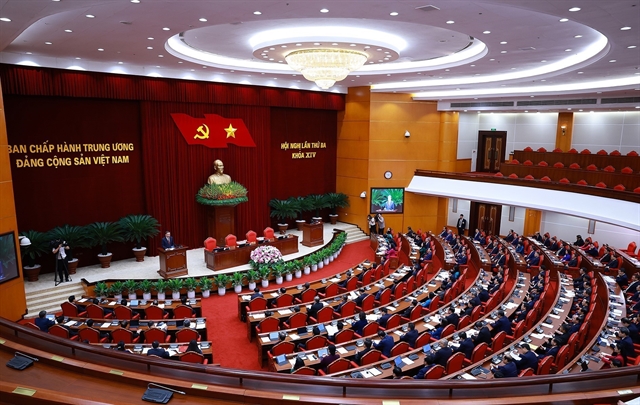 |
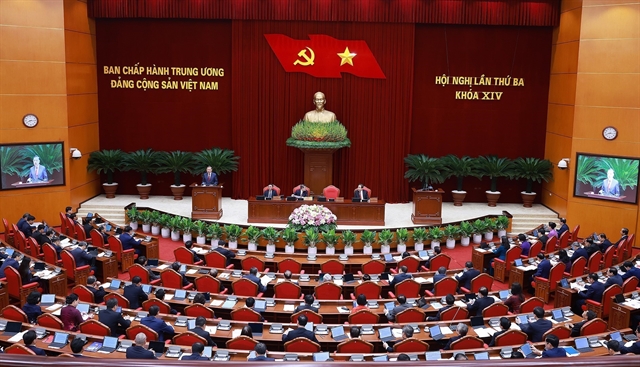
| The Third Plenum of the 14th Party Central Committee closed on Friday. VNA/VNS Photos |
HÀ NỘI — Party General Secretary and State President Tô Lâm has called on the entire political system to focus on effective action, stressing that the true value of the Party's decisions lies not in their adoption but in the tangible improvements they bring to people's lives and the country's long-term development.
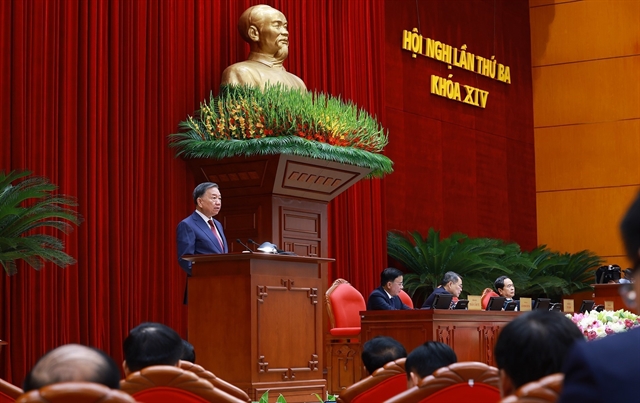
Delivering the closing remarks at the Third Plenum of the 14th Party Central Committee on July 24, the Party chief said the meeting had reached broad consensus on a wide range of strategic policies covering socio-economic development, national governance, land management, marine development, national security and sustainable growth.
Held after several days of what Lâm described as "urgent, serious, democratic, candid and responsible" deliberations, the Plenum approved resolutions, conclusions and policy documents designed to implement the Resolution of the 14th National Party Congress while laying the foundations for the country's next stage of development.
According to the top leader, the Party Central Committee agreed that the Congress' resolution and other strategic Party resolutions have been carried out vigorously during the first six months of 2026. The country's political system has continued to operate stably following recent institutional restructuring, while leadership, governance, inspection and oversight have all shown positive improvements.
At the same time, he acknowledged that implementation remains the country's greatest challenge.
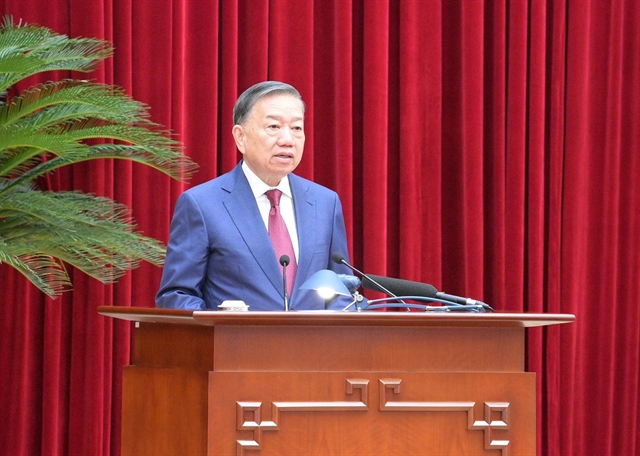
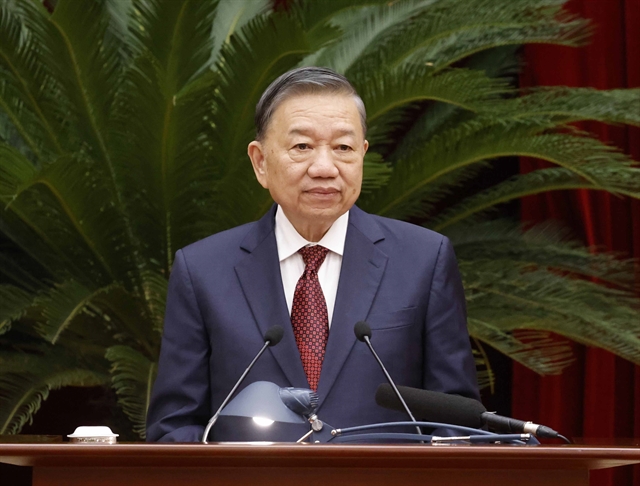 |
| Party General Secretary and State President Tô Lâm speaks at the closing session of the Third Plenum of the 14th Party Central Committee. |
The Party chief said many obstacles stem from inconsistencies between authority and accountability, with decentralisation in some areas not sufficiently matched by financial resources, personnel, data, implementation tools and oversight mechanisms.
Resources remain fragmented, while economic growth has yet to rely sufficiently on productivity and domestic capacity. In some sectors and localities, forecasting, risk prevention and preparedness have also failed to keep pace with rapidly changing circumstances.
Addressing these shortcomings requires more than administrative adjustments, he said. Instead, reforms must tackle root causes through coordinated improvements in institutions, organisational structures, workforce development and governance methods, while closely integrating Party building with national governance, socio-economic growth and national defence.
Growth target remains unchanged
One of the Plenum's strongest messages was its determination to maintain rapid economic growth despite an increasingly uncertain global environment.
The Party Central Committee reaffirmed its goal of achieving economic growth of at least 10 per cent this year while maintaining macroeconomic stability, controlling inflation, safeguarding major economic balances and ensuring employment, income growth and social welfare.
To support this objective, the Central Committee approved a new resolution on reforming Việt Nam's development model, describing it as an unprecedented strategic undertaking that will shape the country's long-term development through 2045 and beyond.
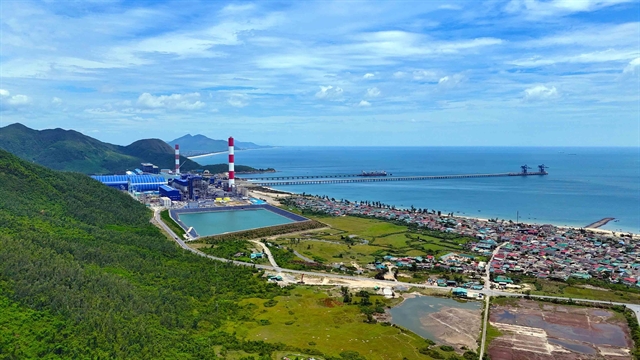 |
| Thermal power plants in the Vũng Áng Economic Zone in Hà Tĩnh Province. |
Unlike previous reforms that primarily focused on changing the growth model, the new resolution establishes a comprehensive national development framework centred on people and human development.
It seeks to translate the Party's development vision into practical policies while drawing selectively on international experience suited to Việt Nam's own conditions.
Lâm said that development should ultimately be measured not simply by economic indicators, but by improvements in people's quality of life and happiness.
In the same spirit, the Central Committee also approved a proposal on building a disciplined, safe, civilised, harmonious and progressive society, identifying people, culture, the rule of law, social discipline and a healthy social environment as essential foundations for sustainable national development.
Land reform to unlock development resources
Land policy emerged as another major focus of the Plenum.
The Central Committee approved conclusions reviewing the implementation of Resolution No 18 while agreeing on guiding principles for amending the Land Law and related legislation.
The Party chief reaffirmed the longstanding principle that land belongs to all citizens, with the State acting as the representative owner and exercising unified management.
He stressed that the State would not reconsider legally established land-use rights recognised under previous land policies and legislation.
Future amendments to the Land Law must unlock development resources without leading to the privatisation of land, he said.
The revised legislation must strike a balance between the interests of the State, citizens and businesses, while ensuring that the State continues to regulate, supervise and determine land prices, Lâm said, adding that the reforms should also improve housing conditions, livelihoods and living standards for people whose land is acquired for development projects.
The Party leader described land not only as an economic resource, but also as the nation's living space and an essential foundation for long-term development.
New cities and marine development strategy
Among the major structural decisions adopted at the Plenum was the approval in principle for the establishment of Quảng Ninh City and Bắc Ninh City.
The Central Committee also adopted a new resolution on developing Việt Nam into a strong maritime nation.
The resolution identifies the sea as both a strategic space for national development and an essential component of safeguarding national sovereignty.
Lâm stressed that developing a modern marine economy must go hand in hand with protecting marine ecosystems, improving people's livelihoods and firmly safeguarding the country's sovereignty.
National security and climate resilience
Alongside economic priorities, the Party Central Committee reaffirmed that national security and sustainable development remain inseparable pillars of the country's long-term strategy.
The Plenum endorsed the key orientations of a new National Security Strategy, calling for security to be integrated into the country's overall development agenda rather than treated as a separate policy area.
The strategy calls for earlier identification, forecasting and prevention of both traditional and non-traditional security threats, including emerging cross-sectoral and transnational risks. It also broadens the concept of national security beyond conventional defence to include human security, data security, energy security, water security, food security and the protection of critical infrastructure.
According to Lâm, safeguarding the Party, the State, the socialist regime, national independence, sovereignty, unity and territorial integrity remains a fundamental objective. However, national security must increasingly be understood through the lens of sustainable development, resilience and the country's capacity to respond to rapidly evolving global challenges.
The Central Committee also reviewed the implementation of Resolution No 24 on climate change and environmental protection before adopting a new conclusion aimed at guiding policy in the coming years.
The Party leader said Việt Nam must fundamentally shift from a reactive approach focused primarily on disaster recovery towards one centred on prevention, adaptation and resilience.
Environmental governance should increasingly adopt ecosystem-based approaches, with management organised around river basins, coastal areas and marine ecosystems rather than administrative boundaries alone.
He also stressed that the green transition should not be viewed merely as an environmental obligation, but as an opportunity to strengthen national competitiveness, improve development quality and ensure long-term security while fulfilling responsibilities to future generations.
From policy to implementation
A central theme of Lâm's closing remarks was the need to move swiftly from policy consensus to effective implementation.
He said the resolutions adopted at the Plenum would only have lasting value if they were translated into concrete programmes, measurable outcomes and tangible improvements in people's lives.
"We must transform the speed of policy issuance into the speed of implementation, and political determination into substantive progress and concrete results," he said.
To that end, the Party chief outlined five priority areas for the entire Party and political system immediately following the Plenum.
He called for a clear focus on strategic priorities and breakthrough tasks capable of generating wider momentum, saying measures that are ready for implementation should be carried out without delay, while new and unprecedented initiatives should be carefully studied and, where appropriate, introduced through well-supervised pilot programmes.
Lâm also stressed the need for implementation to proceed under the Party's unified leadership, with every institution fully exercising its assigned functions and responsibilities. The entire political system must operate in a coordinated, seamless and people-centred manner, he said.
Another priority is clarifying the respective responsibilities of central, provincial and commune-level authorities under the country's new governance model.
According to the top leader, the central level should concentrate on strategic direction, institutional development, major resource allocation and oversight.
Provincial authorities should take greater responsibility for coordinating development and supporting implementation, while commune-level governments should serve as the front line of public administration, directly addressing the needs of citizens and businesses.
Where local authorities lack sufficient resources or capacity, provincial governments must provide timely support rather than allowing problems to accumulate.
Lâm also called for every resolution to be translated into specific action programmes, with clearly identified resources, implementation roadmaps, deliverables and accountable agencies and officials.
"Leaders must stay closely connected to the realities on the ground, understand the pulse of the localities and sectors they oversee, listen to grassroots communities, businesses and the people, and demonstrate initiative and creativity in implementation while acting within their authority, in line with the Party's direction and for the common good," he said.
At the same time, he stressed the importance of communicating Party policies in a timely, accurate and persuasive manner to build public understanding and social consensus, while countering false and distorted information.
Finally, the Party chief underscored the importance of stronger inspection and supervision, saying implementation should be assessed through data, measurable outcomes and actual performance rather than procedural compliance alone.
He said progress should be assessed by whether longstanding bottlenecks had been removed, resources unlocked and people's lives improved, adding that public satisfaction and business confidence should become key benchmarks for evaluating the performance of organisations and officials, particularly those in leadership positions.
Confidence in the country's development path
Concluding his remarks, Lâm said the successful completion of the Third Plenum represented only the beginning of a much broader process of implementation.
He noted that the international environment will continue to evolve rapidly and unpredictably, with opportunities and challenges becoming increasingly intertwined.
Against that backdrop, he called on the entire Party and political system to remain steadfast in their objectives while fostering greater initiative, creativity and responsibility in serving the national interest.
For the 79th anniversary of War Invalids and Martyrs' Day on July 27, he also extended the Party's gratitude to Heroic Vietnamese Mothers, war heroes, war invalids, families of fallen soldiers, veterans and all those who have rendered distinguished service to the nation.
The top leader urged authorities at all levels to continue improving care for policy beneficiaries and to effectively implement the ongoing 500-Day Campaign to accelerate the search for, recovery and identification of the remains of fallen soldiers whose identities remain unknown.
Expressing confidence in the country's future, Lâm said that with the Party's united and resolute leadership, the support of the people, the dedication of officials and Party members and the nation's shared aspiration for development, Việt Nam would successfully implement the Resolution of the 14th National Party Congress and translate the Central Committee's strategic decisions into tangible improvements in people's lives. VNS
Politics & Law
 Politics & Law
 Politics & Law
 Politics & Law
 Politics & Law
 Politics & Law
 Politics & Law
 Politics & Law
 Politics & Law
 Politics & Law
 Politics & Law
 Politics & Law
 Politics & Law
 Politics & Law
 Politics & Law
 Politics & Law
 Politics & Law
 Politics & Law
 Politics & Law
 Politics & Law
 Politics & Law