 Society

Việt Nam steps up fight against counterfeits, IP violations
1.
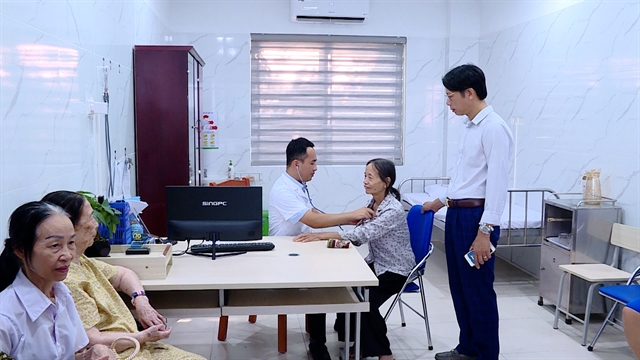 |
| Nguyễn Văn Hà (right) takes his mother to the day centre for older adults at Long Biên Ward Healthcare Centre every weekday. VNS Photo Lê Hương |
By Lê Hương
HÀ NỘI — Every weekday morning, Nguyễn Văn Hà follows a routine that has become second nature.
Before heading to work, he accompanies his 82-year-old mother, Nguyễn Thị Múi, to a modest healthcare centre just a few minutes from their home in Long Biên Ward. By late afternoon, he returns to take her home.
It is a simple journey, but one that has transformed both of their lives.
Instead of spending long hours alone at home, Múi now joins dozens of other older residents at Hà Nội's first public day centre for senior citizens, a pilot programme operated by the Long Biên Ward Healthcare Centre.
Here, she receives regular health monitoring, enjoys nutritious meals, joins exercise sessions and games, and, perhaps most importantly, spends time with people of her age.
For Hà, the greatest comfort comes from knowing his mother is no longer isolated.
"The medical staff check my mother's blood pressure every day, look after her, talk with her, and keep her company," he told Việt Nam News.
The change has been impossible to miss.
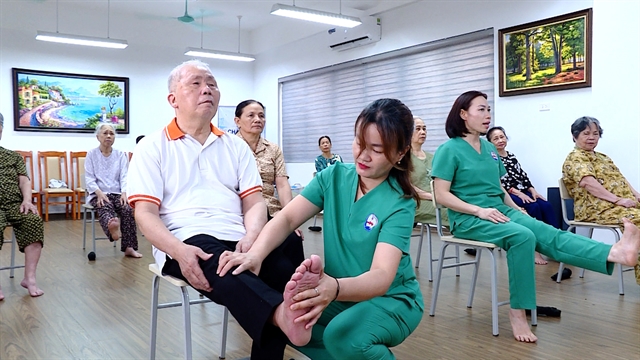 |
| Older adults take part in morning exercises as part of the daily programme at the Long Biên Ward day centre. VNS Photo Lê Hương |
"Every afternoon when she comes home, I can tell from the look in her eyes and her smile how happy she is. She also tells me about the games they play and the conversations she has with the other seniors in the group. It gives me great peace of mind," he said.
His experience reflects a growing reality for many families in Hà Nội.
People are living longer than ever before, but as the city ages, more elderly residents are finding themselves spending much of the day alone while their children work. Families want to care for ageing parents, yet balancing employment, childcare and eldercare has become increasingly difficult.
The Long Biên centre offers a glimpse of a new approach — one that allows older people to continue living at home while receiving healthcare, companionship and emotional support within their own community.
It is the first publicly operated day centre of its kind in the capital, and city officials hope it will become a model for the future.
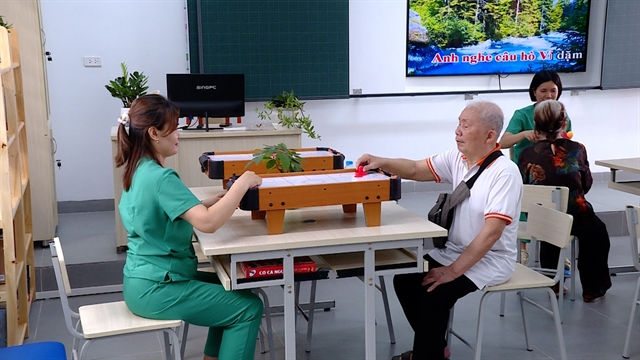 |
| Older adults enjoy games and social activities at the Long Biên Ward daycare centre. VNS Photo Lê Hương |
More than healthcare
Walking into the centre feels less like entering a medical facility than a neighbourhood gathering place.
Some seniors practise gentle exercises under the guidance of physiotherapists. Others gather around tables chatting over tea, playing board games or singing familiar songs. Laughter regularly echoes through the activity rooms.
Medical care remains central to the programme. Blood pressure and chronic conditions are monitored daily and rehabilitation sessions are available for those recovering from illness or injury, while balanced meals are prepared to meet older people's nutritional needs.
Yet, staff say medicine is only one part of healthy ageing.
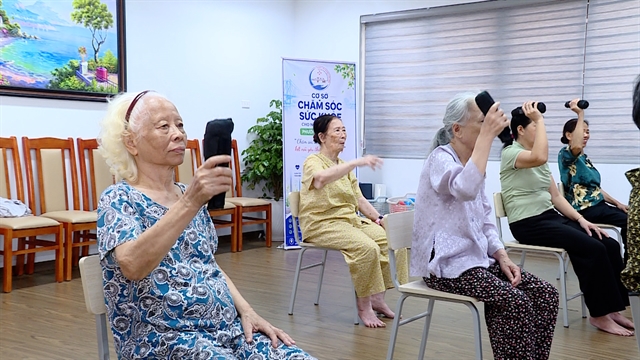 |
| Regular activities at the centre help older adults stay physically active, mentally engaged and socially connected. VNS Photo Lê Hương |
Equally important is helping seniors regain a sense of purpose, confidence and belonging.
For 84-year-old Đặng Thị Cánh, the centre has become a place she looks forward to visiting every day.
"I come here to meet people my own age. We spend time with the young nurses, exercise, sing and enjoy all kinds of activities together. It really lifts my spirits," Cánh said.
For Lê Thị Huy, 83, the impact has been even more profound.
After her husband died two years ago, loneliness became part of her everyday life.
"Since coming here, I feel healthier and much more positive about life. At home, it was just me within four walls. My husband passed away two years ago, and I used to cry all the time. But coming here has changed me completely. It's been really good for me."
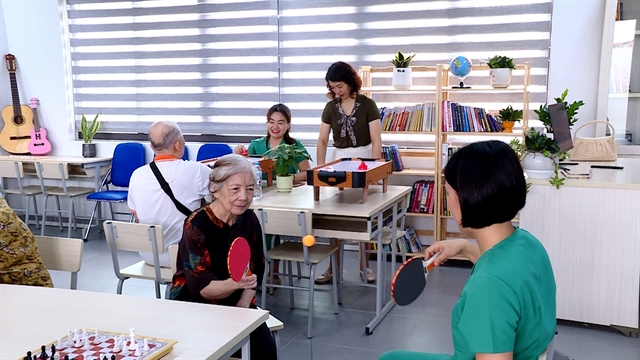 |
| Games and group activities help lift older adults' spirits. VNS Photo Lê Hương |
Her experience illustrates a challenge often hidden behind the statistics of an ageing population.
Longer life expectancy is a remarkable achievement, but it also means more people are living for many years with chronic illnesses, declining mobility or simply the emotional effects of isolation.
Medical treatment can prolong life; companionship helps give it meaning.
That philosophy underpins everything the centre does.
"Here, the seniors receive healthcare, nutritious meals and, most importantly, emotional care," said Nguyễn Khắc Thúy, director of Long Biên Ward Healthcare Centre.
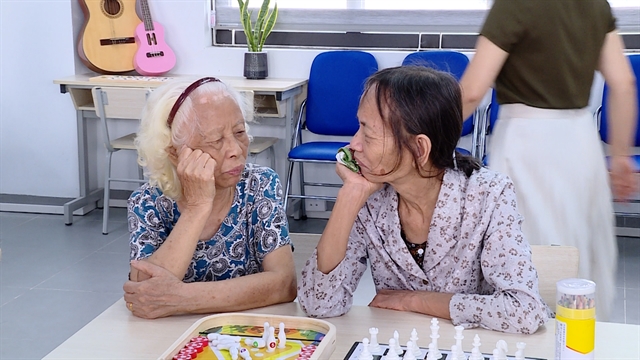 |
| Older adults chat with one another at the Long Bien Ward daycare centre. VNS Photo Lê Hương |
"We create a space where they can spend time with others their own age. They enjoy activities, chat and share their stories instead of staying home all day. Many older people who remain at home are at risk of loneliness and social isolation."
Unlike traditional nursing homes, participants return to their families every evening.
Rather than replacing family care, the programme supports it.
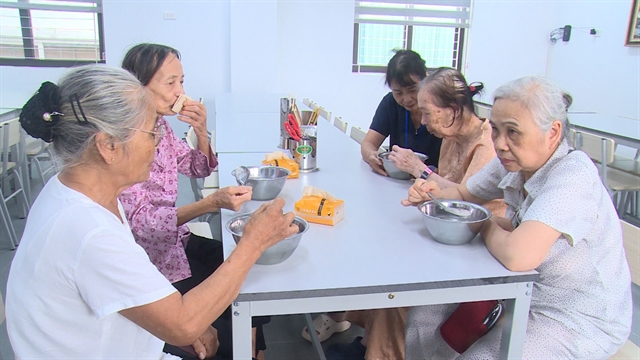 |
| Older adults receive nutritious, well-balanced meals at the Long Bien Ward day centre. VNS Photo Lê Hương |
A city growing older
The need for such services is becoming increasingly urgent.
Việt Nam officially entered an ageing population phase in 2011, and demographic change is occurring far more rapidly than it did in many developed countries.
Hà Nội is already feeling the effects.
According to the city's Department of Health, the capital is home to more than 1.44 million people aged 60 and above, representing 16.3 per cent of its population. Average life expectancy has reached 76.7 years, while declining birth rates continue to accelerate population ageing.
The figures represent remarkable progress in healthcare and living standards, but they also present one of the city's biggest social policy challenges.
Traditionally, older Vietnamese were cared for by extended families living under one roof. Today, urban lifestyles are reshaping that model.
Smaller households, lengthy commutes for work and increasingly demanding careers mean many older people spend long periods on their own, even when they live with their children.
 |
| Older adults receive regular healthcare services at facilities across Hà Nội. Photo courtesy of the Hà Nội Department of Health |
The result is a growing gap between independent living and full-time residential care.
For many families, nursing homes remain financially out of reach or are seen as a last resort. Hospitals, meanwhile, are designed to treat illness rather than provide long-term social support.
Community-based day centres offer a third option.
They enable older adults to remain active and socially engaged while continuing to live at home, reducing pressure on both families and hospitals.
Healthcare workers at Long Biên believe integrating eldercare into primary healthcare is one of the programme's greatest strengths.
"Our primary responsibility is to provide healthcare services to the public," Thúy said.
"Our staff are already busy with health check-ups, preventive care and many other duties. Integrating eldercare into primary healthcare allows us to make better use of our facilities and workforce to provide more comprehensive care for older adults. However, it also increases the workload for our medical staff."
The approach is already attracting attention from neighbouring healthcare units planning similar services.
"Our goal is to help older people live happy, healthy lives," said Nguyễn Văn Hùng from Thạch Bàn Healthcare Unit.
"Our staff communicate in ways that are sensitive to their emotional needs, helping them feel comfortable opening up, joining conversations and enjoying the activities."
Preparing for the future
The centre in Long Biên is not an isolated initiative. It forms part of Hà Nội's broader strategy to prepare for a rapidly ageing society.
Over recent years, the city has expanded preventive healthcare for older residents. In 2025, 91.3 per cent of elderly people received regular health check-ups, while 95 per cent had personal health records established for long-term monitoring.
Between 2021 and 2025, more than 540,000 health examinations were conducted for older residents, helping detect and manage chronic diseases such as hypertension, diabetes, cardiovascular disease and dementia at an early stage.
Community support has also expanded significantly.
More than 4,300 volunteers now provide home visits for older people with limited mobility, while hundreds of community-based care models and thousands of elderly clubs encourage seniors to remain physically active and socially connected.
International cooperation with Japan has introduced preventive exercise programmes designed to reduce falls and improve mobility among older adults.
Building on these efforts, Hà Nội is now piloting public day centres that combine healthcare, rehabilitation, nutritional support, psychological counselling and recreational activities under one roof.
 |
| Hà Nội has carried out a series of healthcare campaigns to improve the health and well-being of older adults. Photo courtesy of the Hà Nội Department of Health. |
Authorities plan to expand the model to five additional wards, making community-based daytime care available to many more families.
The initiative reflects a broader shift in thinking.
Population ageing is no longer viewed solely as a healthcare issue, but as a challenge that requires coordinated action across healthcare, social welfare and urban planning.
Supporting older adults to remain healthy, independent and engaged in their communities is increasingly seen as both a social responsibility and an economic necessity.
For families already using the Long Biên centre, however, the benefits are measured less in policy than in everyday life.
"At home, my mother wasn't very happy and tended to keep to herself," said area resident Dương Thị Vui.
"But after just one week here, she's become much more cheerful. She's eating better and is in much better spirits. I sincerely hope it can be expanded across the country, so that not only my parents' generation, but eventually ours as well, can benefit from it," she said.
That hope is shared by the healthcare workers who welcome seniors through the doors each morning.
"I hope every senior who comes here can stay healthy, enjoy life and make each day meaningful and fulfilling," Thúy said.
"As healthcare workers, we think of ourselves as their children and grandchildren. Seeing them happy and in good health every day is what brings us the greatest happiness."
Tomorrow morning, Nguyễn Văn Hà will once again accompany his mother to the Long Biên centre before heading to work.
She will spend the day exercising, sharing stories with friends and laughing over games before returning home in the afternoon with the same bright smile her son has come to expect.
For one family, it has become an ordinary routine.
For Hà Nội, it may represent the beginning of a new model of ageing — one that recognises that growing older is not simply about living longer, but about living well. —VNS
Society
 Society
 Society
 Society
 Society
 Society
 Society
 Society
 Society
 Society
 Society
 Society
 Society
 Society
 Society