 Society
Việt Nam steps up fight against counterfeits, IP violations
1.
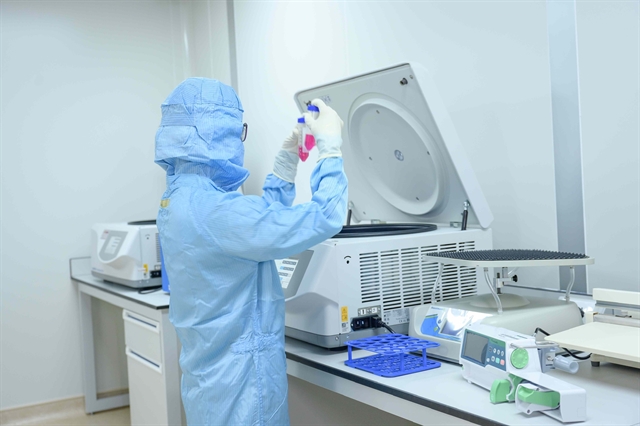 |
| Laboratory at the Vinmec Research Institute of Stem Cell and Gene Technology. — Photo courtesy of the Vinmec Research Institute of Stem Cell and Gene Technology |
HÀ NỘI — Vinmec Smart City Hospital in Hà Nội announced it has successfully applied CAR-T cell therapy for the first time to treat a 28-year-old female patient suffering from systemic lupus erythematosus with severe kidney damage.
Systemic lupus erythematosus is a chronic autoimmune disease in which the immune system mistakenly identifies healthy tissues as harmful agents and attacks the body itself, causing inflammation and damage to multiple organs, such as the skin, joints, kidneys, heart and brain.
The female patient was diagnosed with systemic lupus erythematosus complicated by glomerulonephritis in 2023. Despite treatment with various medications, she showed a poor response. Recently, her condition worsened, presenting with generalised oedema and severe, progressive renal damage.
Following a professional clinical assessment, the patient was selected to participate in a clinical trial for treating systemic lupus erythematosus using CAR-T immune cell therapy.
The programme is conducted by the Vinmec Research Institute of Stem Cell and Gene Technology in collaboration with the Department of Haematology at Vinmec Smart City General Hospital and the Department of Immunology and Allergy at Vinmec Times City International General Hospital.
A team of experts and scientists collected immune cells (specifically T-lymphocytes) from the patient to undergo gene transfer to create new immune cells known as CAR-T cells. These cells can recognise and eliminate the cells responsible for the disease.
This method has marked a breakthrough in the treatment of various malignant haematological conditions and is currently being investigated for application to autoimmune diseases, including refractory systemic lupus erythematosus.
Following the phase of chemotherapy aimed at eliminating disease-causing cells and preparing a suitable immune environment, the patient receives an infusion of CAR-T immune cells at a dosage individualised based on body weight.
During the post-infusion monitoring period, the patient developed cytokine release syndrome (CRS), a common manifestation of CAR-T therapy. Concurrently, chemotherapy-induced leukopenia heightened the risk of infection. The patient was continuously monitored within a sterile, positive-pressure isolation unit and received comprehensive, advanced supportive care.
However, thanks to the close coordination of the multidisciplinary team, all emerging symptoms were safely and effectively managed. After two weeks of treatment, the patient was discharged in stable condition.
Initial assessment results indicate robust proliferation of CAR-T immune cells following infusion. Notably, the population of pathogenic cells dropped to undetectable levels, demonstrating a positive biological response to the therapy.
The patient is currently undergoing regular outpatient monitoring to evaluate the long-term efficacy of the treatment and immune system recovery.
Professor Dr Nguyễn Thanh Liêm, Director of the Vinmec Research Institute of Stem Cell and Gene Technology, said: “This initial success has placed Việt Nam among the pioneering nations applying CAR-T therapy to treat systemic lupus erythematosus.”
Unlike traditional treatments that primarily manage symptoms or suppress the immune system, CAR-T therapy holds the potential to reset the immune system, thereby fundamentally addressing the root cause and restoring the patient's health.
As a pioneer approved by the Ministry of Health to conduct CAR-T clinical trials in Việt Nam, Vinmec is advancing research and application of advanced cell therapies, opening new prospects for treating autoimmune diseases. — VNS
Society
 Society
 Society
 Society
 Society
 Society
 Society
 Society
 Society
 Society
 Society
 Society
 Society
 Society
 Society