 Society
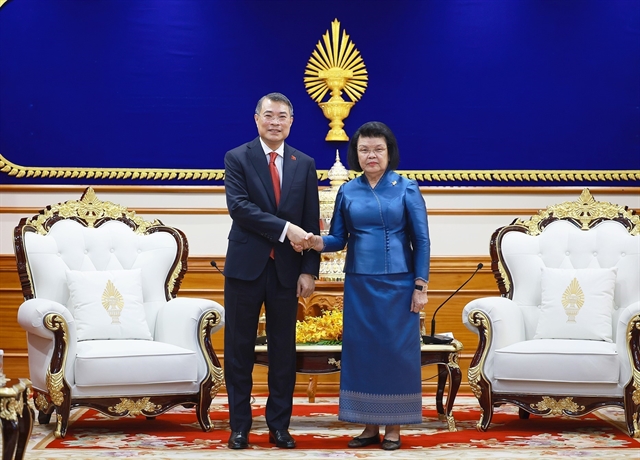
Vietnamese Prime Minister meets Cambodian National Assembly President
1.
|
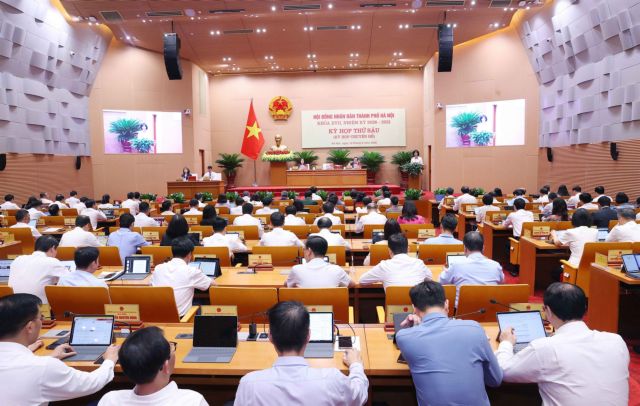
| Delegates at the sixth session of the 17th tenure of Hà Nội's People's Committee for the 2026-31 term on Monday. — VNA/VNS Photo |
HÀ NỘI — Hà Nội has approved the investment policy for a healthcare and elderly care complex under Hà Nội Medical University, with a preliminary total investment of approximately VNĐ14.22 trillion (US$546 million).
The decision was adopted on Monday by the city’s People’s Council at its sixth session of the 17th tenure for the 2026-31 term. It provides the basis for the city to proceed with a feasibility study, which will determine the official investment cost, funding sources, land fund for payment, investor selection method, and management and operation mechanisms in accordance with regulations.
The project will be developed in Hoàng Mai Ward, on a total area of approximately 9.26 hectares. It comprises three component projects, using different sources of funding and investment methods. The first and second component projects are expected to be completed in the fourth quarter of 2028, while the third component project is scheduled for completion in the fourth quarter of 2029.
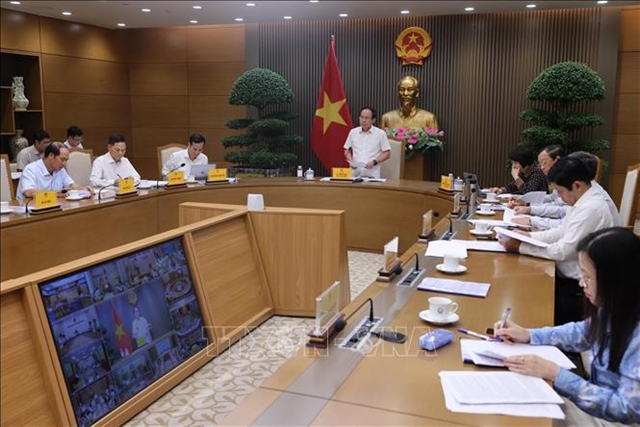
Deputy Chairwoman of the city’s People’s Committee Vũ Thu Hà said the project aims to establish an integrated complex combining healthcare, education, scientific research, technology transfer, long-term care and rehabilitation, while providing comprehensive healthcare services to the community, particularly older people.

|
| Deputy Chairwoman of the city’s People’s Committee Vũ Thu Hà speaks at the meeting. — VNA/VNS Photo |
The project will develop a high-quality healthcare complex equipped with modern technologies, including a general hospital and specialised centres with a combined capacity of 1,600 beds. The complex is expected to provide advanced, specialised medical services at the highest level of the healthcare system, commensurate with the leading role of Hà Nội Medical University Hospital and with a view to meeting international standards.
In addition to medical examination and treatment, the project will promote applied research, training and technology transfer in long-term care. It will also establish a specialised elderly healthcare model integrated with the broader healthcare system.
The care facilities will operate around the clock and provide long- and short-term care, elderly residential care, rehabilitation, nursing and assistance with daily activities, meeting the needs of older people with varying levels of illness and care requirements. The project also seeks to create a safe, convenient and age-friendly living environment, helping improve the quality of life of older people.
The overall project comprises three interconnected component projects in terms of infrastructure, functions, as well as development and operation.
The first component project involves construction of 1,600 beds Hà Nội Medical University Hospital, a facility for Hà Nội Medical University, and an elderly medical examination, treatment and healthcare facility. The project will use non-state budget capital and be implemented under the public-private partnership (PPP) model.
The second component project covers the procurement of medical and educational equipment for facilities under the first component project. Funding is expected to come from Hà Nội Medical University’s and Hà Nội Medical University Hospital’s funds for the development of public-service activities, as well as other lawful sources.
The third involves the construction of apartments for commercial purposes integrated with elderly healthcare services, using non-state budget capital.
In terms of investment structure, the project will be implemented under the PPP model, with build-transfer (BT) and build-operate-transfer (BOT) contracts expected to be applied.
During preparation of the feasibility study, the investor will be responsible for incorporating appraisal comments from relevant municipal departments and agencies, while comprehensively reviewing funding sources, total investment costs, the payment plan for the BT contract and the land fund to be used for payment.
Cost calculations must be accurate and comprehensive, consistent with the city’s capacity to balance resources, and comply with the principles of equal-value exchange, publicity and transparency. The project must clearly distinguish assets to be handed over to the State from those to be managed and operated by the investor, preventing duplicated costs or losses of public assets.
Under the preliminary plan, the city is considering a land fund totaling approximately 98.13 hectares in Vĩnh Thanh Commune and Hoàng Mai Ward for payment under the BT contract. The land fund is preliminarily valued at around VNĐ9.114 trillion, based on the land price framework set out in Resolution No. 52 of the Hà Nội People’s Council.
The location, area, planning information, value and method of land-based payment will be officially determined during the project preparation, appraisal and approval process in accordance with regulations.
Bạch Liên Hương, head of the Hà Nội People’s Council’s Committee for Culture and Social Affairs, said the committee basically agreed with the municipal People’s Committee’s proposal regarding the necessity, objectives, scale and investment methods of the project.
However, the appraisal body asked the city to further clarify the basis for determining the hospital’s 1,600-bed capacity and its projected capacity of around 10,000 outpatient visits per day, ensuring that these figures are consistent with actual demand and the facility’s operational capacity after completion.
Another issue of note is the proposed use of land to settle payments under the BT contract. The municipal People’s Committee needs to carefully review the land fund to ensure equal-value payment, consistency with planning and efficient use of land resources.
The division of the project into three component ones must also have a clear legal basis and ensure their independence, infrastructure connectivity, funding arrangements and investment methods. The city must clarify the investor selection process, arrangements for handing over and managing the facilities, and land-related financial obligations for commercially operated components, she said. — VNS
Society
 Society
 Society
 Society
 Society
 Society
 Society
 Society
 Society
 Society
 Society
.jfif) Society
Society
 Society
.jfif) Society
Society
.jfif) Society
Society