 Society
European higher education week opens new opportunities
1.
|
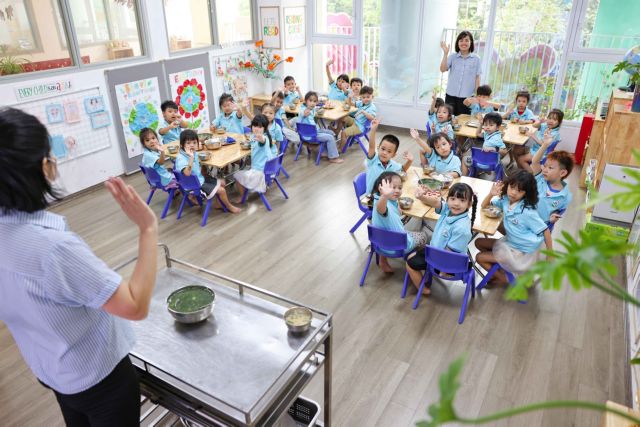
| Children enjoy lunch at Bà Triệu Kindergarten in Hà Nội. VNA/VNS Photo Thanh Tùng |
HÀ NỘI — With the 2026–2027 academic year just weeks away, Hà Nội is introducing a more rigorous and transparent system to oversee school lunch programmes, aiming to better protect the health of students while reassuring parents through tighter supervision and digital monitoring.
City authorities have moved to strengthen food safety controls across the entire school meal supply chain, from selecting catering providers to monitoring daily food preparation and distribution. Local administrations have been instructed to intensify inspections of school kitchens, catering companies and food suppliers before classes resume.
Food safety starts at the source
According to Đặng Thanh Phong, head of the Hà Nội Food Safety Department, ensuring food safety in schools is an ongoing responsibility rather than a seasonal campaign.
Even during the summer holiday, authorities continued inspecting childcare centres and kindergartens operating summer programmes, tracing the origins of food ingredients and requiring facilities that failed to meet food safety standards to rectify shortcomings or suspend operations.
The city's newly issued Guideline No 02 on school meal safety for the 2026–2027 academic year places particular emphasis on preventing risks at the earliest stage by strengthening supplier selection and introducing the HanoiCheck digital platform to manage menus and trace food ingredients.
The guideline also clearly assigns responsibilities to every authority involved in organising school lunch services, from assessing demand and selecting suppliers to conducting inspections, responding to incidents and supervising implementation, creating a unified management framework across the capital.
Ward- and commune-level People's Committees have been assigned a leading role in organising and overseeing school meal services in their localities. Besides selecting qualified suppliers and developing meal service plans, local governments are required to ensure schools comply with food safety regulations, prepare contingency plans for supply disruptions and carry out regular inspections.
|
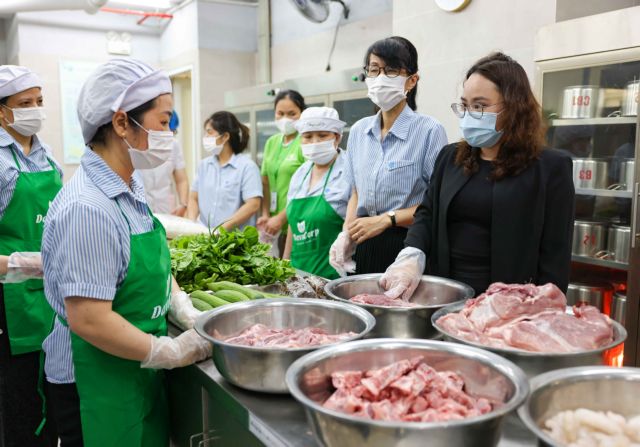
| An inter-agency inspection team from Cửa Nam Ward, led by Vice Chairwoman of the ward People's Committee Trịnh Ngọc Trâm, inspects the early-morning delivery of food, the quality of supplies provided by catering companies and food safety practices at local schools. VNA/VNS Photo Thanh Tùng |
Trần Thanh Nga, Vice Chairwoman of the People's Committee of Yên Sở Ward, said supplier selection now extends far beyond reviewing administrative documents.
Authorities also conduct on-site evaluations of food safety conditions, staffing, facilities, transport arrangements, traceability systems and quality control procedures before approving contractors. The entire process, from receiving applications and establishing evaluation panels to field inspections and publication of results, follows strict regulations.
After contracts are awarded, authorities will continue both scheduled and surprise inspections at schools and supplier facilities, focusing on ingredient sourcing, transportation, food preparation, meal distribution, implementation of the mandatory three-step food inspection process and food sample retention.
In Bồ Đề Ward, specialised departments have been tasked with reviewing food safety conditions at all schools and establishing steering committees and evaluation councils in line with Guideline No. 02.
Only suppliers meeting all legal requirements, demonstrating sufficient production capacity, complying with food safety standards and ensuring full ingredient traceability will be eligible to provide meals to students.
Đào Thị Hoa, Vice Chairwoman of the People's Committee of Bồ Đề Ward, said schools must strictly implement food origin inspections, the three-step food safety procedure and food sample retention while publicly disclosing menus, meal prices and supplier information.
She added that involving parents in school self-monitoring groups would provide an additional layer of oversight and further improve transparency.
Digital platform enhances transparency
A key feature of the city's new approach is the launch of HanoiCheck, a comprehensive digital database for school nutrition and food safety that will gradually replace paper-based records.
Developed by the Department of Science and Technology in cooperation with the Departments of Education and Training and Health, the platform supports the implementation of Politburo Resolution No. 72-NQ/TW on strengthening public healthcare and improving food safety management through digital transformation.
|
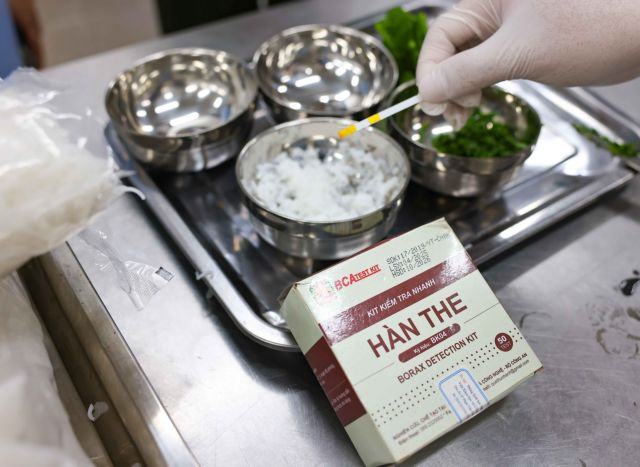
| The inspection team conducts rapid tests for pesticide residues in vegetable and fruit samples, checks noodle and phở samples for borax, and collects pork samples for laboratory testing to detect African swine fever virus strains. VNA/VNS Photo Thanh Tùng |
Vice Chairwoman of the Hà Nội People's Committee Vũ Thu Hà said the digital system would help authorities identify qualified suppliers, monitor food sources more effectively, improve meal quality and address weaknesses in previous management practices.
The city plans to deploy the platform across schools from the beginning of the new academic year, with a strong emphasis on accountability, transparency and continuous supervision.
For parents, the system will provide easier access to information on school menus, food origins and catering providers, making it simpler to monitor meal quality and increasing confidence in school lunch programmes.
Đoàn Xuân Diệu, whose child has just entered Grade 1 at Nghĩa Đô Primary School, said concerns over recent food safety incidents had made many parents more cautious when registering their children for school lunches.
As his family cannot collect their child during the school day, they rely on the school's boarding meal service. He believes HanoiCheck will give parents greater reassurance by making key information about menus, ingredients and suppliers readily available.
Schools will also continue their own daily supervision.
Nguyễn Thanh Hà, Vice Principal of Võ Thị Sáu Primary School in Cửa Nam Ward, said that although local authorities will be responsible for selecting food suppliers, schools will maintain strict daily monitoring of meal quality.
If any meals fail to meet food safety or quality standards, schools will document the violations, require suppliers to take immediate corrective action and report the cases to the relevant authorities.
In addition to conducting more surprise inspections and using digital traceability tools, schools will regularly gather feedback from both students and parents to improve menus.
With the new academic year fast approaching, Hà Nội's integrated approach to managing school meals is expected to strengthen food safety, improve accountability and reinforce parents' trust.
By combining stricter oversight, clearly defined responsibilities, digital technology and greater parental involvement, the city aims to ensure that every school meal is safe, nutritious and transparently managed, creating a healthier learning environment for students. — VNS
Society
 Society
 Society
 Society
 Society
 Society
.jfif) Society
Society
.jfif) Society
Society
 Society
 Society
 Society
 Society
 Society
 Society
 Society