 Opinion
Deputy PM calls for tighter price management of essential goods
1.
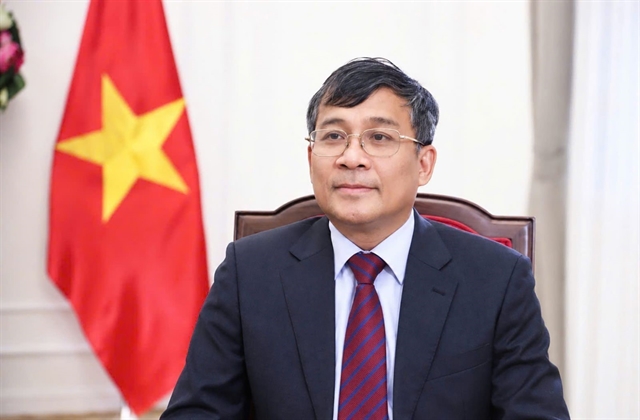
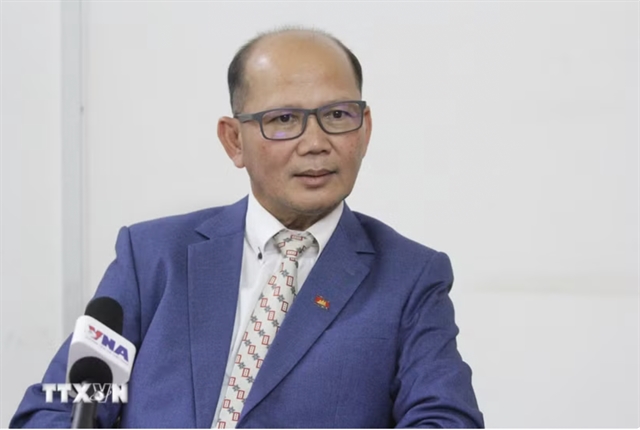
In light of the ongoing visit to Australia by General Secretary of the Communist Party of Việt Nam Central Committee and State President Tô Lâm, Việt Nam News reporters Khánh Chi and Thu Hằng spoke to Assoc Prof Dr Nguyễn Mạnh Hùng, National Director of the Vietnam Australia Centre (VAC), which came into being in June 2022 following a joint Prime Ministers' statement in August 2019. As a centrepiece of Australia’s development partnership with Việt Nam, VAC offers flagship leadership capability development program and policy advisory and research services.
Since its inception, what have been the Centre’s most significant contributions to strengthening the strategic partnership between the two nations?
The VAC has helped translate the high level of political trust between Việt Nam and Australia into practical, sustained and institution-to-institution cooperation.
First, we have established a trusted platform for leadership development. The VAC is jointly shaped by the priorities of the two governments and is closely connected to the Hồ Chí Minh National Academy of Politics (HCMA), which trains Việt Nam’s current and future leaders. This gives Australian institutions a valuable opportunity to work directly with Vietnamese government officials, while enabling Vietnamese participants to learn from Australia’s experience in public governance, international engagement and policy implementation. Between June 2022 and May 2025, VAC activities engaged more than 5,000 participants from different ministries, agencies and provinces.
Programmes such as the Strategic Leadership Certificate, Advanced Political Theory workshops, Women in Leadership Journey and specialist capacity-building courses have strengthened strategic thinking, digital-age leadership, inclusive governance and sustainable-development capabilities. Since 2022, VAC and HCMA have also jointly delivered seven Advanced Political Theory leadership workshops.
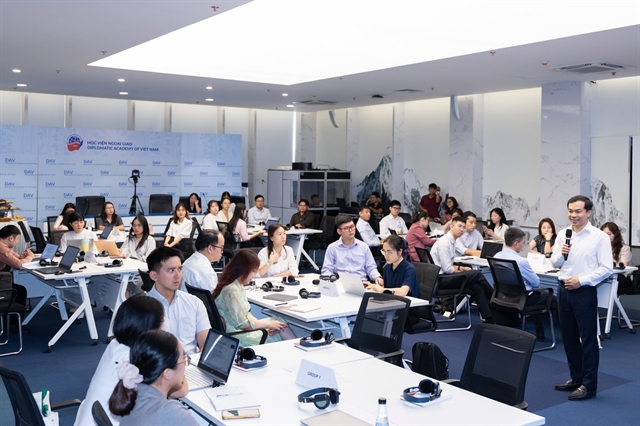 |
| Assoc Prof Dr Nguyễn Mạnh Hùng, National Director of the Vietnam Australia Centre, delivers a keynote speech on strategic framework for diplomatic speechwriting. |
Second, the VAC has strengthened the connection between research and policymaking. The Centre has supported a six-study research series on 40 years of Đổi Mới (Renewal), with reports relating to administrative reform and evidence-informed policy advice. It has convened the Vietnam–Australia Forum, policy dialogues, regional exchanges and activities involving ministries, provinces, universities and research organisations.
Third, we have built durable professional and people-to-people networks. Study visits, workplace application projects, alumni engagement and exchanges with Australian universities, government agencies and experts have created relationships that continue beyond individual courses. These networks increase mutual understanding and enable officials from both countries to work together on emerging issues such as digital transformation, green growth, institutional reform and social inclusion.
Therefore, the VAC is not simply a training project. It has become a bridge for policy knowledge and institutional cooperation, contributing to the stronger foundation on which the Comprehensive Strategic Partnership now rests.
What strategic recommendations is the VAC providing to Australian leaders to ensure that bilateral cooperation supports Việt Nam’s progress toward becoming a high-income developed nation by 2045?
First, cooperation should focus on the fundamental drivers of a high-income economy: institutional quality, productivity, innovation, high-quality human resources and climate resilience. Australia’s Development Partnership Plan for 2025–2030 already identifies four closely connected objectives: a prosperous and sustainable economy; stronger human resources; greater climate resilience and emissions reduction; and inclusive socioeconomic development. It also prioritises innovation and digital capacity, leadership development, policy research, education exchanges and stronger industry linkages.
Second, Australia should increasingly focus on long-term institutional partnerships. Cooperation should link Australian government agencies, universities, research institutions and businesses with their Vietnamese counterparts. This could include sustained partnerships in digital government, applied research, innovation policy, higher education, vocational skills, clean energy, climate-smart development and modern public administration. Australia’s current approach already envisages stronger engagement involving economic-policy agencies, Austrade, CSIRO and the private sectors of both countries.
Third, cooperation in governance, science, technology, innovation and human resource development must be connected directly to economic transformation. Bilateral initiatives should help Vietnam improve university–industry cooperation, technology adoption by enterprises, digital capabilities among small and medium-sized businesses, participation in higher-value global supply chains, and good governance. The objective should be not only knowledge transfer, but also the joint creation, adaptation and application of knowledge.
Fourth, support should be locally grounded and results-oriented. National-level dialogue should be accompanied by pilot initiatives in provinces, universities and public institutions. Successful models can then be evaluated, adapted and scaled through Vietnamese systems. We should measure not merely the number of workshops or participants, but improvement in institutional performance, professional practice and bilateral networks.
Finally, we recommend greater coordination across Australia’s different cooperation instruments. There are opportunities to strengthen links among Australian government agencies and programs in skills, innovation, adaptation and infrastructure. VAC can serve as a strategic interface—helping Australian leaders understand Vietnam’s evolving priorities and connecting Australian capabilities with the Vietnamese institutions best placed to produce impact.
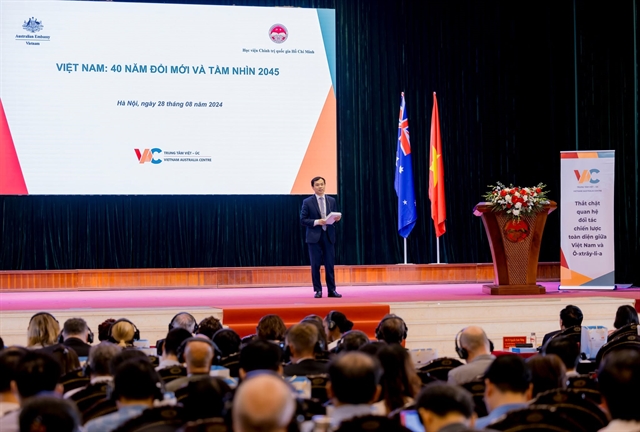 |
| Assoc Prof Dr Nguyễn Mạnh Hùng delivers a keynote speech at the Vietnam-Australia Forum 2024. |
What specific plans will the VAC have to help Việt Nam develop high-quality human resources, especially in science, technology and innovation?
The VAC should not seek to duplicate the role of a technical university or scientific institute. Our distinctive contribution is to develop the leaders, policymakers, lecturers, researchers and institutional networks that enable good governane, leadership and innovation to flourish.
In the next phase, subject to agreement between the two governments, our plans will be organised around three interconnected levels: people, institutions and the wider innovation ecosystem.
At the individual level, we propose to establish a dedicated leadership stream on innovative governance. It would serve senior officials, emerging leaders, university managers and policy advisers. Possible modules would include innovation-system governance, artificial intelligence and data governance, digital public services, research financing, university–industry cooperation, and responsible innovation. Programmes would combine learning in Việt Nam and Australia with mentoring, field visits and workplace application projects.
At the institutional level, VAC will strengthen train-the-trainer programmes and jointly developed curricula for HCMA, regional academies and relevant Vietnamese institutions. We intend to develop Vietnamese–Australian case studies, digital learning resources and communities of practice so that knowledge can be disseminated well beyond the original participants. Longer-term expert exchanges and institutional partnerships with Australian government agencies, universities and research organisations would also help build sustainable local capacity.
At the policy level, we propose a joint research and rapid-advisory mechanism bringing together Vietnamese and Australian experts. It would produce policy briefs and recommendations on emerging issues of both countries’ interests.
At the ecosystem level, VAC plans to convene regular policy forums on national governance, innovation, digital transformation and green transition, while connecting Vietnamese ministries, universities, research institutes and businesses with Australian partners.
We will also give greater attention to women in leadership, young and emerging leaders, provincial institutions and areas outside the major cities. Selection, mentoring and alumni mechanisms will be designed to ensure that opportunities are inclusive and that graduates remain connected to one another.
Most importantly, we will evaluate success by application and impact: whether participants introduce better policies, establish new partnerships, improve their institutions, develop innovative solutions and mentor the next generation. Our ambition is not simply to train more individuals, but to help Việt Nam build a sustainable pipeline of leaders capable of governing technological change, converting knowledge into productivity and ensuring that innovation serves national development and the public good. VNS
Opinion
 Opinion
 Opinion
 Opinion
 Opinion
 Opinion
 Opinion
 Opinion
 Opinion
 Opinion
 Opinion
 Opinion
 Opinion
 Opinion
 Opinion