 Opinion

HIIVE by fusion brings business and golf closer in Bình Dương
1.
 |
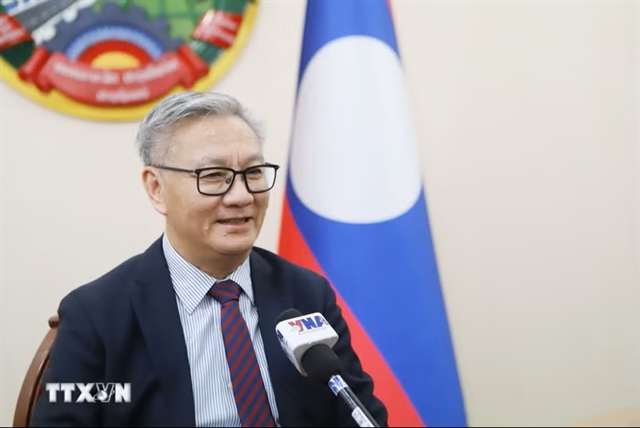
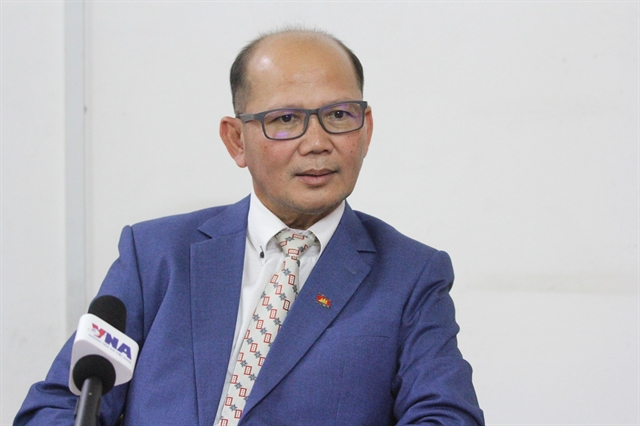
| Collins Chong Yew Keat, a foreign affairs, security and strategy analyst at the University of Malaya. — VNA/VNS Photo |
KUALA LUMPUR — Malaysian Defence Minister Mohamed Khaled bin Nordin's official visit to Việt Nam has set a strategic agenda for expanding bilateral defence cooperation and advancing a more practical partnership, according to Collins Chong Yew Keat, a foreign affairs, security and strategy analyst at the University of Malaya.
The visit, made on August 5 and 6 at the invitation of Deputy Prime Minister and Minister of National Defence General Phan Văn Giang, came after the two countries extended their memorandum of understanding (MoU) on bilateral defence cooperation in December 2023 and upgraded ties to a Comprehensive Strategic Partnership in November 2024.
In an interview granted to the Vietnam News Agency’s correspondents in Malaysia, Collins said the visit's foremost achievement was the strong political support demonstrated by both governments.
During a meeting with Malaysian Defence Minister Mohamed Khaled, Prime Minister Lê Minh Hưng welcomed closer defence cooperation within the long-term framework of the Comprehensive Strategic Partnership, the expert said, underscoring that defence cooperation complements broader political, economic, technological and diplomatic ties, creating favourable conditions for the two sides to move from exploratory discussions to practical cooperation programmes.
According to the expert, another key outcome was the reaffirmation of the 2023 defence cooperation MoU and the Action Programme for implementing the Comprehensive Strategic Partnership as the principal roadmap for future collaboration. The framework builds on existing cooperation in delegation exchanges, consultation mechanisms, military education, defence industry, and coordination within ASEAN and other multilateral forums.
Maritime cooperation has emerged as the clearest strategic priority, he noted. Both countries support regular consultations, closer interaction among maritime law enforcement agencies, assistance for fishermen in distress, and peaceful management of maritime disputes in accordance with international law.
The two sides also reaffirmed the importance of the 1982 United Nations Convention on the Law of the Sea (UNCLOS), the full implementation of the Declaration on the Conduct of Parties in the East Sea (DOC), and the early conclusion of an effective and substantive Code of Conduct (COC).
The visit outlined a concrete agenda for education and training cooperation, he said, noting that bilingual programmes, faculty exchanges, officer training courses, and reciprocal visits between military academies are cost-effective initiatives with the potential to deliver significant long-term benefits. Over time, they can help build a network of officers who share a common professional vocabulary, understand each other's institutional culture, and are able to communicate directly during emergencies or in multinational operations.
Meanwhile, defence industry cooperation received fresh momentum through Việt Nam's invitation to Malaysian defence leaders, armed forces representatives and companies to participate in the third Việt Nam International Defence Expo this year. While the event could help identify potential projects and partners, Collins said procurement deals, technology transfer and joint production would require sustained follow-up beyond participation.
The expert said the visit has brought political trust, shared maritime interests and ASEAN priorities closer together through a more practical cooperation agenda. For Malaysia, it strengthens maritime resilience, defence diversification and ASEAN-centred regional security. For Việt Nam, it expands capacity building, maritime risk management mechanisms and a broader network of trusted defence partners. For ASEAN, the visit demonstrates how stronger bilateral cooperation can reinforce regional institutions.
The visit's lasting value will ultimately depend on both countries' ability to translate their commitments into sustained cooperation, stronger professional networks, and measurable security outcomes, Collins said.
Looking ahead, the analyst said the most effective approach would be to focus on maritime security, cyber resilience, humanitarian assistance, military education, and carefully selected defence industry projects. Such cooperation, he added, would strengthen both countries' capabilities while enhancing ASEAN's capacity to manage an increasingly competitive regional environment. — VNA/VNS
Opinion
 Opinion
 Opinion
 Opinion
 Opinion
 Opinion
 Opinion
 Opinion
 Opinion
 Opinion
 Opinion
 Opinion
 Opinion
 Opinion
 Opinion