 Brandinfo
Understanding skin ageing key to more effective rejuvenation, dermatologist says
1.
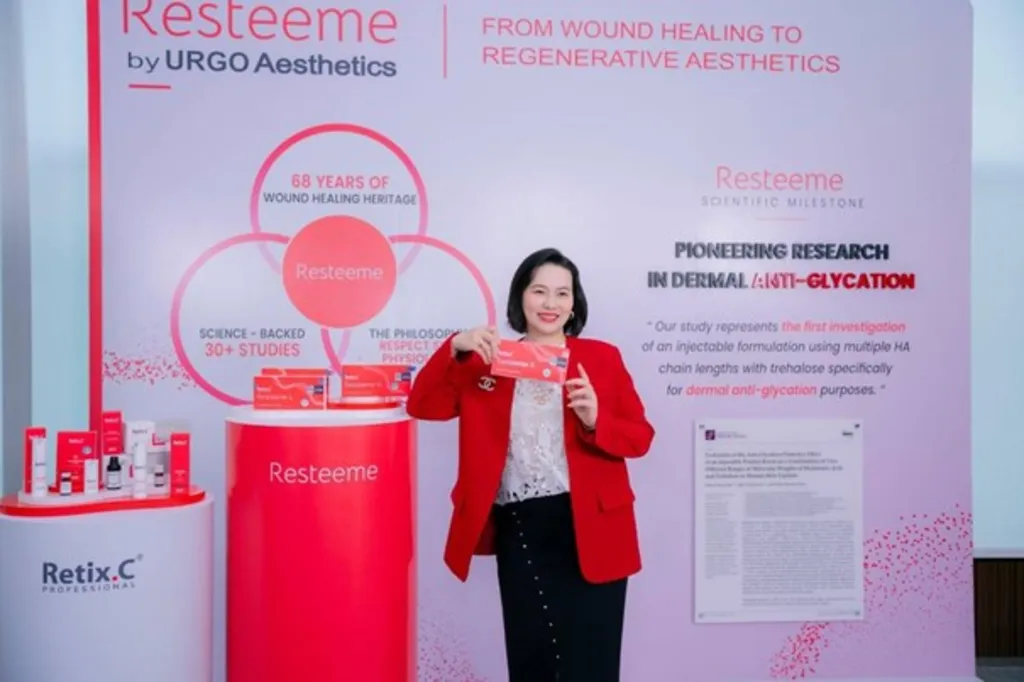 |
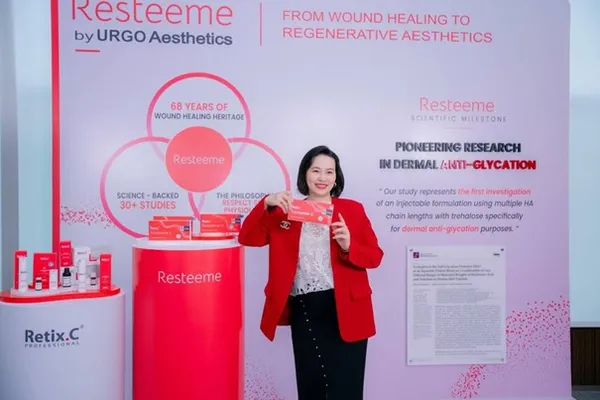
| Dr Nguyễn Phương Thảo at the launch of Resteeme by URGO Aesthetics in Việt Nam |
HCM CITY — Many women have tried various skin rejuvenation treatments but still struggle with wrinkles, sagging skin or a loss of elasticity. According to Dr Nguyễn Phương Thảo, understanding the underlying causes of skin ageing is essential to achieving better results, and one often overlooked factor is a biological process known as glycation.
Dr Thảo, who holds a master’s degree and a Specialist Level II qualification, is medical director and founder of the Pensilia Dermatology and Aesthetic Clinic system. On October 21, she attended the launch of Resteeme by URGO Aesthetics in HCM City.
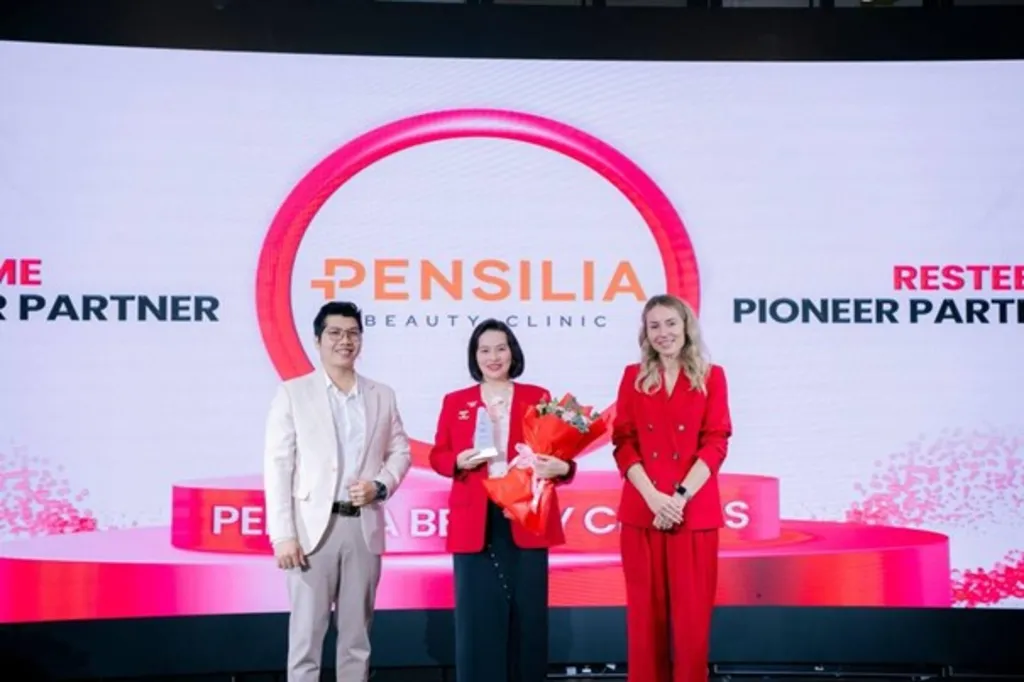
At the event, she received the Clinical Expert Retix.C certification from URGO Aesthetics and NZ Group in recognition of her professional expertise and role in supporting the development of Retix.C in Việt Nam. Pensilia Beauty Clinics also received the Resteeme Pioneer commemorative award.
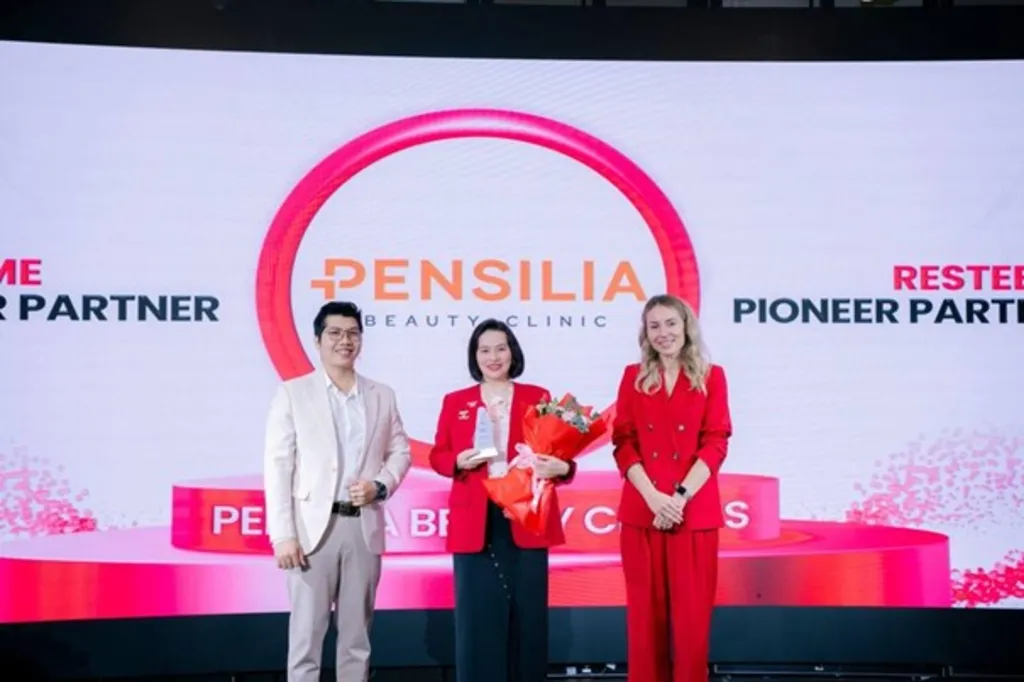 |
| Pensilia Beauty Clinics receives the Resteeme Pioneer award from NZ Group at the Resteeme launch event in Việt Nam |
On the occasion, Dr Thảo discussed why skin rejuvenation treatments do not always meet patients’ expectations, as well as the role of emerging active ingredients in skincare and in addressing age-related skin changes.
Why do some women spend considerable time and money on skin rejuvenation treatments but still have wrinkles and sagging skin?
I see quite a few patients who have tried different rejuvenation treatments but remain unhappy with the results. Some are concerned about wrinkles, others notice sagging, while some simply want their skin to look smoother, firmer and more radiant. Although these concerns may appear similar, their underlying causes can be quite different.
Skin ageing is influenced by many factors, including age, sun exposure, hormonal changes, oxidative stress and glycation. Over time, changes in facial fat distribution and the underlying supporting structures also contribute to an older appearance.
For example, if someone is experiencing facial volume loss, focusing solely on hydration is unlikely to produce the results they expect. Similarly, a patient may undergo a skin-tightening procedure but still have dry or rough skin because overall skin quality has not been adequately addressed.
That is why, before recommending any treatment, I try to understand what is actually causing the changes in each patient’s appearance.
You mentioned glycation. What is this process, and how does it affect skin ageing?
Glycation is a process in which sugars react with proteins and other molecules in the body. Over time, these reactions can lead to the formation of advanced glycation end products, commonly known as AGEs.
Put simply, collagen and elastin form a network of fibres that helps keep our skin firm and elastic. When these proteins are affected by glycation, abnormal cross-links can form between them, making the fibres less flexible. This is one of the mechanisms that can contribute to reduced skin elasticity and the development of wrinkles as we age.
However, not every wrinkle or sign of sagging is caused by glycation. Sun exposure, genetics, hormonal changes and many other factors also influence how quickly our skin ages. Doctors need to consider the overall condition of the skin rather than attributing all visible signs of ageing to a single cause.
How can someone tell whether their skin is affected by glycation? Are there treatments that can help?
It is not possible to determine the exact degree of glycation in the skin simply by looking at it.
During a consultation, the doctor assesses skin elasticity, hydration levels, wrinkles, the degree of sagging and the treatments the patient has previously undergone. Based on these findings, we can consider whether the priority should be improving skin quality, restoring structural support or combining different treatment approaches.
Researchers are also investigating active ingredients that may help protect skin structures from the effects of glycation. One promising area of research involves combining hyaluronic acid (HA) with trehalose.
This combination is used in Resteeme X, an injectable product in the Retix.C range developed by URGO Aesthetics. It is also part of Pensilia Beauty Clinic’s proprietary Pen Renew treatment protocol.
What makes trehalose special when combined with hyaluronic acid? Could you explain it in simple terms?
HA is a naturally occurring substance in our skin that can retain water. It helps maintain skin hydration and supports the environment needed for normal cell function.
Trehalose, on the other hand, is a disaccharide, or double sugar, that has been studied for its ability to stabilise and protect biological molecules under unfavourable conditions. What makes the combination interesting is the way the two ingredients may complement each other.
Normally, HA is gradually broken down by enzymes in the body, including one called hyaluronidase. Some laboratory experiments have shown that trehalose may help reduce the breakdown of HA by this enzyme.
In simple terms, HA helps retain moisture, while trehalose is being investigated for its potential to protect HA and help maintain its stability under laboratory conditions.
In addition, a study published in 2025 using human skin tissue found that a formulation combining HA and trehalose reduced certain markers associated with glycation.
These findings are encouraging, but it is important to understand that results obtained from experiments on skin tissue do not necessarily mean that the same rejuvenating effects have been demonstrated in people receiving injections.
In my view, the value of these studies is that they help us better understand how these ingredients work and provide a scientific basis for considering their use in treatment. However, actual results still need to be evaluated and monitored in individual patients.
How has Pensilia incorporated the three Resteeme products into its Pen Renew protocol to address different signs of skin ageing?
When developing Pen Renew, I did not want it to be just another injectable skin booster treatment. As I mentioned earlier, skin ageing involves several different processes. If we focus on only one aspect, the results may not fully meet the patient’s expectations.
 |
| Dr Nguyễn Phương Thảo receives the Clinical Expert Retix.C certification from URGO Aesthetics |
One distinctive feature of Pen Renew is the combination of all three Resteeme products — X, L and H. Each has its own characteristics and serves a different purpose within the overall rejuvenation plan.
For example, Resteeme X combines HA and trehalose and is intended to support improvements in overall skin quality. Resteeme L is used when additional structural support or lifting is indicated, while Resteeme H focuses on improving skin hydration and quality in suitable treatment areas.
However, receiving injections of all three Resteeme products does not, by itself, constitute the complete Pen Renew protocol.
At Pensilia, we also use technologies such as LDM, radiofrequency (RF) and other skincare procedures. Each technology works through a different mechanism, and the doctor incorporates them into a treatment plan designed to address multiple signs of ageing rather than a single concern.
Some steps are intended to prepare the skin and improve its condition, while others aim to address firmness and elasticity. The timing and sequence of these treatments are also important.
With Pen Renew, the doctor personally examines the patient, assesses the signs of ageing and determines whether the full protocol is appropriate before proceeding. We then tailor the technologies, treatment techniques and overall schedule to each patient’s skin condition.
For women who have already spent considerable sums on rejuvenation treatments without achieving the results they hoped for, I believe the first step should be to reassess their skin rather than immediately look for a more expensive technology. We need to understand which concerns have not yet been adequately addressed.
That is precisely why Pensilia developed Pen Renew as a comprehensive protocol combining multiple approaches, rather than simply offering a single injectable product or a single skin rejuvenation technology. — VNS
Pensilia Dermatology and Aesthetic Clinic system
• Pensilia Nguyễn Đình Chiểu: 411/2–413–415 Nguyễn Đình Chiểu Street, Bàn Cờ Ward, HCM City. Medical operating licence Nos. 09422/HCM-GPHĐ (dermatology) and 05026/HCM-GPHĐ (aesthetics).
• Pensilia Vũng Tàu: 551 Trương Công Định Street, Tam Thắng Ward, HCM City. Medical operating licence No. 07646/HCM-GPHĐ.
• Pensilia Biên Hòa: 1096 Phạm Văn Thuận Street, Tam Hiệp Ward, Đồng Nai City. Medical operating licence No. 2730/ĐNAI-GPHĐ.
Hotline: +84 938 777 885 | Website: pensilia.com
Opening hours: 9am–8.30pm (Pensilia Biên Hòa: 5pm–9pm Monday to Friday; 1.30pm–9pm Saturday and Sunday).
Brandinfo
 Brandinfo
 Brandinfo
 Brandinfo
 Brandinfo
 Brandinfo
 Brandinfo
 Brandinfo
 Brandinfo
 Brandinfo
 Brandinfo
 Brandinfo
 Brandinfo
 Brandinfo
 Brandinfo