Building a multi-value, sustainably developed forestry sector
1.
|
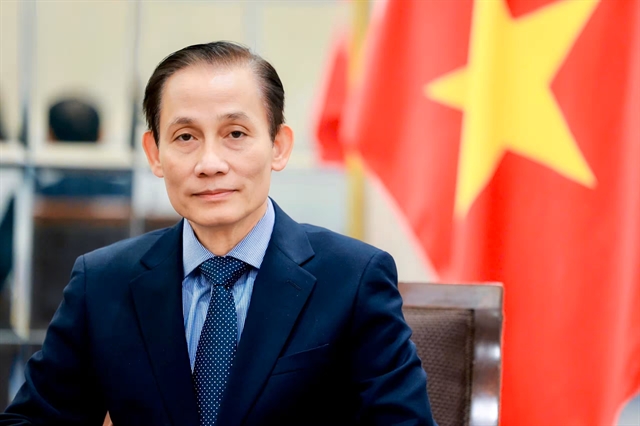
| Politburo member, Minister of Foreign Affairs Lê Hoài Trung. — Photo from the foreign ministry |
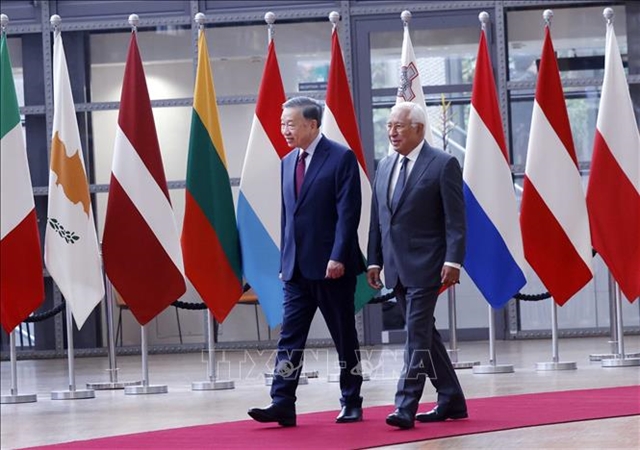
HÀ NỘI — Việt Nam and its European partners have discussed prospective investment projects worth around €20 billion (US$2.4 billion) following General Secretary of the Communist Party of Việt Nam Central Committee and State President Tô Lâm’s State visit to Denmark and official visits to the European Union (EU) and Belgium, Minister of Foreign Affairs Lê Hoài Trung has said.
Minister Trung said these visits were a success that elevated relations with the three partners and opened up new opportunities for substantive cooperation in trade, investment, green energy, infrastructure, science and technology, in an interview with the media on the visits.
The trips helped strengthen political trust, expand Việt Nam's network of reliable partners and reinforce its ties with Europe amid profound changes in the international landscape, he said.
A major outcome was Việt Nam and Denmark’s agreement to elevate bilateral relations to a Comprehensive Strategic Partnership, making Denmark the second EU member state to establish such a partnership with Việt Nam after France.
Minister Trung said Denmark regarded Việt Nam as a leading partner and a strategic gateway to Southeast Asia. The two countries agreed to make economic, trade and investment cooperation a key pillar of their upgraded relationship, alongside expanded collaboration in renewable energy, offshore wind power, green transition, seaports, logistics and green maritime transport.
The agreement builds on 55 years of traditional friendship, with both sides expressing their commitment to deepening cooperation across politics, diplomacy, economics, science and technology, and education and training.
The trip also helped expand cooperation between Việt Nam and the EU beyond conventional trade, investment attraction and technology transfer towards stronger connections among research institutions, universities and businesses.
Under this approach, the partners aim to conduct joint research, develop and apply technologies, create shared products and participate more deeply in global value chains and supply chains, Trung said.
Discussions covered science and technology, innovation, critical raw materials, strategic infrastructure, the circular economy and the maritime economy. Both sides also agreed to make more effective use of existing cooperation frameworks, including the EU’s Global Gateway initiative, the Just Energy Transition Partnership (JETP) and Horizon Europe.
Việt Nam and the EU agreed to strengthen strategic dialogue and expand cooperation in emerging areas, including defence and security, maritime security and responses to non-traditional security challenges.
In Belgium, the federal parliament’s approval of the EU–Việt Nam Investment Protection Agreement (EVIPA) shortly before the official programme began was a positive signal of the country’s commitment to bilateral relations, the foreign minister said.
The two sides agreed on a shared vision of upgrading relations to a Strategic Partnership, reflecting the growing breadth of their cooperation beyond the existing sectoral strategic partnership in agriculture.
Potential areas for flagship projects include seaports, logistics, clean energy, science and technology, and high-quality human resource training. Engagements with Belgian regional and local authorities, alongside federal-level exchanges, also created opportunities to broaden and deepen cooperation.
Trung noted that European leaders and business communities appreciated Việt Nam's development policies, particularly efforts to improve institutions, develop infrastructure and enhance human resource quality.
They also encouraged Việt Nam to maintain a stable, transparent, consistent and predictable legal and policy environment to facilitate long-term cooperation and investment.
Turning commitments into concrete projects
Beyond diplomatic outcomes, the visits created opportunities to mobilise additional resources for Việt Nam's socio-economic development. European corporations and businesses presented plans and prospective projects for Việt Nam with a preliminary combined value of around €20 billion, while ministries, localities and companies signed a number of cooperation documents and agreements.
Việt Nam and its European partners also agreed to make more effective use of the EU–Việt Nam Free Trade Agreement (EVFTA), promote trade and investment, and address outstanding difficulties.
Việt Nam called on the remaining EU member states to ratify EVIPA as soon as possible and urged the EU to remove its 'yellow card' warning over illegal, unreported and unregulated (IUU) fishing against Vietnamese seafood.
At the multilateral level, the partners reaffirmed their commitment to multilateralism, the United Nations Charter, international law and the peaceful settlement of disputes. They also agreed to strengthen coordination at multilateral forums and promote ASEAN–EU relations, contributing to peace, stability and sustainable development.
Trung stressed that the key task following the visits was to translate shared understandings, high-level commitments and agreements into concrete programmes, projects and products.
First, relevant Vietnamese ministries, agencies and localities will work closely with their counterparts to develop action plans with clearly defined responsibilities, implementing agencies, resources, timelines and measurable outcomes.
Second, both sides will make better use of existing cooperation mechanisms and the EVFTA, while advancing EVIPA’s ratification and strengthening Vietnamese businesses’ capacity to meet EU standards on the environment, sustainable development, traceability and social responsibility.
Third, Việt Nam will prioritise strategic and feasible projects that deliver tangible results. Cooperation with Denmark will focus on energy transition, offshore wind power, seaport infrastructure and green logistics. With the EU, Việt Nam will proactively propose projects under Global Gateway, JETP and Horizon Europe, as well as in strategic technology sectors. Cooperation with Belgium will prioritise seaports, logistics, clean energy, science and technology and high-quality workforce training.
Trung also emphasised the role of ministries, local authorities, businesses, universities and research institutes in identifying and implementing cooperation opportunities.
Việt Nam needs to strengthen links between research and the market, moving beyond technology acquisition towards joint research, production and product development, thereby gradually enhancing its capacity to master technologies, he said.
The foreign minister expressed confidence that, with strong political commitment and proactive, practical implementation by all stakeholders, Việt Nam's relations with Denmark, the EU and Belgium would continue to develop in depth and effectiveness, serving the interests of their peoples and contributing to peace, stability, cooperation and development regionally and globally. — VNS
 Opinion
 Opinion
 Opinion
 Opinion
 Opinion
 Opinion
 Opinion
.jpg) Opinion
 Opinion
 Opinion
 Opinion
 Opinion
 Opinion
 Opinion