.jpg) Opinion
It's time to translate Việt Nam - France leaders' priorities into concrete actions: minister
1.
|
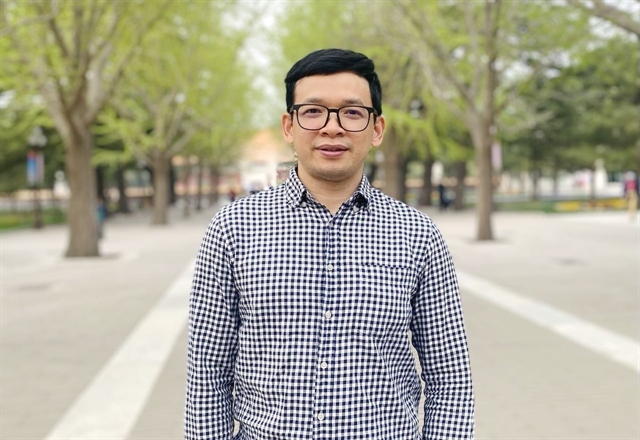
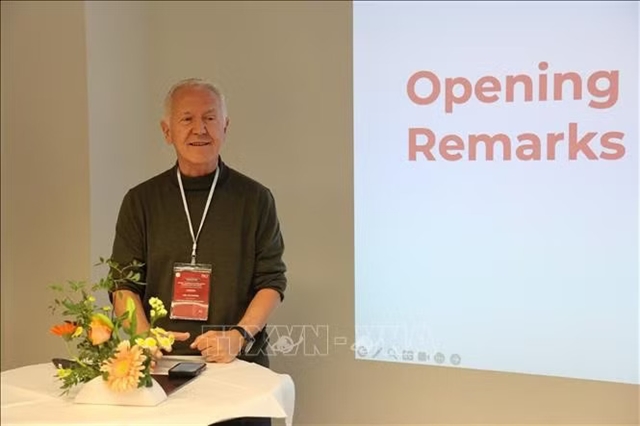
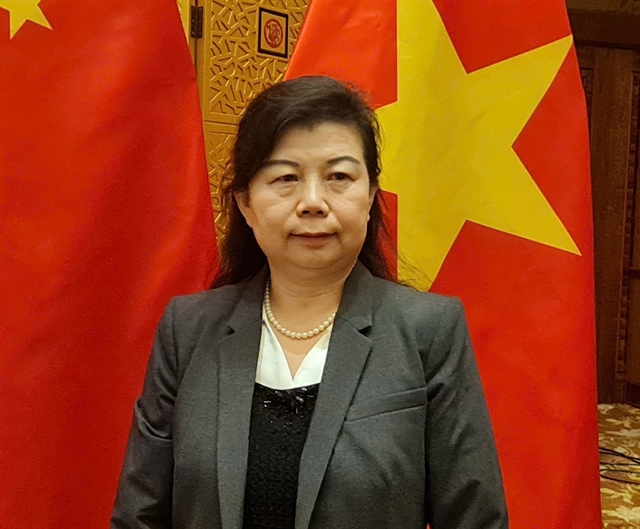
| Associate Professor Nguyễn Quốc Hưng of the Academy of Mathematics and Systems Science (AMSS) under the Chinese Academy of Sciences. — VNA/VNS Photo |
BEIJING — Politburo Resolution No. 23-NQ/TW has created opportunities for overseas Vietnamese to contribute directly to national development through their expertise, experience and international networks, said Associate Professor Nguyễn Quốc Hưng of the Academy of Mathematics and Systems Science (AMSS) under the Chinese Academy of Sciences.
In an interview with Vietnam News Agency correspondents in Beijing onResolution No. 23-NQ/TW on overseas Vietnamese affairs, Hưng noted that General Secretary of the Communist Party of Việt Nam Central Committee and President Tô Lâm's repeated emphasis on engaging overseas intellectuals and talented Vietnamese during foreign visits reflected the highest-level attention to the issue.
In conjunction with Politburo Resolution No. 57-NQ/TW on breakthroughs in science, technology, innovation and national digital transformation, this presented an opportunity to connect overseas expertise with Việt Nam's specific development needs.
Hưng said scientists needed favourable working conditions, opportunities to advance research and train younger generations, and a stable family life if they were to consider returning home for the long term.
Drawing on his experience at AMSS, the Vietnamese academic said attracting researchers required more than competitive salaries. A strong professional environment, talented colleagues, opportunities to mentor young scientists and sufficient time for research were equally important. He proposed four measures to strengthen engagement with overseas Vietnamese talent.
First, Việt Nam should expand flexible forms of contribution without requiring professionals to relocate permanently. Overseas researchers could serve as visiting professors, co-supervise doctoral students, establish joint research groups or deliver specialised courses in Việt Nam. Appropriate contracts and funding mechanisms would help sustain such cooperation. The programmes of the Việt Nam Institute for Advanced Study in Mathematics (VIASM) could serve as a model for other disciplines.
Second, the country should ensure stable, multi-year research funding while granting scientists professional autonomy alongside accountability. Researchers should be able to build teams, select research directions and manage allocated budgets, with simplified administrative procedures allowing them to focus on their work. Evaluation should reflect the characteristics of each discipline, prioritise research quality and long-term contributions, and involve respected domestic and international experts.
Third, greater investment in young researchers is essential. Doctoral scholarships and postdoctoral salaries should be sufficient to allow researchers to pursue their work with confidence. Opportunities to collaborate with leading domestic and international research groups would also strengthen Việt Nam's scientific capacity and lay the foundation for lasting partnerships with overseas Vietnamese intellectuals.
Fourth, cooperation should extend beyond academia to Vietnamese experts working at major technology corporations and research and development institutions. In fields such as artificial intelligence, semiconductors and biotechnology, they could provide consultancy, train local professionals and participate in joint projects with Vietnamese universities, research institutes and businesses.
For those returning to work in Việt Nam permanently, Hưng stressed the need for competitive remuneration commensurate with their expertise and responsibilities, alongside favourable working conditions that would enable them to maximise their potential. — VNA/VNS
Opinion
 Opinion
 Opinion
 Opinion
 Opinion
 Opinion
 Opinion
 Opinion
 Opinion
 Opinion
 Opinion
 Opinion
 Opinion
 Opinion
 Opinion