Opinion
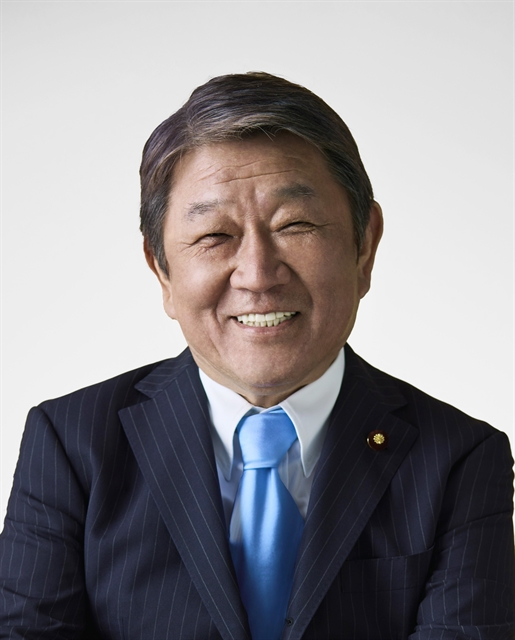
Top Vietnamese leader’s visit to elevate Việt Nam–Japan ties to new heights: Japanese FM
1.
|
|
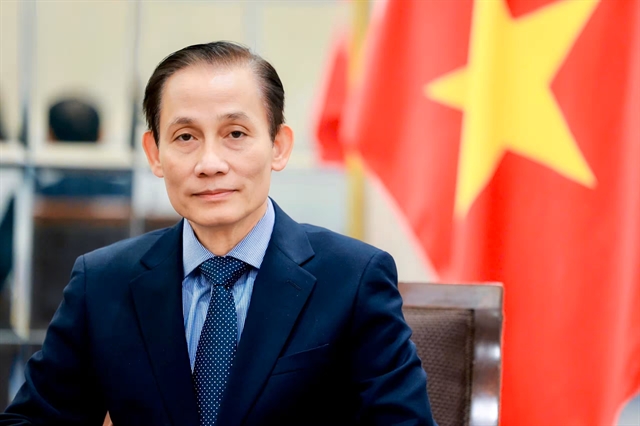
| Japanese Minister for Foreign Affairs Motegi Toshimitsu. — VNA/VNS Photo |
TOKYO — Japanese Minister for Foreign Affairs Motegi Toshimitsu has spoken to the Viet Nam News Agency (VNA)'s resident correspondent in Tokyo about the special significance of the upcoming official visit to Japan by General Secretary of the Communist Party of Viet Nam Central Committee and President Tô Lâm, his spouse and a high-ranking Vietnamese delegation.
Below is the full text of the interview.
During the visit to Việt Nam in May 2026, Prime Minister Sanae Takaichi affirmed Japan’s desire to continue working closely with Việt Nam to elevate the two countries’ Comprehensive Strategic Partnership to a new level. How does Japan expect the significance of the upcoming visit to Japan by General Secretary and President Tô Lâm in strengthening political trust and deepening bilateral relations in this new phase?
First of all, I have a personal affinity to Việt Nam. I well remember that in 2017, when I served as Minister in charge of Economic Revitalisation, I worked with Việt Nam as co-chair to bring together the agreement in principle on the Comprehensive and Progressive Agreement for Trans-Pacific Partnership (CPTPP). I find it most encouraging that the cooperative relationship between our two countries is now steadily taking concrete shape not only in the economic field but also across a wide range of areas, including security cooperation and economic security.
Against this backdrop, Prime Minister Takaichi’s visit to Việt Nam this May demonstrated Japan’s strong will to further strengthen the “Comprehensive Strategic Partnership” between our two countries. The visit to Japan by General Secretary and President Tô Lâm, beginning on November 8, follows the Prime Minister’s visit to Việt Nam, constituting a mutual exchange of visits between our leaders. I am convinced that, building on the strong relationship of trust cultivated between the two leaders, this visit will serve as an important opportunity to elevate our bilateral relations to new heights in both name and substance.
In particular, amid major shifts in the international situation, Việt Nam is a core partner for the realisation of a “Free and Open Indo-Pacific (FOIP).” It was symbolic that Prime Minister Takaichi announced the Updated “FOIP” in May in Hà Nội. Prime Minister Lê Minh Hưng also expressed his support for FOIP at the joint press announcement following the summit meeting. During this visit by General Secretary and President Tô Lâm, an address to the Japanese Diet is also scheduled. I believe that further deepening the mutual understanding, trust, and strategic coordination between Japan and Việt Nam, while resolutely demonstrating this both at home and abroad, will carry great significance not only for advancing our bilateral relations but also for the maintenance and strengthening of a free and open international order based on the rule of law and for peace and stability in the region.
Việt Nam and Japan have identified cooperation on economic security in energy, critical minerals, artificial intelligence, semiconductors and space as new priorities. In your view, which of these areas are most likely to take shape soon as concrete projects or joint initiatives? What coordination mechanisms do the two countries need to move them forward?
At present, amid intensifying competition over emerging technologies such as AI and over the securing of resources and the expansion of interests, the range of diplomatic challenges that Japan and Việt Nam should address together, has expanded considerably, including economic security, energy security, and food security. Our two countries share concerns over economic coercion, and on the occasion of Prime Minister Takaichi’s visit to Việt Nam in May, the two leaders positioned economic security as a new priority area for Japan–Việt Nam cooperation. I believe that cooperation in the field of economic security will likewise be one of the principal outcomes of this forthcoming visit to Japan by General Secretary and President Tô Lâm.
Among many challenges, one of the most pressing is energy security, in light of such factors as the current situation in the Middle East. Japan will work to give concrete shape to cooperation projects under the “Partnership On Wide Energy and Resources Resilience Asia (POWERR Asia)” framework, which was newly launched to advance cooperation towards strengthening energy supply systems, diversifying energy sources, and upgrading industry in Việt Nam and other Asian countries, and under the Asia Zero-Emission Community (AZEC), which has been reinforced with perspectives on economic and energy resilience. Furthermore, in order to enhance the capabilities to freely determine our own futures and resilience of both Japan and Việt Nam in all aspects, including the economy – a concept that also forms a pillar of the Updated “FOIP” – I would like to broaden the scope of cooperation with Việt Nam into such fields as strengthening the resilience of supply chains, including for critical minerals, as well as AI, semiconductors, and space.
In order to advance these efforts steadily and swiftly, collaboration involving not only the relevant government authorities but also the industrial and academic communities of both countries is indispensable. I would like to pursue finely tuned collaboration that remains closely attentive to the circumstances and the needs of Việt Nam.
Amid changes in the international and regional environment that bring new demands for economic security, energy security and supply chain resilience, how does Japan wish to work with Việt Nam in ASEAN-led mechanisms and multilateral forums? What specific initiatives or outcomes do you hope the two countries can advance together in the coming years?
Amid an increasingly severe international situation and growing demands to address economic security and the vulnerability of supply chains, Japan attaches the utmost importance to its coordination with Việt Nam in ASEAN-led multilateral frameworks and in the regional multilateral free trading system.
Việt Nam has placed international integration at the core of its diplomacy and is playing an ever more proactive and active role in ASEAN and in the international community, bearing the weighty responsibilities of serving as Chair of CPTPP this year and as Host of APEC next year. I wish to express my deep respect for Việt Nam's contributions and to convey that Japan will spare no effort in extending its cooperation to Việt Nam. From the perspective of maintaining and strengthening a free and fair, rules-based economic order, it is important, in the case of the CPTPP for example, to expand it strategically while maintaining its high standards. Japan intends to continue to play a leading role together with Việt Nam, making full use of multilateral platforms.
In addition, I believe there is considerable scope for Japan and Việt Nam to contribute together to the sustainable growth and stability of the entire region, through promoting sustainable development and the connectivity of the Mekong region, including efforts to achieve both a stable energy supply and a clean energy transition.
Moreover, as the security environment surrounding our two countries becomes increasingly severe, cooperation in the fields of security and law enforcement is also extremely important. Japan intends to deepen coordination in international fora towards upholding the rule of law at sea, including in the South China Sea [known in Việt Nam as the East Sea - Ed], and to steadily build up our bilateral cooperation for enhancing security capabilities, thereby contributing, together with Việt Nam, to ensuring peace and security in the region. — VNA/VNS
Opinion
 Opinion
 Opinion
 Opinion
 Opinion
 Opinion
 Opinion
 Opinion
 Opinion
 Opinion
 Opinion
 Opinion
 Opinion
 Opinion
 Opinion