 Opinion
Innovation key to making livestock production more sustainable
1.
 |
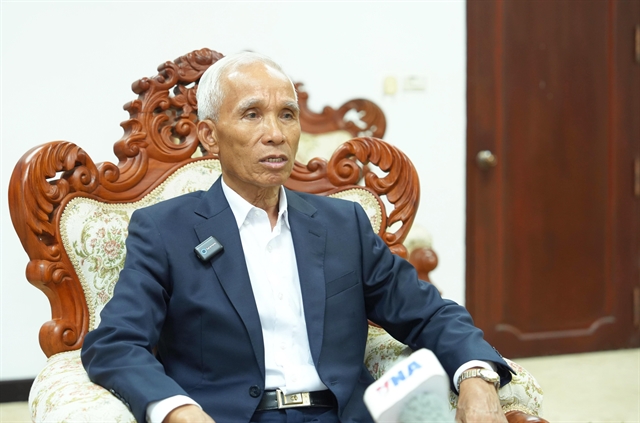
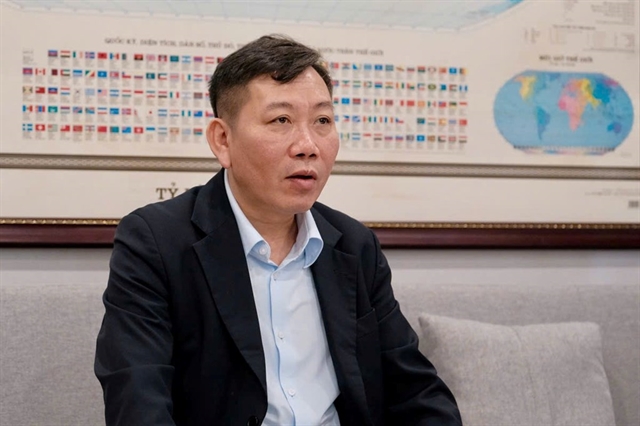
| Associate Professor Lê Bộ Lĩnh, former vice chairman of the NA’s Committee for Science, Technology and Environment. — Photo courtesy of the International Centre for Interdisciplinary Science and Education |
Associate Professor Lê Bộ Lĩnh, former deputy secretary general of the National Assembly (NA) and former vice chairman of the NA’s Committee for Science, Technology and Environment speaks to Việt Nam News reporter Khánh Dương about Việt Nam’s sci-tech diplomacy.
Against the backdrop of science, technology and innovation becoming increasingly important factors in national competitiveness, how do you assess the role of science and technology diplomacy for Việt Nam today?
Amid growing global strategic competition, particularly the race for mastery of core technologies such as semiconductors, artificial intelligence and new energy, science and technology diplomacy has affirmed its indispensable role in Việt Nam's comprehensive diplomacy.
Today, science and technology diplomacy is no longer merely a supplementary channel for cooperation but has become a vital strategic pillar, as reflected in four fundamental aspects.
First, science and technology diplomacy serves as a bridge and gateway for Việt Nam to access strategic technologies and global knowledge resources.
By connecting domestic research institutes, universities and businesses with leading innovation centres around the world, Việt Nam can absorb core technologies and acquire knowledge through technology transfer. This helps translate commitments made under strategic partnerships into practical research and development (R&D) cooperation programmes.
Second, science and technology diplomacy helps position Việt Nam in global high-tech supply chains. Combined with economic diplomacy, it can help Việt Nam become an important link in high-tech value chains and contribute to shaping cooperation frameworks and technical standards, thereby strengthening the country's global competitiveness.
Third, science and technology diplomacy plays an important role in mobilising international intellectual resources and Vietnamese experts around the world. It not only helps bring together global expertise but also supports the development of international connectivity hubs, helping turn Việt Nam into a regional knowledge hub through world-class scientific conferences.
Finally, science and technology diplomacy helps build soft power and safeguard national interests in multilateral settings. By promoting dialogue and addressing cross-border challenges, it not only contributes to peace but also provides scientific evidence to support negotiations involving national interests.
What should Việt Nam do to move from simply engaging in science and technology cooperation to using science and technology as a diplomatic tool, enhancing the country's position and influence internationally?
Việt Nam is facing major challenges and opportunities amid the fourth industrial revolution. To fully harness science and technology as a strategic diplomatic tool, Việt Nam needs a fundamental shift in both thinking and methods of action.
This means moving from a mindset of simplyreceiving and cooperating on science and technolog to proactively using science and technology to shape national interests.
First, shifting from a 'request-and-receive' approach to co-creation and mutually beneficial cooperation would help Việt Nam become an 'open laboratory'. By identifying concrete challenges facing the country, such as climate change, food security and tropical medicine, Việt Nam can actively participate in global research and experimentation, thereby establishing itself as an equal partner.
Second, strategies need to be institutionalised and better coordinated. Developing a national strategy on science and technology diplomacy would create a flexible legal framework for cross-border research activities.
Diplomatic agendas should integrate science and technology as a top priority, ensuring that high technologies are consistently addressed in international agreements rather than being confined to broad memorandums of understanding.
Third, Việt Nam should proactively participate in shaping the rules of the game for global governance of emerging technologies. In emerging fields such as AI and cybersecurity, participation in committees and mechanisms of international organisations would help Việt Nam safeguard its national interests and enhance its global standing.
Finally, Việt Nam needs to develop a corps of technology-savvy diplomats and scientists with an international and diplomatic mindset. Deploying science and technology attachés at major technology hubs around the world could create important bridges for connecting knowledge and policymaking.
When science and technology become sufficiently strong endogenous capabilities and are effectively coordinated with political diplomacy, Việt Nam will gradually establish itself as a trusted technology partner and gain a competitive advantage in global value chains.
Having followed science and technology policies in the National Assembly for many years, what do you see as the biggest bottlenecks preventing Việt Nam from fully leveraging international science and technology resources?
Việt Nam clearly does not lack opportunities, partners or good will from the international community. However, international science and technology resources flowing into the country remain modest compared with its development needs.
Many obstacles prevent these resources from being fully harnessed, stemming from institutional bottlenecks and limited capacity to absorb technology.
First, an administrative approach to financial management continues to influence the allocation of funding for science and technology.
Second, regulatory gaps and legal delays are particularly evident in access to breakthrough technologies.
Third, the technology absorption capacity of the domestic ecosystem remains relatively weak. Small and medium-sized enterprises lack capital and infrastructure, while their investment in research and development remains limited. Weak links among research institutes, universities and businesses mean that many research findings are not developed into commercial products, resulting in wasted resources.
Finally, mechanisms for attracting and utilising international talent remain insufficiently competitive. Policies on remuneration, working conditions and administrative procedures continue to pose challenges for foreign scientists seeking to work in Việt Nam.
To unlock the flow of international resources, the National Assembly and the government need to remove institutional barriers, create an environment conducive to venture investment and grant genuine autonomy to scientific organisations.
Only by treating spending on science and technology as a form of long-term investment can Việt Nam turn its potential into reality and embark on a path of sustainable development.
If you had to identify two or three priorities for science and technology diplomacy over the next five years, what would you propose?
The 2026-30 period is expected to be a turning point for Việt Nam's science and technology diplomacy as the global technology landscape becomes increasingly polarised.
To avoid spreading resources too thinly, Việt Nam should focus on three core strategic priorities to strengthen its position in this area.
First, position Việt Nam in strategic R&D and technology design value chains.
Moving from broad-based FDI attraction to attracting leading technology corporations to conduct R&D in Việt Nam would create significant potential. Science and technology diplomacy should focus on negotiating cooperation in core technology transfer while developing R&D and technology design centres in Việt Nam, particularly in key fields such as semiconductors and artificial intelligence.
Leveraging comprehensive strategic partnerships with developed countries such as the United States, Japan and the Republic of Korea could pave the way for this, helping Việt Nam become an important link in global supply chains.
Second, connect international resources for the energy transition and climate-adaptation technologies.
Việt Nam needs to leverage international commitments and green finance funds to attract new technologies for energy management and climate adaptation.
Third, proactively help shape global standards and rules for digital technologies.
Việt Nam needs to participate in shaping global rules and norms on digital technology governance, from AI ethics to data protection. Such engagement would not only help safeguard national sovereignty but also enable domestic businesses to develop sustainably in an increasingly complex technological environment.
In short, developing a clear and effective science and technology diplomacy strategy for 2026-30 will provide an important foundation for Việt Nam to advance amid globalisation and intensifying technological competition.
How can Việt Nam better connect diplomats, scientists, technology businesses and universities in international cooperation activities?
The 'four-party' model involving diplomats, scientists, technology businesses and universities is becoming an important framework for promoting international cooperation. However, in practice, a lack of coordination and mutual understanding among these groups remains a major barrier.
This stems from differences in language and priorities. Diplomats focus on politics and foreign relations while scientists focus on academic publications, businesses seek to commercialise products and universities emphasise education and training.
To overcome these barriers, we should build a platform that connects concrete needs. A model of 'diplomacy serving specific challenges' would allow businesses and universities to put forward specific problems, enabling diplomats to leverage international relationships to seek solutions.
In short, for the 'four-party' model to become a reality and deliver effective international cooperation, Việt Nam needs to build a substantive ecosystem of connectivity, overcome existing barriers and create mutually beneficial outcomes for all stakeholders. —VNS
Opinion
 Opinion
 Opinion
 Opinion
 Opinion
 Opinion
 Opinion
 Opinion
 Opinion
 Opinion
 Opinion
 Opinion
 Opinion
 Opinion
.jpg) Opinion