 Opinion
Việt Nam, New Zealand convene 14th political consultation
1.
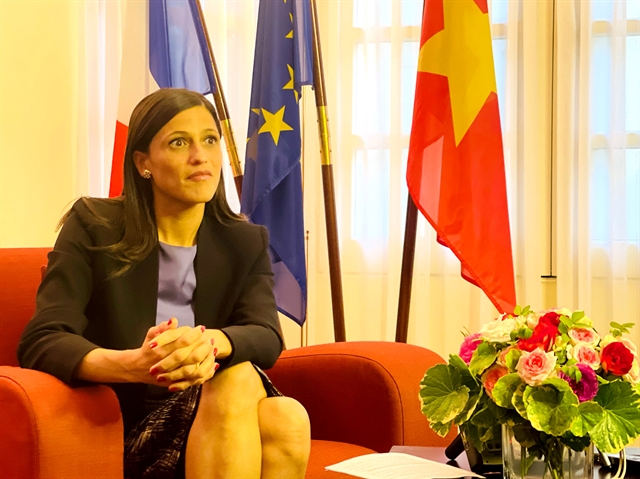 |
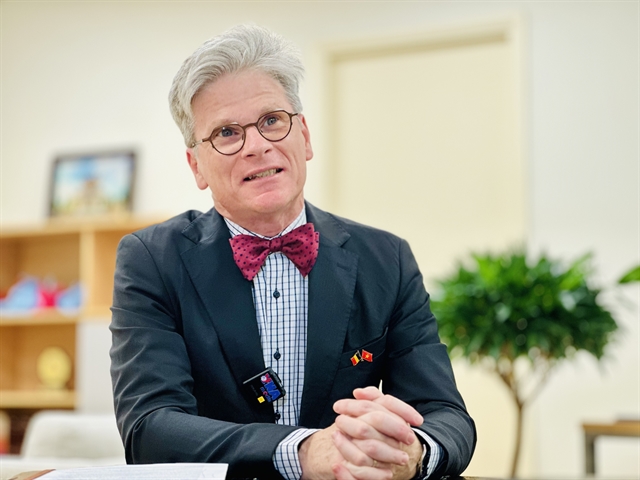
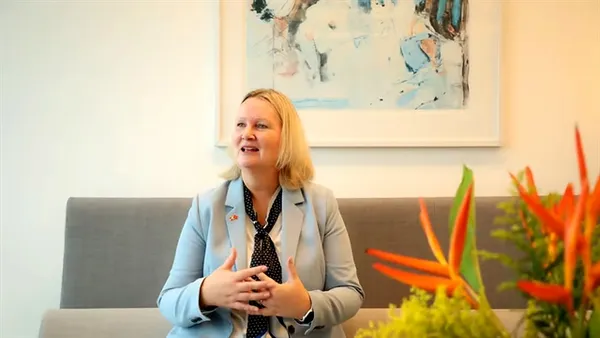
| French Minister Delegate for Francophonie, International Partnerships and French Nationals Abroad Éléonore Caroit in an interview with local media on Monday. VNS Photo Nguyễn Khánh Chi |
French Minister Delegate for Francophonie, International Partnerships and French Nationals Abroad Éléonore Caroit believes the time is now to turn priorities identified by top leaders of Việt Nam and France into concrete actions to strengthen the mutual cooperation. She was speaking to media during her working trip to Việt Nam from October 17-19.
What is the key objective of your visit to Việt Nam just a few weeks after the official visit to France by General Secretary of the Communist Party of Việt Nam Central Committee and President Tô Lâm?
I am very pleased to make this official visit to Việt Nam, just a few weeks after the meeting between our two leaders in Paris - a meeting that is the third in two years.
The leaders have defined priorities to strengthen our partnership, including certain areas such as rail transport, healthcare, critical minerals, energy, research, security, defence and so on.
As the minister in charge of Francophonie, it is also very important for me to make this trip to Southeast Asia when we are just a few weeks away from the Francophonie Summit, which will be held in Phnom Penh in November.
I am particularly committed to strengthening our cooperation in promoting and disseminating the French language, but also our cooperation in the cultural, artistic and academic fields, as well as the mobility of our youth.
Finally, I obviously cannot forget our French community here in Việt Nam, which I represent and have the honour of representing. I have visited the French school and met with many representatives of the French community.
What priorities and shared commitments are structured in the cooperation roadmap between the two countries?
It is now a matter of following up and translating these priorities into concrete actions to strengthen our cooperation.
Cooperation between France and Việt Nam goes far beyond their bilateral relationship. We have a true alignment regarding the multilateralism, and compliance with international law and the Charter of the United Nations. We are committed to respecting sovereignty, territorial integrity, and the peaceful settlement of disputes.
Our cooperation and alignment are also reflected in an attachment to open and regulated trade, without coercion, continuing the trade agreements and investment protection agreements concluded between Việt Nam and the European Union, which are currently being ratified in various countries.
You touched on cooperation between the two countries in transportation. So, how is France supporting Vietnamese ambitions in this sector?
On the afternoon of Monday, I visited the Hanoi Metro, which is a flagship project of our cooperation in the transport sector and is only a beginning. This project is emblematic because it serves our shared goals of reducing CO2 emissions, environmental protection, and clean mobility, while at the same time improving the lives of millions of Vietnamese.
It also illustrates the diversity of French expertise and how it is deployed to serve these shared goals, whether through the studies conducted to build the metro, the delivery of its various components or throughout all the stages of the project’s execution. You find French know-how, skills transfer and training that allow these projects to be sustainable and enable Việt Nam to ensure its sovereignty.
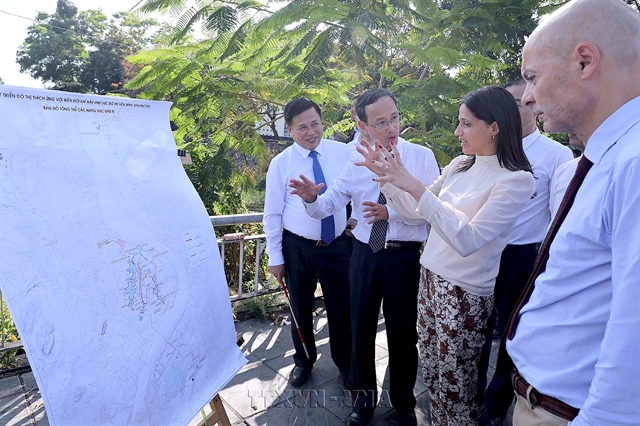 |
| French Minister Delegate for Francophonie, International Partnerships and French Nationals Abroad Éléonore Caroit with officials in Phú Thọ Province discuss a French-funded project on climate-resilient urban development in the Hòa Bình urban area during her working visit there on Sunday. VNA/VNS Photo |
What can cooperation on critical minerals bring to our two countries?
There again, there is a lot to say because it once again touches upon the issue of sovereignty, which is essential for France as well as for Việt Nam.
Việt Nam wishes to better understand its mineral resources, develop them, and ensure their extraction and processing in a sustainable manner.
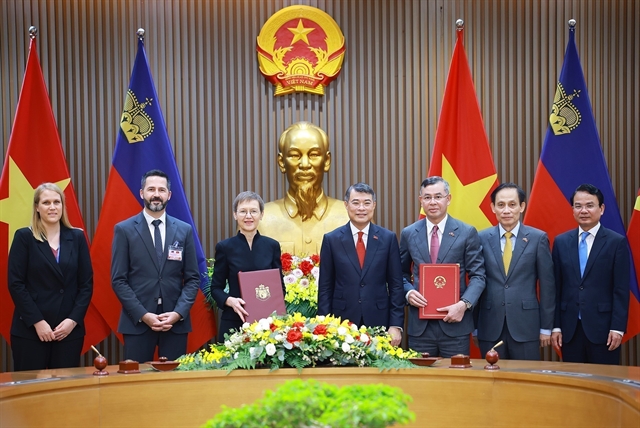
In this sense, the letter of intent signed between French and Vietnamese authorities is a significant step forward that allows us to define our shared objectives. It enables the French Bureau of Geological and Mining Research (BRGM), the French Development Agency (AFD), and Vietnamese geological authorities to work together and share their expertise for the benefit of this agenda.
And this cooperation will strengthen Vietnamese industrial capabilities while diversifying our supplies of essential minerals for the energy transition. It is truly an example of a partnership where we share goals and have an interest in working together.
What, in your view, are the main foundations for deepening Franco-Vietnamese human ties?
There are numerous foundations for deepening these already very strong ties. Despite a history that has sometimes been painful, we share a language that is widely spoken in your country, and a shared will to work and move forward together. In any case, that is what I feel following this visit.
For decades now, we have established educational tracks that have notably trained more than 3,000 Vietnamese doctors. This is also the case in other sectors. I believe we must now broaden this cooperation to foster what seems essential to me: the mobility of our youth and exchanges between younger generations.
What new prospects do you wish to offer the younger generation?
Well, I believe this is precisely the priority on which we must concentrate all our efforts. We already have structured French-Vietnamese cooperation tracks, but we must go further, move faster and venture into sectors where we are not yet present, because we have a lot to do together.
This means establishing dual-degree programmes and training that facilitate university exchanges and travel in fields identified as sectors of the future: artificial intelligence, quantum computing, aerospace, and more. In reality, there are truly numerous opportunities.
Existing programmes, such as the Hubert Curien Hoa Sen Lotus, allow young researchers to conduct these exchanges, alongside many other programmes with elite universities and schools in Việt Nam and France. Now, once again, we need to delve deeper to find opportunities.
This also involves the next step: internships that young Vietnamese can carry out in French companies or that young French people can undertake here in Việt Nam.
What ambitions do France and Việt Nam hold for the upcoming Francophonie Summit in Phnom Penh in November?
The next Francophonie Summit will take place in Southeast Asia, 29 years after being held here in Việt Nam. I believe it is a very important moment, both for Việt Nam and for France.
On a purely political level, the ambition of this summit is to promote peace and dialogue. In a time when multilateralism is being challenged, more flexible multilateral bodies like the Organization internationale de la Francophonie (OIF) take on their full significance, allowing us to make concrete progress on subjects that are more difficult to address in other forums.
However, this summit is not simply a political summit or a gathering of heads of state. There will be an edition of FrancoTech, which is eagerly awaited by businesses and private sector actors; there will be gatherings between young people; and there will be meetings between elected officials. In short, it is a very important moment for the French-speaking world.
This summit provides an opportunity to discuss the commitments of our two leaders regarding the Francophonie. They wish to make French a language of opportunity and mobility, strengthen the university cooperation I mentioned earlier, advance scientific research, foster exchanges among young professionals and demonstrate to all who wish to learn our language that it serves as a vehicle of opportunity.
Concretely in Việt Nam, this naturally takes place through our networks, the French Institutes, the French high schools, but also through expanding French language instruction within the Vietnamese public school system, particularly through the LabelFrancÉducation certification. VNS
Opinion
 Opinion
 Opinion
 Opinion
 Opinion
 Opinion
 Opinion
 Opinion
 Opinion
 Opinion
 Opinion
 Opinion
 Opinion
 Opinion
 Opinion
.jpg)