 Opinion
Đà Nẵng police seeks witnesses to road accident that killed one foreigner
1.
|
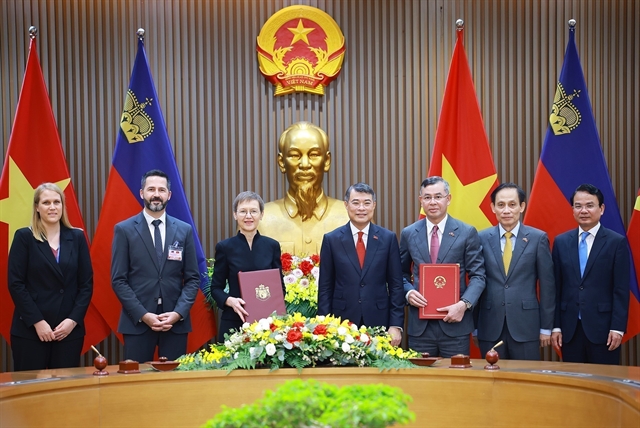
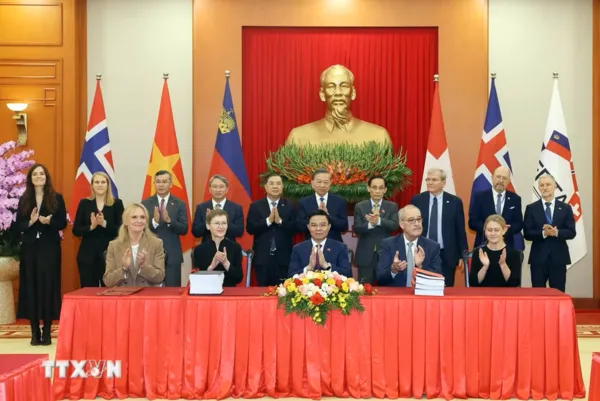
| Prime Minister Lê Minh Hưng and Liechtenstein Prime Minister Brigitte Haas witness the signing ceremony of a tax agreement between Việt Nam and Liechtenstein on October 18. — VNA/VNS Photo Dương Giang |
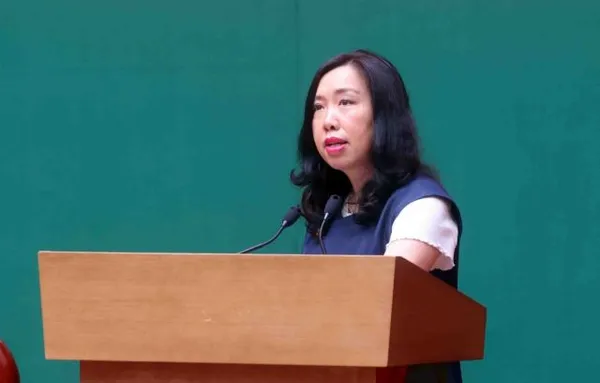
HÀ NỘI — The October 17–19 official visit to Việt Nam by Prime Minister of Liechtenstein Brigitte Haas, at the invitation of her Vietnamese counterpart Lê Minh Hưng, was a success on every front, Deputy Minister of Foreign Affairs Lê Thị Thu Hằng told the press.
Hằng said Liechtenstein is small in population and territory but has a strong economy and advanced financial, scientific and technological sectors. Haas is the first Liechtenstein PM to visit Việt Nam since the two established diplomatic ties in 2008. The trip has broken new ground after 18 years, building political trust and supporting the rollout of shared bilateral and multilateral agreements. It also reinforced Việt Nam's role as a gateway to ASEAN and Liechtenstein’s links to the European Free Trade Association (EFTA).
The visit was a vivid demonstration of Việt Nam's foreign policy set out at the 14th National Party Congress, which underlines independence, self-reliance, strategic autonomy, diversification and multilateralisation of external relations. As Việt Nam pushes to lift growth quality and make science, technology and innovation its main engines, the trip opened new areas of cooperation where both sides have demand.
During meetings and talks, both sides reaffirmed the importance they attach to their friendship and cooperation, and each other’s role and standing in their respective regions. Strategic contacts and exchanges between the two countries’ heads of government helped strengthen political trust and elevate bilateral relations across the board.
They also enabled both sides to better understand each other’s priorities and work together to make areas of strategic cooperation such as science and technology, innovation, the economy, trade and investment, and finance key pillars of cooperation that create breakthroughs in the coming years.
During the visit, the two sides signed several cooperation documents, chiefly the Việt Nam–EFTA Free Trade Agreement (FTA) and a Việt Nam–Liechtenstein accord to eliminate double taxation and prevent tax evasion and avoidance.
The deals lay the groundwork for more trade between Việt Nam and EFTA, of which Liechtenstein is one of the four members. Once the FTA takes effect, trade in goods and services and investment flows between Việt Nam and EFTA states will have more room to grow, she said.
The tax agreement will give companies and investors in both countries a transparent, stable legal framework while curbing cross-border tax evasion. Such gives firms more confidence to form partnerships and invest in each other’s markets, particularly in green finance, high technology, precision engineering, automation and medical equipment.
On the multilateral front, the two countries share a commitment to multilateralism, international law, and cooperation for peace, stability and sustainable development.
They agreed to back each other at multilateral forums and international bodies, particularly the United Nations. They also compared notes on issues of shared concern, notably the peaceful settlement of disputes under international law and the UN Charter.
Hằng said untapped potential remains ample. The visit carried significant political weight and pointed to cooperation in areas where each side has strengths and needs. Ties will rest on equality and mutual respect, benefiting both peoples and contributing to peace, stability and development in their regions and beyond.
With the visit’s strong outcomes, Hằng said the priority is now the timely, focused delivery of agreements, turning shared understandings, commitments and high-level agreements into practical projects and programmes that show tangible progress soon.
According to her, the immediate task is early ratification of the Việt Nam–EFTA FTA and the bilateral tax agreement. Ministries, agencies and local authorities need to coordinate closely on the follow-up work.
Firms need guidance on the commitments, rules of origin and market standards. That must go with efforts to raise product quality, workforce skills and management capacity. Small and medium-sized enterprises need particular support in finding partners and entering supply chains so the gains from global integration spread more widely.
Bilaterally, Hằng urged substantive cooperation across all fields and delivery on commitments made by high-ranking leaders. Regular delegation exchanges, dialogue and coordination through designated agencies would keep high-level guidance translating into sustained action.
In her view, both sides should identify projects that can lift cooperation to a new level. Partnering with Liechtenstein, which has strengths in knowledge, technology and governance, can add resources, build corporate capacity and strengthen Việt Nam's economic autonomy. Feasible projects in advanced manufacturing and financial services give Việt Nam a chance to prepare thoroughly and deliver significant results for national development.
People should remain at the centre of cooperation. She called for more opportunities for students, scientists and workers to study and work together, more cultural exchange and tourism, and a bigger role for the Vietnamese community in Liechtenstein in linking the two countries. A joint research team solving a practical problem, or a young person gaining experience in a joint training course, can bring the nations closer and make ties last, she said.
In closing, she said she expects Haas’s visit to deepen and broaden ties and usher in a more substantive, practical phase built on both countries’ potential. That, she said, is the shared aspiration of the two countries' people and will contribute to peace and cooperation in their regions and the world. — VNA/VNS
Opinion
 Opinion
 Opinion
 Opinion
 Opinion
 Opinion
 Opinion
 Opinion
 Opinion
 Opinion
 Opinion
 Opinion
 Opinion
 Opinion
 Opinion