 Opinion

Hà Nội karate team targets medals at National Games
1.
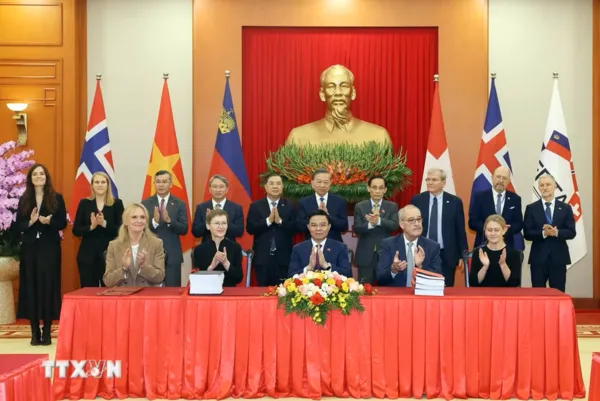
To mark the signing of the EFTA–Việt Nam Free Trade Agreement (FTA) on October 18, Swiss Ambassador Thomas Gass and Norwegian Ambassador Stein Iversen speak to Việt Nam News reporter Nguyễn Hằng about the deal’s potential to boost trade and investment between Việt Nam and EFTA member states.
How do you expect the signing of the EFTA–Việt Nam Free Trade Agreement (FTA) to transform economic and trade relations between Việt Nam and EFTA countries?
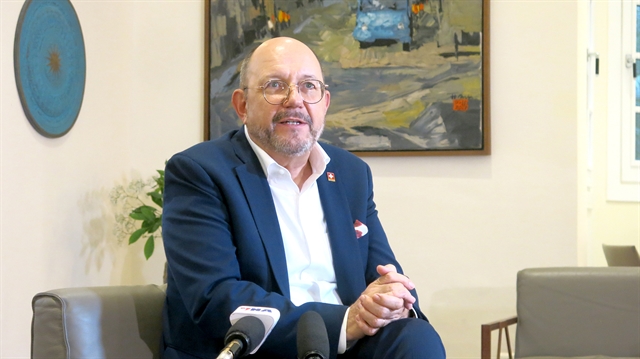 |
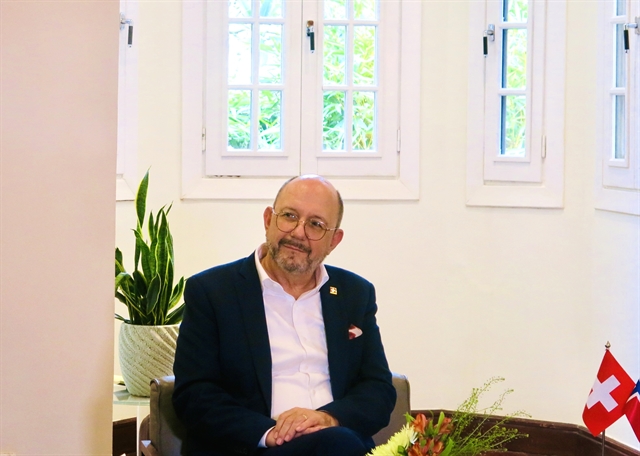
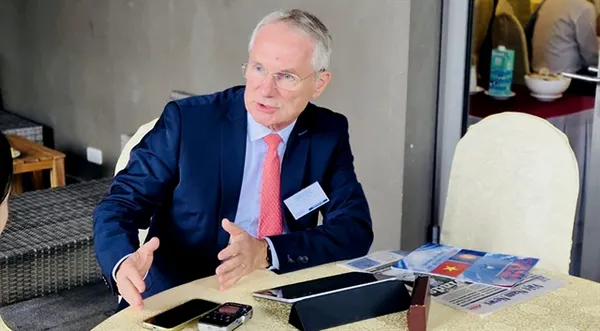
| Swiss Ambassador Thomas Gass. — VNS Photo Nguyễn Hằng |
Swiss Ambassador Thomas Gass:
This agreement is particularly important because Việt Nam has FTAs with many countries, as do EFTA members, but the two sides did not have an agreement with each other. That was a significant gap, especially given that major Swiss companies, including Schindler, ABB, Bühler and Nestlé, have been operating in Việt Nam for more than 30 years.
Despite their long-standing presence, these companies have not enjoyed the same level playing field that Việt Nam has established through its agreement with the European Union. It was time to create similar conditions for EFTA countries, particularly as international trade increasingly appears to be driven by power politics rather than predictable frameworks. Signing this agreement is a strong statement in support of predictability and an international legal framework that builds confidence in trade.
Norwegian Ambassador Stein Iversen:
We are delighted to have finally reached an agreement. It is a comprehensive deal, and the complex and intensive negotiations reflect the breadth of our commitments and relations.
This agreement will take our relations to a new level, creating significant opportunities for businesses from Switzerland, Norway, Iceland and Liechtenstein to access the Vietnamese market, and vice versa. It will boost trade and strengthen Việt Nam’s bilateral ties with each of the four countries. This is a milestone in our relations.
Which sectors offer the greatest potential for businesses to expand trade and investment once the FTA comes into effect?
Norwegian Ambassador Stein Iversen:
The maritime sector offers the greatest potential and already accounts for considerable trade and cooperation between Norway and Việt Nam. Norwegian shipbuilding companies have invested significantly in shipyards here, while Norwegian and Vietnamese partners are working together across the aquaculture sector, drawing on extensive experience in marine aquaculture. There is scope for cooperation throughout the aquaculture value chain, combining Việt Nam’s strong expertise with Norwegian investment to support the country’s ambitions.
Renewable energy is another area of considerable interest. A delegation of six Norwegian companies recently visited Việt Nam to explore opportunities in the sector. These are key areas where Norwegian businesses are already active and where I see great potential for further development in the future. I would also highlight the circular economy, which is crucial to Việt Nam’s ambitious target of achieving net-zero emissions by 2050.
Norwegian investors and companies with advanced technological expertise in the circular economy are already present in Việt Nam, with some considering substantial expansion. One example is the development of a deposit-return scheme to reduce plastic pollution. Recycling will be essential to achieving sustainability and emissions targets, and Norwegian expertise could support Việt Nam’s ambitious agenda.
Swiss Ambassador Thomas Gass:
Switzerland and Việt Nam have had an investment protection agreement since the 1990s. This needs to be updated to provide investors with stronger protection for their investments in Việt Nam. Swiss businesses are already active across a wide range of sectors. In coffee production, for example, one of our major companies processes around 25 per cent of Việt Nam’s coffee, producing sophisticated products for coffee shops around the world.
Another major company is building container terminals, while the energy transition offers opportunities in areas including LNG turbines, smart grids and transformers. Quality control is another important field. One of the world’s largest testing and inspection companies operates laboratories across Việt Nam, helping ensure that imported and exported products meet the quality standards stated on their labels.
A leading global company specialising in flavours and fragrances is also investing in Việt Nam and producing goods for the wider Southeast Asian market. I could give many more examples. The services sector is also worth highlighting, as Việt Nam is often seen primarily as a manufacturing hub. In fact, Swiss companies are helping develop sophisticated banking security software here, drawing on Vietnamese talent and innovation. This is making a significant contribution globally.
How can the FTA and the Green Strategic Partnership translate into concrete Norway–Việt Nam cooperation in maritime activities, aquaculture and the circular economy?
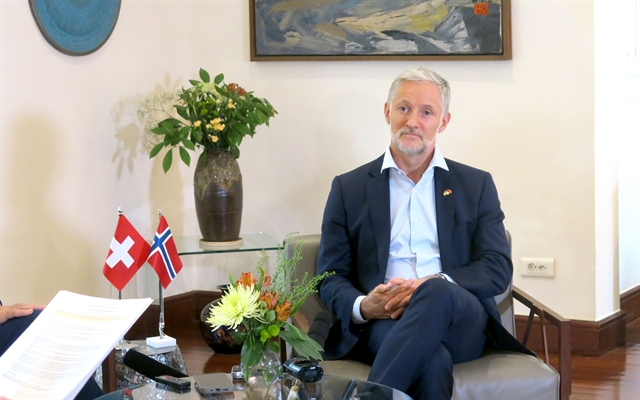 |
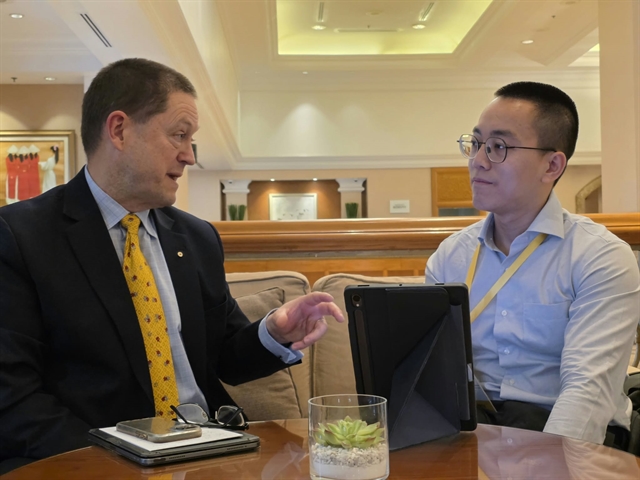
| Norwegian Ambassador Stein Iversen. — VNS Photo Nguyễn Hằng |
Norwegian Ambassador Stein Iversen:
The Green Strategic Partnership is another cornerstone of our bilateral relations this year, alongside the FTA. The partnership provides political direction and a framework for our future cooperation, while the FTA establishes the regulatory basis for commercial investment and trade. Together, they will take our relations to a new level. The sectors you mentioned – maritime activities, aquaculture and the circular economy – are specifically covered by the Green Strategic Partnership, which sets out a concrete roadmap for advancing cooperation in these areas.
This is an important year for us as we celebrate 55 years of diplomatic relations with Việt Nam. The Green Strategic Partnership and the EFTA–Việt Nam FTA will bring a completely new substance to our bilateral relations.
How can the FTA support Việt Nam’s green transition and net-zero target through Swiss strengths in green finance, sustainable investment, technology and renewable energy?
Swiss Ambassador Thomas Gass:
First, I would like to congratulate Việt Nam on reaffirming its sustainability and green-transition objectives at the 14th National Congress of the Communist Party of Việt Nam, including its commitment to net-zero emissions by 2050. This is an ambitious goal, particularly at a time when some countries are reconsidering the importance of investing in sustainability. We strongly welcome Việt Nam’s commitment and the political leadership’s determination to build a greener future and a better planet for future generations.
Producing higher-quality, greener goods may cost more than manufacturing cheaper alternatives. Việt Nam therefore needs access to markets with greater purchasing power. EFTA countries have, on average, significantly higher purchasing power than many other markets Việt Nam is targeting. We strongly believe that adding EFTA countries to Việt Nam’s network of free trade partners will create opportunities for the country to maintain its commitment to sustainability.
On technology, I have already mentioned several areas in which Swiss companies can contribute, including agricultural production, particularly coffee, and energy generation. There is also scope to introduce advanced technologies into manufacturing, the automotive industry, rail transport, infrastructure and construction. Cooperation between universities in Switzerland and Việt Nam also offers considerable potential.
What should businesses, particularly small and medium-sized enterprises (SMEs), do to prepare for and make the most of the opportunities created by the FTA?
Norwegian Ambassador Stein Iversen:
Businesses need to read the agreement, which runs to 74 pages across 14 chapters. We also have a responsibility to disseminate information about it. The agreement specifically addresses this, particularly the need to help SMEs, which have fewer resources to identify and assess the opportunities available. Ensuring that businesses understand the agreement is a major task for us and our Vietnamese counterparts.
Technical requirements and standards for accessing the Swiss and Norwegian markets should not be viewed simply as administrative burdens or barriers. They can help make Vietnamese exports more competitive globally by providing a roadmap towards international standards. Many Vietnamese export industries already meet these requirements, while others have the potential to enter global markets. The agreement can help them move in that direction. So in that context, I think the framework could be highly valuable to Vietnamese exporters.
Swiss Ambassador Thomas Gass:
For the past 15 years, we have run economic development cooperation programmes covering areas such as negotiation training and market access, helping businesses enter more complex markets. I am confident that our embassies will continue developing programmes to support companies seeking better access to these markets.
As Ambassador Iversen said, disseminating information is essential. Businesses need to navigate a wide range of options, identify the right sectors and understand where the opportunities lie.
Việt Nam also has large companies with established contacts in these markets. From our perspective as foreign observers, integration between large Vietnamese companies and SMEs could be stronger. Larger businesses could help SMEs access global markets by incorporating them into their supply chains and value chains. Building these networks is crucial to expanding international market access. — VNS
Box: The European Free Trade Association (EFTA) is an intergovernmental organisation established to promote free trade and economic integration. It currently comprises four member states of Norway, Switzerland, Iceland and Liechtenstein.
Việt Nam and EFTA have held 21 formal rounds of negotiations. The latest took place in Iceland from June 17 to 22. On June 22, a delegation led by Deputy Minister of Industry and Trade Nguyễn Sinh Nhật Tân attended the EFTA Ministerial Meeting in Iceland to discuss the outstanding issues needed to conclude the negotiations.
On July 2, Việt Nam and the EFTA member states officially issued a joint statement announcing the conclusion of negotiations on a free trade agreement (FTA) between the two sides. — VNS
Opinion
 Opinion
 Opinion
 Opinion
 Opinion
 Opinion
 Opinion
 Opinion
 Opinion
 Opinion
 Opinion
 Opinion
 Opinion
 Opinion
 Opinion
.jpg)