 Opinion

VIS 2026 drives resource connectivity, tech commercialisation in HCM City
1.
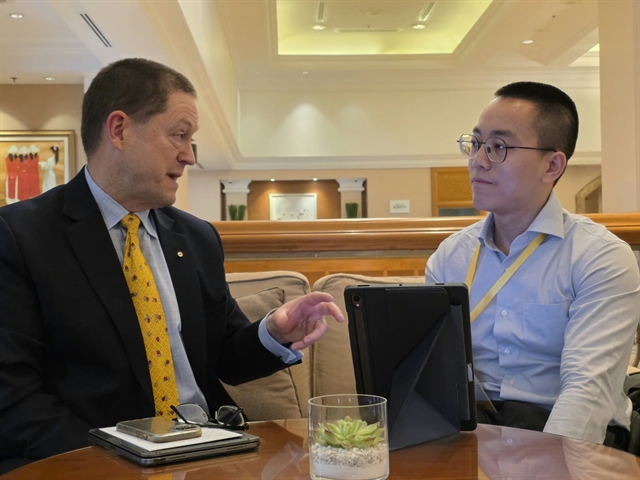 |
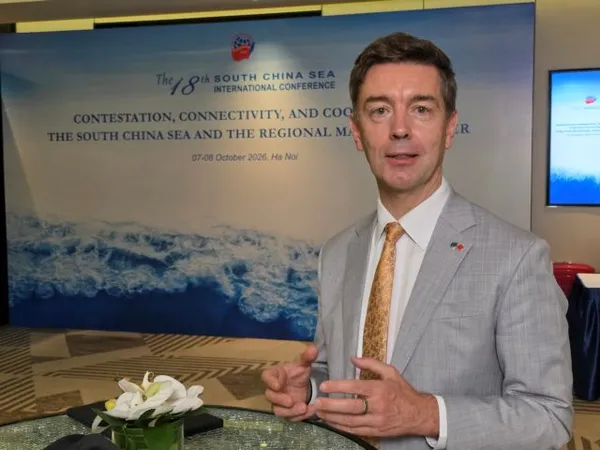
| Commodore Peter Leavy (Retd), of the National Security College at the Australian National University in the interview with Việt Nam News. — VNS Photo Trọng Kiên |
HÀ NỘI — Australia and Việt Nam can strengthen maritime cooperation through technology, information-sharing and practical measures to prevent incidents at sea, while working with other middle powers to uphold international law amid intensifying strategic competition, an Australian maritime security expert has said.
Commodore Peter Leavy (Retd), of the National Security College at the Australian National University, made the remarks in an interview with Việt Nam News on the sidelines of the 2026 South China Sea International Conference in Hà Nội.
Leavy, with 40 years of experience in the Royal Australian Navy, said the Oceanic nation could support Việt Nam’s ambition to become a strong maritime nation by sharing expertise in maritime domain awareness, uncrewed systems and data fusion, alongside education and exchanges between researchers from the two countries.
He stressed, however, that such cooperation should build on Việt Nam’s existing maritime expertise rather than seek to replace it.
“Việt Nam has a proud history as a strong maritime nation, and has been one for centuries. I don’t think anyone understands the operating environment in Việt Nam’s maritime zones better than Việt Nam does,” he said.
Australia could add value by helping Việt Nam develop a more comprehensive picture of activity across its maritime zones, allowing authorities to identify emerging risks and direct limited surveillance and response resources where they are most needed.
Australia has developed an increasingly strong industry in uncrewed aerial and surface systems equipped with sensors, radars and cameras. Such systems can gather information over large maritime areas and feed it into a shared operational picture.
Leavy described data fusion as the process of combining information from multiple sources, including ships, aircraft, remote sensors and uncrewed platforms, to build a more accurate understanding of the maritime environment.
However, the researcher underscored that while automated systems can increasingly correlate information from different sensors, human operators remain important in interpreting the results.
The approach is particularly relevant to countries with extensive maritime areas and limited resources for maintaining a constant physical presence at sea.
Australia’s experience in this field could therefore offer Việt Nam useful lessons in surveillance technology, information management and the efficient deployment of maritime capabilities.
Leavy also highlighted the value of academic cooperation, pointing to the Diplomatic Academy of Việt Nam’s maritime expertise as well regarded in Australia.
Rather than treating training as a one-way transfer of knowledge, he advocated exchanges that would allow scholars and practitioners from both countries to learn from different perspectives and operating environments.
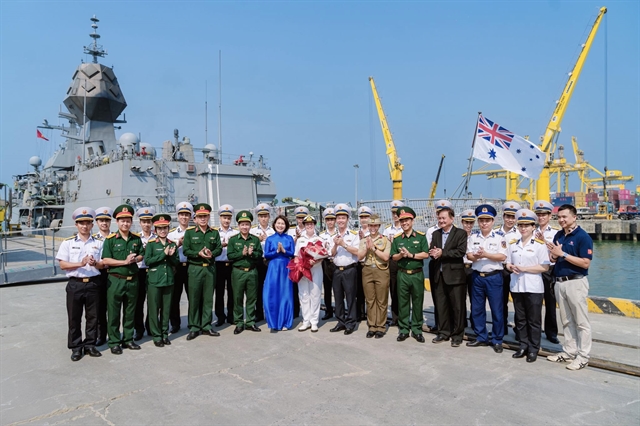 |
| The Royal Australian Navy ship HMAS Toowoomba, led by Lieutenant Colonel Alicia Harrison, arrived at Tiên Sa Port on March 28, 2026, for a five-day friendly visit to the central city of Đà Nẵng. — VNA/VNS Photo |
International law must remain the common framework
Beyond bilateral cooperation, Leavy warned that the growing influence of great-power competition was making it more difficult for middle powers to defend an international order based on rules and accepted norms.
“The world is moving away from a solid emphasis on international law guiding behaviour. That still has a big role, but great power competition is becoming more and more of a feature,” he said.
This presents a challenge for middle-power countries such as Australia and Việt Nam, which have “limited influence over the strategic decisions of major powers” but have a shared interest in a stable regional environment.
The retired navy official argued that middle powers should cooperate wherever their interests align, including by supporting smaller countries and seeking to influence the behaviour of major powers.
He cautioned against overstating what such cooperation could achieve, noting that the ability of middle powers to shape international conduct had become increasingly constrained in recent years.
One important contribution, he said, was to uphold international law consistently, including when its application did not serve a country’s immediate interests.
He cited Australia’s maritime boundary dispute with Timor-Leste, which was resolved through compulsory conciliation under the mechanisms of the United Nations Convention on the Law of the Sea (UNCLOS) – which harkened to the Philippines vs China case which was also initiated under UNCLOS – as an example of a larger country accepting an outcome reached through an international legal process.
“We need to be conscious of where our interests align and where we can, we should band together,” he said. Where differences remained, countries should use international law as the framework for resolving disputes.
The principle is particularly relevant to the South China Sea, where overlapping maritime claims and competing interpretations of international law continue to complicate regional relations.
The 1982 UNCLOS provides the legal framework governing maritime rights and obligations, including navigation and the delimitation of maritime zones. Việt Nam and Australia have both affirmed the importance of the convention and the peaceful settlement of maritime disputes in their bilateral relationship.
Regarding grey-zone tactics, he stressed these were difficult to counter precisely because they exploited the boundaries between civilian and military activity.
Leavy argued the international community should assess conduct at sea by the nature of the behaviour rather than simply by whether the vessel involved belonged to a navy which would be presently considered as military actions versus ‘civilian’ actions done by coast guard, fishing fleet or maritime militia.
Such an approach, he suggested, would help address situations in which the use of ostensibly civilian vessels complicates responses to actions that increase tensions or put other vessels at risk.
He also rejected the notion that developments in the South China Sea should be of concern only to countries bordering the waterway.
Given its importance to international shipping and global commerce, the sea has implications far beyond the region, he said. The involvement of countries outside Southeast Asia reflects the broader international interest in protecting maritime stability and freedom of navigation across the globe.
Practical rules can reduce risks at sea
Leavy identified practical arrangements to prevent collisions and misunderstandings as another area where regional countries could make progress, even while difficult sovereignty disputes remain unresolved.
As naval vessels, coast guards, fishing boats, research platforms and uncrewed systems operate in increasingly crowded waters, encounters between parties with competing claims can carry the risk of miscalculation.
He proposed developing a code for unplanned encounters at sea that would establish predictable responses when vessels or aircraft approached one another in potentially sensitive circumstances.
Under such an arrangement, crews would follow agreed procedures, including predetermined manoeuvres and courses, to reduce the likelihood of collision.
He pointed to a Cold War-era agreement between the United States and the Soviet Union as a model for how adversaries could establish practical safeguards without resolving their underlying political differences.
The objective, he said, should be to protect personnel operating in disputed areas and prevent an accident from escalating into a diplomatic crisis or wider confrontation.
“The sailors and pilots that are out there doing this … they’re not the ones driving the dispute. They’re just the tools out there trying to exercise the right,” he said. “We don’t want to hurt them on either side.”
Leavy also suggested that countries could expand information-sharing on non-sensitive maritime activities, including environmental conditions, commercial shipping and fishing fleets.
While governments might be reluctant to share military information, cooperation on civilian maritime data could help countries build a more comprehensive picture of activity across the South China Sea.
Improved transparency, predictable procedures and reliable communication channels could complement diplomatic efforts to manage tensions, he said.
Such measures would not settle competing claims, but could reduce the risk that routine maritime operations lead to unintended confrontation.
Although the tensions in the South China Sea and the crisis in the Strait of Hormuz differ significantly in nature, Leavy argued that both underscore the importance of upholding international law and preventing states from asserting jurisdiction beyond what UNCLOS permits or imposing restrictions that undermine freedom of navigation.
Middle powers, he said, should work together to resist attempts to impose restrictions inconsistent with the legal framework governing international waterways.
Leavy said the challenge was to recognise the limits of their influence while making the most of opportunities to cooperate, uphold common rules and reduce the risks of confrontation at sea.
Code of Conduct must comply with UNCLOS
On negotiations between ASEAN and China for a Code of Conduct (COC) in the South China Sea, Leavy expressed doubts that a binding agreement could be concluded easily, given the parties’ differing interpretations of maritime law.
The negotiations aim to establish a framework for managing conduct and reducing tensions in the disputed waters. In July 2026, the Philippines, which holds ASEAN’s chairmanship this year, said the parties were working towards concluding the code by the end of the year.
Leavy said any agreement should remain fully consistent with UNCLOS and must not weaken rights and obligations established under the convention.
“If the code is signed, the provisions need to be completely in accordance with the Law of the Sea Convention,” he said, warning that even a limited departure from established rules could create a precedent for similar exceptions elsewhere, potentially weakening the convention’s effectiveness over time.
Leavy said Australia and other countries outside the immediate disputes, while having no say in the negotiations, had a legitimate interest in ensuring that any eventual code upheld international law.— VNS
Opinion
 Opinion
 Opinion
 Opinion
 Opinion
 Opinion
 Opinion
 Opinion
 Opinion
 Opinion
 Opinion
 Opinion
 Opinion
 Opinion
 Opinion