 Opinion

Việt Nam-Cambodia trade expo promotes bilateral economic cooperation
1.
 |
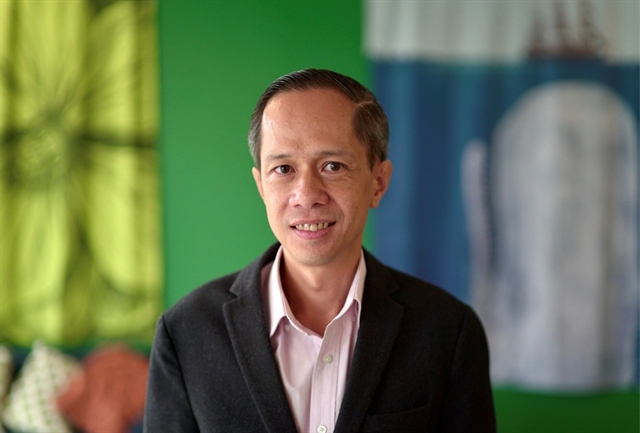
| Võ Thị Bích Thủy, Operations Manager at Manpower Vietnam. — Photo courtesy of the company |
HÀ NỘI — Việt Nam is seeking to sustain strong economic growth in a new phase of development driven by innovation, digital transformation, high-tech industries and higher labour productivity.
HCM City, the country's economic hub, aims to maintain robust growth while strengthening its position as a regional centre for finance, science and technology and innovation. Access to high-quality human resources will be critical to achieving these goals, supporting competitiveness, attracting investment and expanding high-value-added industries.
Võ Thị Bích Thủy, Operations Manager at Manpower Vietnam, discusses trends in demand for skilled talent, the factors that could make Việt Nam and HCM City more attractive to highly qualified professionals, and measures to attract, develop and retain them.
How will the market for high-quality talent and international experts in Việt Nam evolve over the next five to 10 years?
From a labour-market perspective, Manpower sees three major shifts that are already affecting and will continue to shape the demand for high-quality talent and international experts in Việt Nam over the next decade.
First, demand for high-quality talent will outpace supply.
Manpower's recruitment data points to strong demand for skilled workers in Việt Nam. Our surveys have shown that the share of businesses planning to increase hiring has remained high since the beginning of 2026. Most recently, 52 per cent of businesses said they planned to increase recruitment in the fourth quarter.
At the same time, a shortage of workers with the right skills remains a major recruitment challenge. About half of the Việt Namese businesses surveyed said it was taking longer to fill vacancies than in 2025 because of a shortage of suitable candidates, either because there were too few applicants with the required skills or because the pool of candidates meeting specific job requirements was limited.
The semiconductor industry is a clear example of this supply-demand gap. Việt Nam aims to develop a workforce of about 50,000 semiconductor professionals by 2030, while HCM City alone plans to train at least 9,000 people with university-level qualifications or higher. The country currently has only about 15,000 semiconductor workers, or around 30 per cent of the projected demand.
Second, companies' expectations of high-quality talent are changing.
In the past, companies typically prioritised academic qualifications, experience, foreign-language skills and management capabilities. These have increasingly become baseline requirements. Companies are moving from hiring people primarily to execute tasks to seeking professionals who can drive growth and innovation.
Third, competition for high-quality talent will increasingly be global.
In the past, companies mainly competed for talent within their local markets or between provinces and cities in Việt Nam. Today, an AI specialist, factory manager or senior executive can potentially choose to work in any major economic hub around the world.
The expansion of the digital economy, greater global mobility of talent and rising demand for senior professionals are intensifying competition for skilled workers.
This means Việt Nam will need to compete not only for investment capital but also for both domestic and international talent.
What makes international talent choose HCM City over other major cities such as Shanghai, Hong Kong or Singapore?
In my view, HCM City has three notable advantages.
One is the opportunity to participate in a high-growth market.
Many international business hubs already have highly mature ecosystems. HCM City offers a different proposition: professionals have opportunities to build teams, develop markets and drive tangible change firsthand. For many, that can be an important source of career value.
This is reinforced by the city's dynamic business environment and open, welcoming character. HCM City has a young workforce eager to learn, a vibrant business community and an environment where new business models are continually emerging.
Another attraction is Việt Nam's competitive cost-of-living-to-income ratio.
According to the Expat Insider survey by InterNations, Việt Nam has ranked highly in the personal finance index for expatriates in recent years. The survey found that 89 per cent of foreign professionals rated the cost of living in Việt Nam positively, while 87 per cent said their income was sufficient for a comfortable lifestyle. Both figures were above the global average.
This is becoming an increasingly important consideration as living costs rise in many markets, particularly amid global economic and geopolitical uncertainty.
HCM City's strategic position within regional supply chains and the ASEAN market is another important factor.
Việt Nam is playing an increasingly important role in the supply-chain diversification and manufacturing expansion strategies of international companies. In this context, HCM City has advantages as a hub for management, trade and operational coordination serving both Việt Nam and the wider ASEAN market.
Beyond being Việt Nam's economic centre, the city has connectivity with major regional business centres, as well as infrastructure, financial services, logistics capabilities and an established international business community.
The city is becoming more than a destination for companies' Việt Nam operations. It is increasingly being used as a base for regional management and coordination. That creates opportunities for expatriate professionals, particularly those specialising in regional management, business development, supply chains and operations.
Rather than working solely in one market, they can take part in regional activities, broaden their professional experience and gain exposure to one of ASEAN's dynamic economies.
What else should Việt Nam and HCM City do to become a leading regional hub for attracting international talent?
For Việt Nam and HCM City to become a leading destination for international talent, a comprehensive approach is needed, focusing on four key areas.
Streamlining administrative procedures for businesses and international professionals would be an important step. Việt Nam should continue improving the transparency, simplicity and convenience of procedures related to visas, work permits and residency.
Accelerating digitalisation, standardising procedures and ensuring consistency in implementation would allow businesses and foreign professionals to access information more easily and plan their work in Việt Nam more proactively.
It is important not only to shorten processing times but also to establish procedures that are clear, trackable and predictable. When businesses and international professionals understand the required steps, the status of an application and the expected processing time, companies can allocate resources more efficiently and accelerate projects, while foreign professionals can have greater confidence in choosing to work and build a long-term future in Việt Nam.
Creating a supportive environment for professionals and their families is equally important.
For many international professionals, relocating to a city is not simply a career decision. They also need to consider whether they can establish a stable life for their families. Việt Nam, and HCM City in particular, therefore needs to continue improving the broader living environment, including international schools, quality healthcare, housing, transport, green spaces and cultural activities.
When professionals and their families can live, study and integrate into the local community comfortably, they are more likely to make a long-term commitment to both their employers and the city. This is becoming increasingly important in global competition for talent.
Developing a local workforce that can meet international standards is another priority.
No talent hub can develop sustainably by relying solely on foreign professionals. International companies also need access to a capable local workforce that can work effectively with international colleagues, absorb knowledge and create long-term value.
Việt Nam therefore needs to continue investing in workforce development, particularly in high-growth sectors such as AI, semiconductors, information technology and high-tech industries. Alongside technical expertise, greater emphasis should be placed on foreign-language proficiency, communication, cross-cultural collaboration and the ability to work according to international standards.
Only when international and local professionals can work effectively together can global knowledge and experience be translated into long-term competitive advantages.
Việt Nam could also make greater use of overseas Vietnamese professionals and build a clearer international profile for HCM City.
The overseas Vietnamese community represents a valuable pool of international experience and networks, combined with an understanding of Việt Nam's culture and business environment. Many also have a strong desire to contribute to the country's development if suitable opportunities are available.
Việt Nam could therefore explore flexible ways of engaging this talent, not only through permanent relocation but also through research, consulting, technology transfer, investment, teaching and support for international market connections. This could provide access to global expertise while helping strengthen the city's competitiveness.
For HCM City, it is also important to establish a distinctive position on the global talent map. Just as Singapore is widely associated with financial services and Dubai with international commerce, HCM City needs its own proposition for international professionals and investors. VNS
Opinion
 Opinion
 Opinion
 Opinion
 Opinion
 Opinion
 Opinion
 Opinion
 Opinion
 Opinion
 Opinion
 Opinion
 Opinion
 Opinion
 Opinion