 Opinion
Business incubator helps SMEs enhance competitiveness
1.
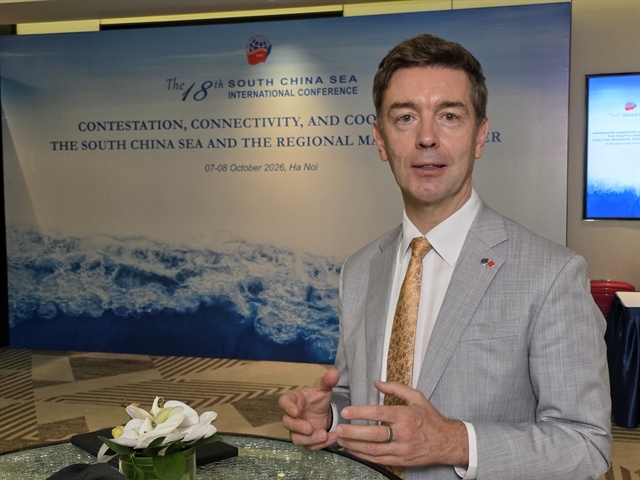 |
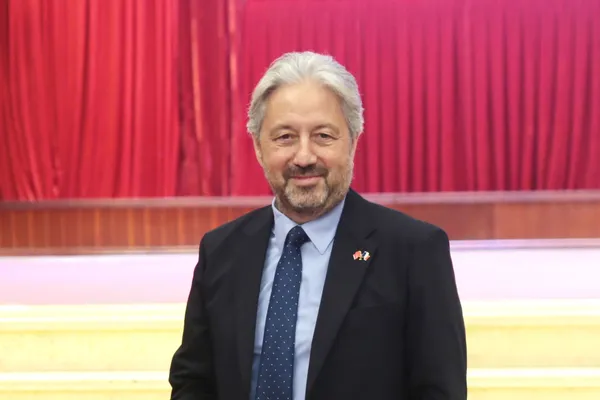
| EU Ambassador to Việt Nam Julien Guerrier spoke to Việt Nam News on the sidelines of the 18th South China Sea International Conference in Hà Nội. — VNS Photo Trọng Kiên |
In an interview on the sidelines of the 18th South China Sea International Conference, European Union (EU) Ambassador to Việt Nam Julien Guerrier discussed how the EU could support Việt Nam’s ambition to become a strong maritime nation, and the prospects for an effective Code of Conduct in the South China Sea (known by Việt Nam as the East Sea) in line with international law.
Việt Nam has recently adopted Politburo Resolution No 20-NQ/TW on building and developing Việt Nam into a strong maritime nation. From the EU's perspective, where do you see the greatest potential for EU–Việt Nam cooperation in helping Việt Nam realise this ambition – whether in maritime infrastructure, green ports, logistics, marine science and technology, ocean governance or maritime security?
I see particularly strong potential in areas where Việt Nam’s maritime ambitions align closely with European expertise, notably green ports and sustainable maritime transport, marine science and technology, and maritime safety and governance.
Việt Nam is looking to build a modern, competitive and sustainable maritime economy, and the EU can bring experience in port decarbonisation, digitalisation, clean transport, marine research and maritime data.
We are already seeing practical cooperation in these areas, including European involvement in the development of the Liên Chiểu container port in Đà Nẵng, while the EU and Việt Nam are also deepening cooperation in science, technology and innovation.
Could the EU’s Global Gateway initiative become an important vehicle for supporting this ambition? Yes, absolutely. I think Global Gateway can be an important vehicle for turning Việt Nam’s maritime ambitions into concrete projects, and we are already seeing this beginning to happen.
Earlier this year, the EU and Việt Nam announced more than €560 million (US$627 million) in investments in sustainable transport and clean energy, including support for sustainable transport and European private-sector involvement in the development of Liên Chiểu port.
Looking ahead, I see scope to deepen this maritime dimension further, including in green ports, low-carbon shipping, logistics connectivity, port digitalisation and offshore renewable energy.
The recurring messages at this year’s conference has been that communication, transparency and adherence to international law are essential to preventing miscalculations and misunderstandings at sea from escalating into incidents or wider crises. From the EU’s perspective, what practical mechanisms or forms of engagement are most effective in reducing these risks in the South China Sea?
From the EU’s perspective, the most effective approach is to build practical habits of communication and cooperation before a crisis occurs. That means improving maritime information-sharing, strengthening direct professional contacts between coast guards and other maritime authorities, and conducting regular training and exercises so that people know how to communicate and respond when an incident happens.
Through CRIMARIO II and the IORIS platform, for example, we help partners build maritime domain awareness and share information securely (470 training activities organised for more than 5000 participants across the region), while the EU 'Global Ports Safety' project supports port safety in eight countries including Vietnam, dangerous-goods handling and incident response.
At the same time, all of this needs to operate within a clear legal framework. For the EU, UNCLOS remains the common framework for activities at sea, and we support an effective, substantive and legally binding ASEAN-led Code of Conduct that is fully consistent with international law.
Does the EU follow the progress on the negotiations for the Code of Conduct in the South China Sea, which the Philippines as ASEAN Chair and ASEAN as a bloc are striving to complete within this year? What expectations do the EU have for this code, with regards to international law and its potential ability to reduce tensions here? And the assessment of Việt Nam's position on the matter?
The EU closely follows the ASEAN-China negotiations on a Code of Conduct (COC) in the South China Sea and welcomes efforts to conclude it this year. The Code should be effective, substantive and legally binding, consistent with UNCLOS, and contribute to reducing tensions and preventing incidents at sea.
Việt Nam's emphasis on international law and the peaceful settlement of disputes is consistent with the EU’s approach. We hope the COC will safeguard the rights of all parties under international law and serve as a meaningful tool for maintaining peace, stability and trust in the region. — VNS
Opinion
 Opinion
 Opinion
 Opinion
 Opinion
 Opinion
 Opinion
 Opinion
 Opinion
 Opinion
 Opinion
 Opinion
 Opinion
 Opinion
 Opinion