 Opinion
Young people’s mental health: We need to listen – and act
1.
On the occasion of the World Mental Health Day (October 10), Silvia Danailov UNICEF Representative in Việt Nam, wrote to Việt Nam News reflecting on this year theme of 'Lived Experiences Heard: Real Voices, Real Change', and why listening to young people must lead to action.
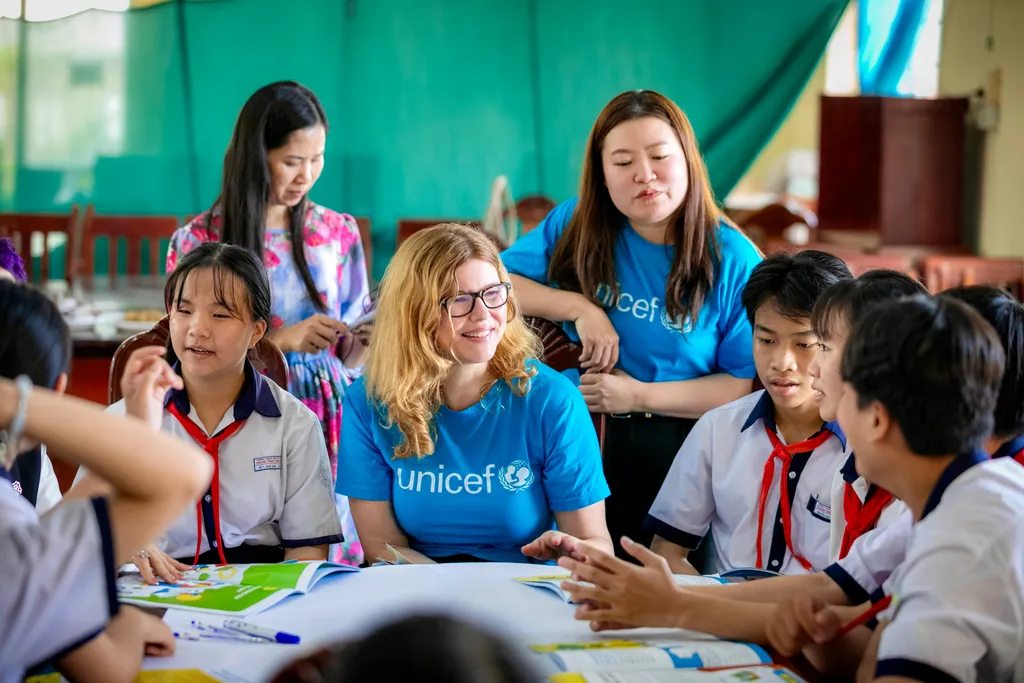 |
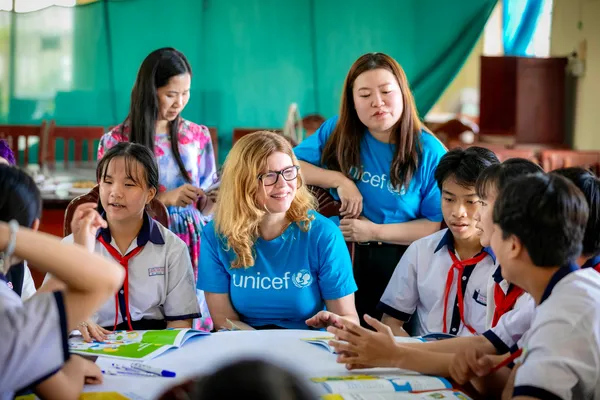
| Silvia Danailov, UNICEF Representative in Việt Nam, talked with adolescents at Thạch Thới Thuận Secondary School in Sóc Trăng Province in 2025 (now part of Cần Thơ City). — Photo courtesy of the UNICEF Việt Nam |
When did you last ask a young person how they are really doing and then stop long enough to hear the answer?
Not “How was school?” Not “Are you ready for the exam?” Not “Why are you so stressed?”
But: How are you, really?
For many adolescents, that question can be surprisingly difficult to answer. They are navigating academic pressure, changing relationships, family expectations, social media and an uncertain future, often while trying to figure out who they are.
And sometimes, the adults around them are listening for the wrong thing. We look for a crisis before we recognise distress.
That needs to change.
Mental health is not a crisis issue. It is a childhood issue.
Every child has the right to grow up safe, healthy and able to reach their full potential. Mental health is part of that right. Yet too often, mental health enters the conversation only when something has gone seriously wrong.
In Việt Nam, around one in five adolescents experience a mental health problem. Yet only 8.4 per cent of those affected accessed support or counselling, while just 5.1 per cent of parents recognised that their adolescent might need help.
These numbers tell us something important: the challenge is not only access to services. It is also whether we recognise that help is needed in the first place.
Prevention therefore has to start much earlier and, in the places, where children live, learn and grow.
The first line of support begins at home
The Việt Nam SDG Indicators on Children and Women Survey 2020–2021 found that more than seven in 10 children aged 1–14 had experienced psychological aggression or physical punishment by household members in the previous month. UNICEF-supported research points to the links between adolescent mental health and academic pressure, bullying, peer relationships, school climate and relationships with teachers.
Discipline that relies on fear or humiliation can undermine a child’s sense of safety, trust and self-worth. Positive parenting, open communication and emotional security, on the other hand, give children the foundations they need to cope with challenges as they grow. That is why supporting parents and caregivers with practical skills is not a soft intervention. It is prevention.
Schools matter just as much. A school that supports mental health is one that understands children learn best when they feel safe, connected and valued. Sport, creativity, friendship and life skills are not distractions from learning. They are part of it.
And increasingly, we need to think about the environments young people inhabit online as well as offline. Digital spaces can connect, educate and empower. They can also expose children to bullying, harmful content, exploitation and relentless social comparison.
The question is not whether young people should be online. They already are. The question is whether we are making those spaces safer and healthier for them.
We need a continuum of support
Some young people will need focused psychosocial support. Others will require specialised mental health services. The answer is not to choose between prevention and professional care. We need both.
Young people asking for help should not have to navigate a maze to find it.
The adults around them need the knowledge, confidence and tools to respond.
Listening is not enough.
This is where this year’s World Mental Health Day theme “Lived Experiences Heard: Real Voices, Real Change” matters.
Young people should not simply be consulted after policies have already been designed. Their experiences should help shape the policies, services and programmes intended for them. And they need to see that their voices lead to change.
Listening without acting is not participation.
Việt Nam has made important progress. Child and adolescent mental health is receiving greater recognition, the evidence base is growing, and education is increasingly part of the conversation. The opportunity now is to turn that momentum into a more connected system of support.
Government leadership is critical. But the government cannot do this alone.
Families create the first environment in which children learn whether they are safe and valued. Schools can create belonging and identify concerns early. Communities can reduce isolation and stigma. Civil society and youth organizations can create trusted spaces for young people.
Businesses have a role too – from creating psychologically safe and inclusive workplaces for young people entering employment to investing in responsible technology, community initiatives and partnerships that strengthen support systems.
And all of us have a role in challenging the idea that mental health is something to talk about only when there is a problem.
So let us speak up, listen and act. We cannot wait until young people are in crisis to hear what they are telling us. — VNS
Opinion
 Opinion
 Opinion
 Opinion
 Opinion
 Opinion
 Opinion
 Opinion
 Opinion
 Opinion
 Opinion
 Opinion
 Opinion
 Opinion
 Opinion