 Opinion

Cafe Show & Tea Show Hanoi 2026 showcases shift towards higher-value coffee, tea
1.
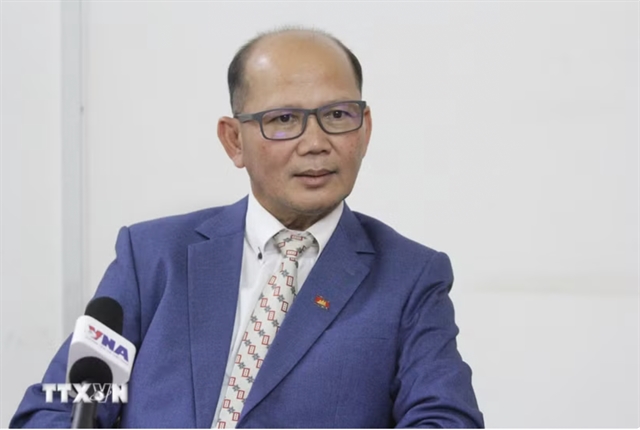 |
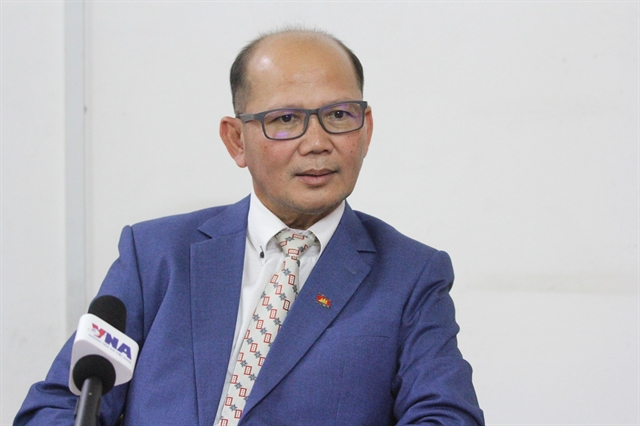
| Uch Leang, Acting Director of Asian, African, and Middle East Studies of the International Relations Institute of Cambodia. VNA/VNS Photo |
PHNOM PENH — Cambodia’s Khmer Times newspaper has published an article by Uch Leang, Acting Director of Asian, African, and Middle East Studies of the International Relations Institute of Cambodia (IRIC) and the President of the Cambodia Alumni from Việt Nam Association (CAVA), who said that the official visit to Cambodia by Vietnamese Prime Minister Lê Minh Hưng on October 9–10 is an important event not only for bilateral relations but also for promoting peace, stability, and cooperation in Southeast Asia.
He noted that the visit comes as the two countries are actively preparing to commemorate the 60th anniversary of the establishment of diplomatic relations in 2027. It therefore provides an important opportunity for both sides to review the achievements of six decades of cooperation, assess existing challenges, and reaffirm their determination to bring bilateral relations to a new level.
Uch Leang held that economic, trade, and investment cooperation remains one of the most important pillars of bilateral relations and has been identified by the leaders of both countries as a priority area.
The next step should be to move beyond traditional trade toward deeper supply-chain integration, with greater emphasis on agricultural processing, logistics, e-commerce, supporting industries, and cross-border production.
The author highlighted that Việt Nam is one of the major investors in Cambodia, adding that Vietnamese investment in Cambodia has also created employment for tens of thousands of workers, generated livelihoods, and contributed hundreds of millions of US dollars annually to the Cambodian state budget.
He held that one of the most important priorities for Cambodia–Việt Nam relations in the coming years will be infrastructure connectivity.
During a meeting in June, Cambodian Prime Minister Hun Manet emphasised the need to accelerate connectivity between Cambodia’s Phnom Penh–Bavet Expressway and Việt Nam’s HCM City–Mộc Bài Expressway, while strengthening waterway connectivity and expanding direct air links. The two sides also discussed simplifying procedures for cross-border freight transportation. These initiatives are of strategic importance.
Tourism is another sector with significant potential. The sector has recorded strong and positive growth in recent years.
Việt Nam remained Cambodia’s largest source of international tourists, with more than 1.22 million Vietnamese visitors to Cambodia in 2025. Conversely, more than 687,000 Cambodian visitors traveled to Việt Nam, making Cambodia one of Việt Nam’s important international tourism markets.
The growth of tourism and people-to-people exchanges has contributed to economic and cultural cooperation while strengthening social connectivity between the two countries.
These figures reflect an important reality: the peoples of Cambodia and Việt Nam are becoming natural bridges between the two countries.
Looking ahead, the Cambodian scholar said that the two countries could develop cross-border tourism products, including heritage routes, overland tourism, caravan tourism, coastal and maritime tourism, and integrated tourism corridors connecting HCM City–Phnom Penh–Siem Reap. Such cooperation would not only generate economic benefits but also promote mutual understanding, goodwill, and stronger social connections between the two peoples.
Alongside economic cooperation, security and defense remain important pillars of bilateral relations.
Challenges such as transnational crime, drug trafficking, human trafficking, online fraud, cybercrime, and smuggling directly affect both Cambodia and Việt Nam. Stronger Cambodia–Vietnam cooperation in this area would therefore benefit not only bilateral security but also broader ASEAN efforts to combat transnational crime, he held.
Regarding bilateral educational cooperation, he held that this should be viewed as a strategic investment in the future, rather than simply as an assistance programme.
Việt Nam has maintained scholarship and training programmes for Cambodian students and officials. Both sides should expand cooperation into emerging fields such as artificial intelligence, digital transformation, science and technology, healthcare, smart agriculture, and public governance.
At the same time, joint research on history, international relations, ASEAN, and the development challenges facing both countries should be strengthened.
Mutual understanding among younger generations will be one of the most important social foundations for sustaining Cambodia–Việt Nam relations in the decades ahead.
In conclusion, Uch Leang affirmed that the visit of Vietnamese Prime Minister Lê Minh Hưng to Cambodia marks an important milestone and opens opportunities for a new phase of cooperation between the two countries in an era of development.
The two sides should use this opportunity to identify clear priorities and translate political trust into more substantive, practical, and effective cooperation across a wide range of sectors, thereby creating tangible development opportunities for both countries.
At the same time, greater emphasis should be placed on educating younger generations about the traditional friendship between Cambodia and Việt Nam, ensuring that the relationship is successfully passed on to future generations and continues to develop on a sustainable basis. VNA/VNS
Opinion
 Opinion
 Opinion
 Opinion
 Opinion
 Opinion
 Opinion
 Opinion
 Opinion
 Opinion
 Opinion
 Opinion
 Opinion
 Opinion
 Opinion
.jpg)