 Opinion

Kidney transplant succeeds after 1,800km journey across Việt Nam
1.
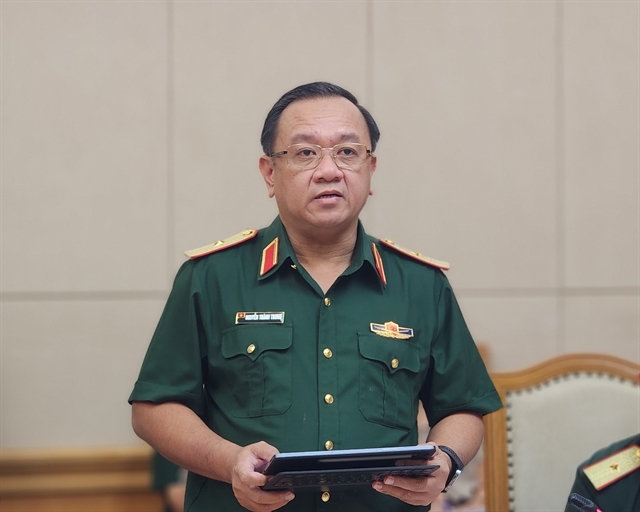 |
| Major General Nguyễn Thành Trung, political commissar of the HCM City High Command and standing deputy head of the HCM City Steering Committee for the Search, Recovery and Identification of Martyrs’ Remains. — VNA/VNS Photo |
HCM City — HCM City is mobilising all available resources, combining records, witness accounts, technology, and DNA testing to search for, recover, and identify the remains of unidentified martyrs and return them to their families and hometowns under the ongoing nationwide “500 Days and Nights Campaign to Accelerate the Search, Recovery and Identification of Martyrs’ Remains.”
Major General Nguyễn Thành Trung, political commissar of the HCM City High Command and standing deputy head of the HCM City Steering Committee for the Search, Recovery and Identification of Martyrs’ Remains, spoke to Tin tức và Dân tộc (News and Ethnic Affairs) newspaper about the campaign.
Could you share your thoughts on the 500 Days and Nights Campaign and its effectiveness in the search, recovery and identification of martyrs’ remains in HCM City?
In my view, the most important thing about the campaign is that we are racing against time.
More than half a century has passed since the war ended. Witnesses are growing older, and many have died. The terrain is changing rapidly, while documents are scattered across many places, both at home and abroad. If we do not act decisively now, some information that can still be verified today may no longer be available in a few years.
Therefore, the campaign is not simply a timeframe or a period of intensive activity. It reflects a political determination and the mobilisation of all available resources to search for, recover and ultimately identify martyrs whose information remains incomplete, using every possible method – from records, documents and historical witnesses to maps, aerial photographs, geophysical survey technology and, in particular, DNA testing.
For us, behind every set of remains is a person and a family that has been waiting for decades. Therefore, finding a martyr’s remains, identifying them and returning them to their family, comrades, and hometown is the most meaningful outcome of the campaign.
How did the HCM City High Command verify and identify the search area for martyrs’ remains at Lê Thị Riêng Cultural Park from the fragmentary initial information?
This was a very long and far from simple process. The initial information that Nguyễn Xuân Thắng, an architect, and I obtained was quite fragmentary, including accounts from witnesses, historical documents, old diagrams, and photographs. Meanwhile, the park today has changed considerably from the former Đô Thành Cemetery.
We determined that we could not rely on a single source of information to locate and excavate the remains. The HCM City High Command collected and cross-checked multiple independent sources, met witnesses directly, identified old physical features such as a water tower, rows of trees, canals, burial areas, road directions, and residential areas, and then overlaid them on current maps.
At the same time, we worked with scientists and used geophysical survey methods such as ground-penetrating radar, electrical resistivity, and other technological tools to identify areas showing abnormalities underground. Only when multiple sources of information converged on the same area did we organise surveys and excavations. On June 23, 2026, the first remains of martyrs were discovered.
That was a particularly significant moment for us because traces that had seemed to have disappeared after nearly 60 years were finally connected again.
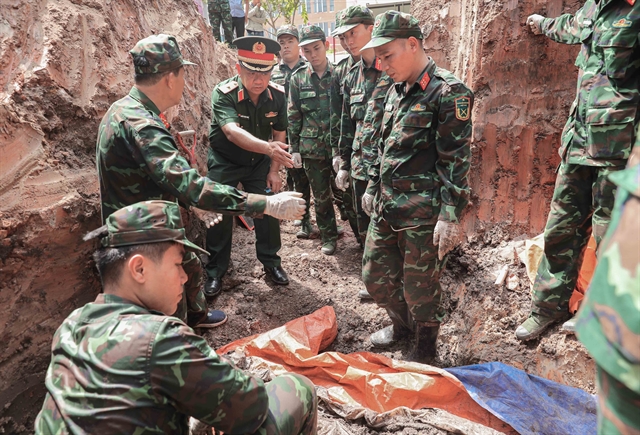 |
| Major General Nguyễn Thành Trung directly oversees the search for and recovery of martyrs’ remains at Lê Thị Riêng Cultural Park in HCM City. — VNA/VNS Photo |
During your direct meetings with witnesses, what information or story affected you most and strengthened your determination to bring the martyrs home as soon as possible?
I have met many witnesses and heard many stories. Some are very old but still remember locations, directions, and how the dead were buried.
What troubles me most is that some people know their comrades are lying somewhere under the ground, but for nearly 60 years they have been unable to identify the exact location and take them home.
In particular, during excavations, we have seen the positions in which the martyrs were buried, sets of remains lying next to each other and cases showing signs of having been tied up. We have also found ordinary personal belongings left beside them, such as rubber sandals, hammocks, scarves, combs, and rings.
These things drive us to work faster, but also with the utmost care and scientific rigour. As long as there is information, we will keep searching; as long as there is a possibility, we will keep verifying. The relatives of the martyrs have already waited for nearly 60 years. We cannot make them wait any longer simply because we have not fulfilled all of our responsibilities.
What have been the most notable outcomes in recent times, particularly through the search at Lê Thị Riêng Cultural Park?
In three months, from June 23 to September 25, 2026, search forces in the park area recovered 665 martyrs’ remains. These included 632 individual remains and eight collective graves containing a total of 33 others. Personal belongings were found, along with 299 sets. (Editor's Note: At the time of publication, October 5, the number of martyrs' remains found had reached nearly 720).
But in my view, the greatest value of these results does not lie in the figure of 665. The greatest value is that we have demonstrated that even after nearly 60 years, there is still a possibility of finding martyrs if we are determined, use the right methods and know how to connect historical documents with modern science and technology.
Every set of remains found also brings new hope to a family that is still waiting.
What difficulties has the search in the park faced in terms of witnesses, documents, terrain, and changes to the area over the decades?
The greatest difficulty is time. Nearly 60 years have passed. Many eyewitnesses are no longer alive, while those who are older may no longer remember everything clearly. Sometimes the names of places, coordinates, and descriptions differ in documents from different sources.
The terrain has also changed almost completely. The former cemetery has become a park, while roads, houses, underground structures, and vegetation have all changed. A physical feature that a witness remembers clearly from 1968 may no longer exist today.
In addition, the excavation process must be carried out with particular care. When remains are found, we follow archaeological methods: observing the position of the remains, determining their location, making diagrams, photographing and digitising the site before removing and recovering the remains and taking DNA samples.
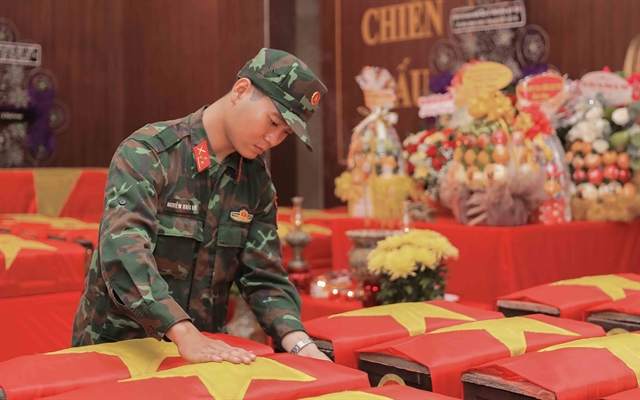 |
| Martyrs’ remains recovered at Lê Thị Riêng Cultural Park are respectfully kept at the park’s memorial house as they await their return to their families, hometowns, relatives, and comrades. — VNA/VNS Photo |
Based on the results at the park, how does HCM City plan to expand the 500 Days and Nights Campaign in terms of its objectives, scope and methods?
The results at the park have given us an important lesson: even if some locations have been searched without results, it does not necessarily mean that no remains are there. If new documents, new witnesses, or new scientific and technological methods become available, those locations need to be studied again.
Therefore, the city will continue reviewing areas suspected of containing martyrs’ graves, particularly sites where collective burials may have taken place. At the same time, we will expand the collection of records from both domestic and foreign sources, including documents from the US and sources related to the resistance war against the US.
Our method is to combine five sources: records and documents, witnesses, maps and archival photographs, science and technology, and DNA. These sources must be cross-checked and complement one another before a search is organised.
Alongside the search, we are building a DNA database of relatives of martyrs. The city has collected and handed over more than 7,000 DNA samples for comparison and identification.
The ultimate goal is not simply to find the remains. If they are found but their names remain unknown, the journey is not yet over. We hope that through DNA and other sources, including records and personal belongings, more and more martyrs will have their identities restored and be returned to their families.
What would you like to say to war veterans, eyewitnesses, and other people who possess information about the burial places of martyrs but have not been able to provide it to the authorities?
I sincerely hope that war veterans, historical witnesses, and people across the country will provide whatever information they have to the authorities, even if it is only a trivial memory.
Do not think that your information is unimportant. A tree, a road, a ditch, an old house, a person who once took part in a burial, a photograph, a letter, a map, or even a story heard from one’s parents may sometimes be the missing link that helps us locate the remains of martyrs.
Time does not wait for us. The number of historical witnesses is declining. Therefore, if you remember something, please tell us; if you have documents, please provide them; if you know of a location where martyrs may be buried, please report it to the authorities.
We will receive and verify every piece of information carefully, scientifically, and responsibly. This is not only the responsibility of the HCM City armed forces or those directly carrying out the work today; it is also the responsibility – and an expression of the Vietnamese tradition of “When drinking water, remember its source” – of our generation towards those who sacrificed their lives for the Fatherland.
We will continue searching as long as there is information, as long as there is hope, and as long as there are martyrs who have yet to return home. — VNS
Opinion
 Opinion
 Opinion
 Opinion
 Opinion
 Opinion
 Opinion
 Opinion
 Opinion
 Opinion
 Opinion
 Opinion
 Opinion
 Opinion
.jpg)



