 Opinion

Việt Nam fosters comprehensive cooperation with Uruguay
1.
|
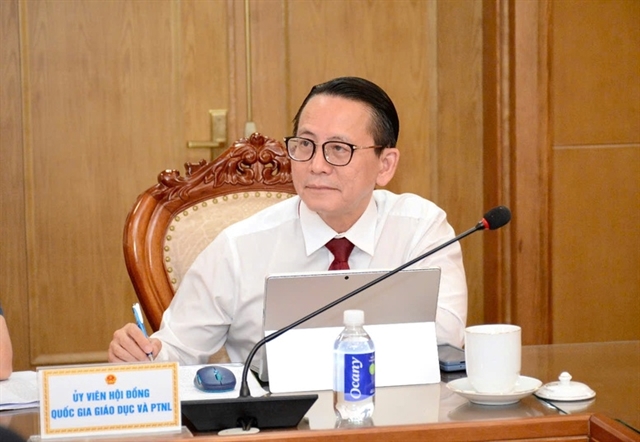
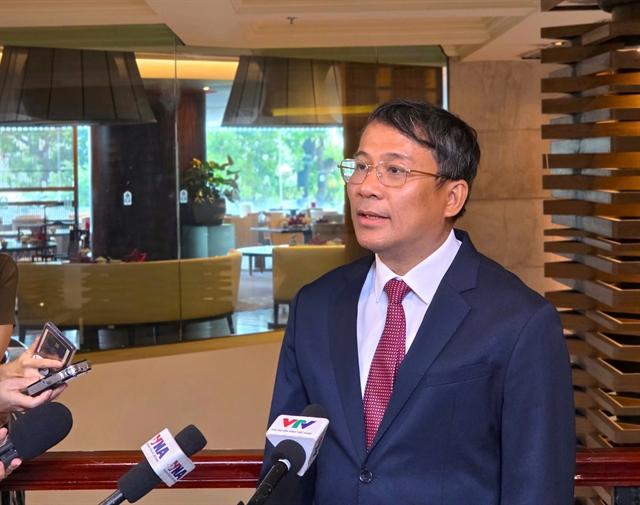
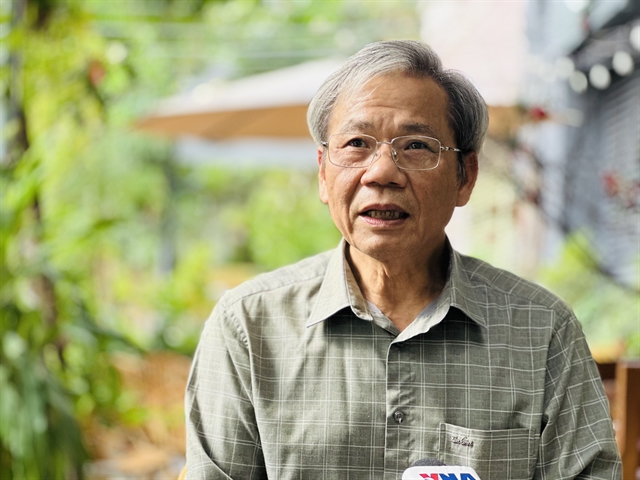
| Prof. Dr. Dương Quý Sỹ. VNA/VNS Photo |
Prof. Dr. Dương Quý Sỹ, a member of the National Committee for Education and Human Development, spoke to Giáo Dục & Thời Đại (Education & Times) about the achievements made in one year since the implemention of Politburo’s Resolution 71-NQ/TW.
What have been the most notable changes in the education sector one year after the Resolution was promulgated?
Many major policies, including tuition fee exemptions and reductions, free textbooks, meal support, scholarships and credit programmes, increased preferential allowances for teachers and greater autonomy in higher and vocational education, have been concretised and implemented in a coordinated manner.
These policies have provided important additional resources for the national education system, reduced barriers to access to education and contributed to improving the quality of education and training.
The effectiveness of restructuring the school system and streamlining the organisational apparatus, combined with efforts to strengthen governance capacity and align with the two-tier local government model, has been clearly reflected in the Grade 10 admissions results for the 2026–2027 academic year, with the number of admission places increasing by more than 24 per cent compared with the previous academic year.
This is a significant figure because Grade 10 admissions in many major provinces and cities have traditionally been a major source of pressure for students and parents.
Vocational education is also facing an important transition, with numerous changes under the 2025 Law on Vocational Education.
In higher education, in line with Resolution 71-NQ/TW, the trends towards modernising infrastructure, strengthening governance and autonomy, linking training with science, technology and innovation, and aligning training with the economy’s human resource needs are becoming increasingly evident.
Preferential credit policies for students studying STEM disciplines, together with scholarships for basic sciences, key engineering fields and strategic technologies, have already generated positive impacts.
Compared with the major objectives of the Resolution, in which areas does education still fall short of the targets?
Implementation capacity remains uneven among localities, educational institutions and management levels. Some officials are still struggling to shift from administrative management towards governance based on standards, data and outcomes.
Notably, following decentralisation, State management capacity in education at commune level remains an area requiring further strengthening. At the same time, restructuring and streamlining the education system within a short period has created a number of difficulties and pressures during implementation.
Teacher shortages also remain a problem in many localities. The policy of placing teachers at the highest level in the public administrative and service salary system, along with a number of specific support policies, does not yet have sufficient conditions for uniform implementation.
There are still significant disparities in infrastructure, access to education and educational quality between regions and localities. Some areas continue to face shortages of classrooms, specialised rooms and teaching equipment, while temporary or borrowed classrooms remain an issue in some disadvantaged areas.
In major cities, rapid population growth driven by migration has placed pressure on school capacity. Meanwhile, remote and border areas continue to face difficulties related to infrastructure, education personnel and other educational support services.
In addition, the institutional framework has not yet been sufficiently developed to create policies suited to the practical requirements of strengthening the modernisation and international competitiveness of Việt Nam’s education and training system.
The State budget’s capacity to allocate funds and mobilise social resources remains limited and does not yet meet the requirements for a breakthrough and modernisation of education.
In my view, the biggest bottleneck at present is the gap between policy direction and institutional frameworks, between institutional frameworks and implementation, and between policies and tangible outcomes for learners.
What solutions should the education sector focus on to move from laying the foundations to accelerating implementation and turning the objectives of Resolution 71 into concrete results?
Teachers and education managers must be regarded as the decisive factors in educational reform. It is not enough simply to recruit sufficient numbers; the sector must recruit the right people, deploy them appropriately, provide commensurate remuneration and create an environment in which talented people want to enter the profession, and capable people want to make long-term contributions.
Investment in education should shift from simply allocating resources towards investing based on objectives and effectiveness.
For vocational education, the network of institutions and training disciplines should be restructured according to human resource needs and the labour market.
For higher education, the development of STEM disciplines and strategic technology fields must be linked to teaching staff, scientific research, laboratories, innovation and human resource needs.
Digital transformation and AI should be viewed as tools for improving the quality and productivity of education, reducing administrative workloads, supporting teachers, enabling personalised learning and promoting data-based governance, rather than simply digitising existing processes. VNS
Opinion
 Opinion
.jpg) Opinion
Opinion
 Opinion
 Opinion
 Opinion
 Opinion
 Opinion
 Opinion
 Opinion
 Opinion
 Opinion
 Opinion
 Opinion
 Opinion