.jpeg) Opinion
Opinion

Ping An Digital Bank Completes HKMA’s Second GenA.I. Sandbox Cohort
1.
.jpg)
|
| A training course for trainers on the Mendez Principles for Effective Interviewing for Investigation and Information Gathering is held in Nha Trang. — VNS Photo Thành Long |
Việt Nam is continuing efforts to strengthen professional capacity in investigative interviewing and information gathering, in line with its commitments to preventing torture and ensuring compliance with international standards. A recent course on the Mendez Principles for Effective Interviewing for Investigation and Information Gathering brought together experts and practitioners to exchange experience on applying the principles in Việt Nam.
Two experts in the field spoke to Việt Nam News reporter Hải Anh about the approach and its relevance to investigative interviewing.
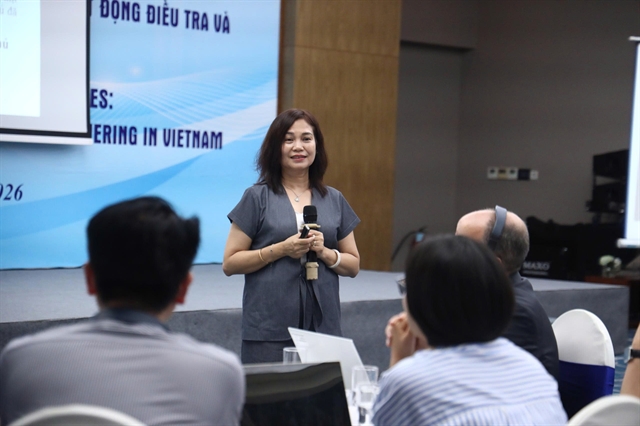
Phan Thị Lan Hương, Head of the International Cooperation Department, Hanoi Law University
|
| Phan Thị Lan Hương, Head of the International Cooperation Department, Hanoi Law University. — VNS Photo Thành Long |
Việt Nam has established a relatively comprehensive legal framework for preventing and combating torture and ensuring compliance with international standards.
Studying the Mendez Principles with a view to further applying them reaffirms Việt Nam’s commitments to preventing torture, coercion and the use of force. It also provides practical guidance to ensure that investigators follow professional, legal and ethical standards when conducting interviews and taking statements.
The Principles provide specific guidance on moving away from an approach based on obtaining statements through pressure or coercion, towards one in which individuals are encouraged to participate voluntarily and share information about a case on the basis of free will and a relationship of trust with investigative authorities.
Putting these principles into practice depends heavily on investigators’ skills, particularly their ability to build rapport and establish trust with those they interview. When people trust that investigators and relevant authorities will collect information objectively and fairly, this in turn helps build greater trust in Việt Nam’s legal system.
Việt Nam has developed a relatively comprehensive legal framework. The next step is to strengthen its implementation through training programmes on a range of skills, including effective interviewing and building relationships based on trust.
In particular, the Mendez Principles also address interviewing vulnerable groups. For example, more specialised training may be needed when interviewing victims of sexual abuse or children, including skills in conducting child-friendly investigations and interviews.
Such training courses serve two purposes: to strengthen the capacity of Việt Nam’s investigators, and to demonstrate how the Government’s commitments are being implemented and translated into practice.
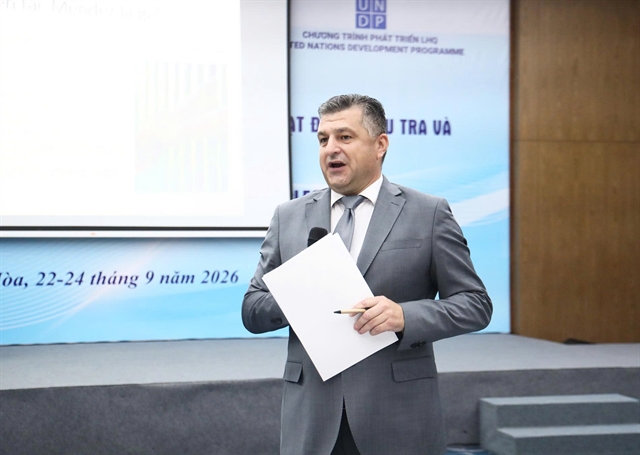
Victor Zaharia, member of the United Nations Subcommittee on Prevention of Torture
|
| Victor Zaharia, member of the United Nations Subcommittee on Prevention of Torture. — VNS Photo Thành Long |
The Mendez Principles provide an opportunity to increase the effectiveness of investigative work. They bring benefits to investigators, as they enable us to collect more reliable information, which means we can perform our professional duties better.
They benefit the justice system because it can operate with credible information collected in accordance with the law, including evidence and so on.
Suspects and other people involved in interviews also benefit from the principles, and more broadly, so does society as a whole, as they help increase trust in and support for the authorities.
I have to say the principles are universal. They come from the long-standing experience of many professionals in various fields, including investigators, scientists and others.
But at the same time, national legislation may provide for specific modalities of implementation, for example, in relation to safeguards. This means there are some local peculiarities, such as the procedures for registering complaints or ensuring that someone receives legal aid.
To translate the principles into everyday investigative practice, we need to ensure that the law is compliant with and incorporates the approaches.
We also need to ensure that the necessary infrastructure is in place. For example, if we are talking about recording interviews, you need to have the appropriate infrastructure to record them.
Another element, which is no less important, is training staff. They should be able to apply the skills and approaches. Over time, they will see the benefits of these approaches and of the principles themselves.
I should also mention that there are already many existing practices that need to be reinforced, and positive trends that need to be maintained. — VNS
Opinion
 Opinion
 Opinion
 Opinion
 Opinion
 Opinion
 Opinion
 Opinion
 Opinion
 Opinion
 Opinion
 Opinion
 Opinion
 Opinion
 Opinion