 Opinion
Senior Party leader calls for urgent, decisive implementation of key tasks by year-end
1.
|
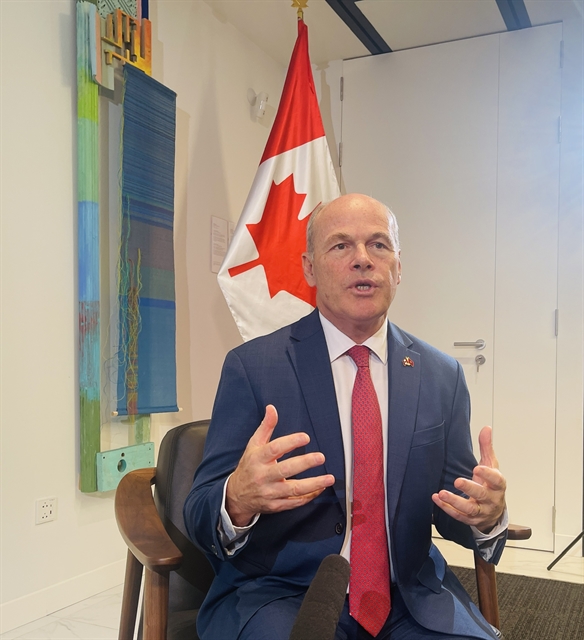
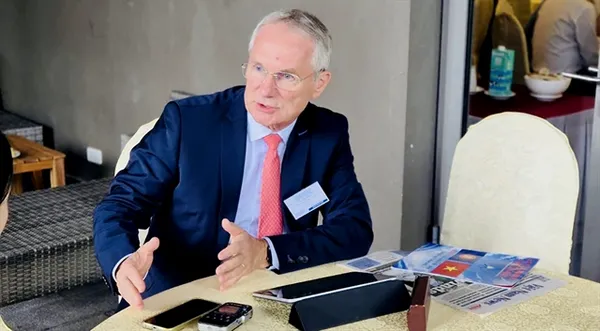
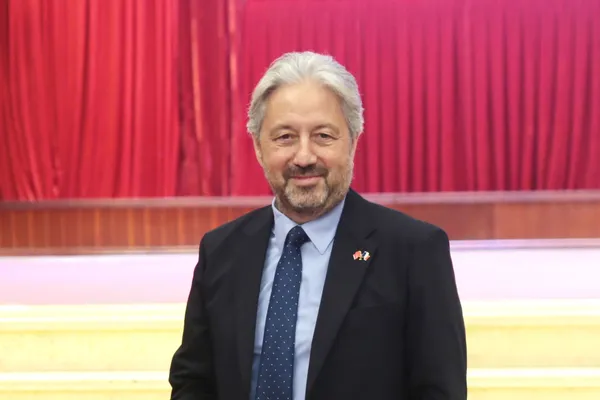
| Canadian Ambassador to Việt Nam, Jim Nickel. — VNS Photo Khánh Chi |
After his trip to the US to attend the High-Level General Debate of the 81st Session of the United Nations General Assembly (UNGA 81) and conduct bilateral activities, General Secretary of the Communist Party of Việt Nam Central Committee and President Tô Lâm will pay a state visit to Canada, which is expected to deepen the Comprehensive Partnership between the two countries. Canadian Ambassador to Việt Nam, Jim Nickel, spoke to local media, highlighting the significance of the visit and bilateral ties.
How significant is the General Secretary and President Tô Lâm's visit to Canada and how can the momentum from the UN General Assembly help further advance the Comprehensive Partnership between our two countries?
Canada is very much looking forward to this historic visit by the Party General Secretary and State President of Việt Nam. We have never had a visit by the General Secretary to Canada, so this will be the first time. We have had, of course, diplomatic relations for the past more than 50 years now, establishing diplomatic relations in 1973. And in 2017, we established a Comprehensive Partnership, which brought our relationship to another level. And it has been a very fruitful, productive relationship, in all areas of the relationship, be it diplomatic, trade and investment, defence and security, cultural-academic exchanges, science and technology, innovation.
We have a number of common values and shared interests that we can build on, and those are in the diplomatic space, in the economic space, in trade and investment, in the people-to-people areas of culture and academic exchange, in the area of sustainable development and development cooperation. So these are all areas of our relationship that I believe, through the visit of General Secretary and President Tô Lâm to Canada, we will have an opportunity to deepen our cooperation in all of these areas and take the relationship to a higher level.
Over the past few years, Việt Nam and Canada relations have continued to grow, with bilateral trade increasing every year. Which areas offer the greatest potential for further cooperation between the two countries in the future?
We're very pleased to see the growth in our trade and investment and innovation relationship with Việt Nam. This is very important to us, and I believe it's very important to Việt Nam as well. Both Canada and Việt Nam recognise the need to have reliable trading partners, to diversify our trade so that we're not overly dependent on any one economy, any one country for our economic growth. And I think we have a shared interest, Canada and Việt Nam, in strengthening our bilateral economic relationship.
So I'm very pleased to see that over the past five years, we have doubled our two-way trade and investment. In fact, even over this past year from 2024 to 2025, our bilateral trade grew from 15.7 billion Canadian dollars to 20.6 billion Canadian dollars (US$11.14 billion - 14.62 billion). Now, the vast majority of that is Vietnamese exports to Canada, which we appreciate very much, so it's been very good for Việt Nam. But we see that there's a great potential for growth in this two-way trading relationship.
Clearly, some of the sectors that are important for Việt Nam and Canada are agriculture and food security, food supply, innovation in the agricultural sector, agricultural technology. So I think agriculture, there's a lot of two-way trade and investment, and there's room for growth in that industry.
Energy is going to be critical for Việt Nam's continued and rapid growth, I would say, as Việt Nam develops its advanced manufacturing, its data centres, its international financial centres, its semiconductor industry. That requires a lot of energy. Canada is an energy superpower. We have conventional energy, we have renewable energy, we have various innovations in the energy space. So this is an area of energy and energy security and energy supply, where I think, we can grow the relationship significantly.
And then just in the overall area of aerospace and aviation, Việt Nam's aviation industry is growing rapidly. We have a strong aviation manufacturing and technology capabilities, so I think there's complementarities there.
And then just more generally in innovation and technology, whether it's communications technologies, satellites, other sorts of technology, including, of course, artificial intelligence, which is on the top of everyone's mind. These are areas where I think we could see some significant growth in the coming years.
|
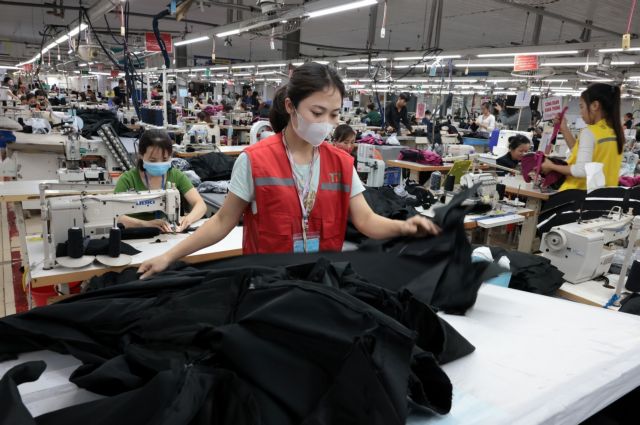
| A worker at the TDT Investment and Development JSC in Điềm Thụy Commune, Thái Nguyên Province, is checking clothing items before they are exported to key markets including the US, EU and Canada. According to the Canadian Ambassador to Việt Nam, Jim Nickel, Việt Nam is now a global manufacturing hub and an important node in global supply chains. VNA/VNS Photo Trần Việt |
Energy is a potential cooperation between the two countries. How can Việt Nam and Canada deepen cooperation in this area, especially in energy transition to build a greener and more resilient economic future, because both countries committed to net-zero targets and sustainable growth?
Both Canada and Việt Nam have the same net-zero targets that we're obliged to meet, and we have different capabilities in the energy field. Canada is quite fortunate in that some 82 per cent of the energy production across our country is clean and green energy. In some provinces of Canada, it's close to 100 per cent green energy, and that's given our hydroelectricity and other capabilities that we have.
We've seen that we have gone through a period, or are still going through a period, where there's a bit of an energy supply crisis, and energy security is top of mind for most governments, including Việt Nam. Canada has a lot of conventional energy, we have renewable energy technologies, and we have a lot of capabilities in the energy space related to energy grids, electricity grid, power plants, all of these technologies, including nuclear technology.
So I think that combination creates opportunities for Việt Nam, Vietnamese companies, and the Government of Việt Nam to work closely with Canadian counterparts to have a partnership in energy that could be very useful for both countries going forward.
Canada is already an important source of investment in Việt Nam, but the scale of investment still appears to be short of potential. Which sectors offer the greatest potential to further strengthen the investment partnership in the upcoming years?
According to Statistics Canada, Canadian direct investment in Việt Nam stood at approximately CA$4.6 billion in 2025, driven primarily by investments in the financial services and insurance sectors. Việt Nam’s direct investment position in Canada remains modest.
This is an underperforming area of our relationship, and we would like to see greater investment ties both ways. So in Việt Nam, Canada is of course very interested in what Việt Nam is doing with the International Financial Centres in HCM City and Đà Nẵng. So we'll be watching that very closely to see if there's opportunities for Canadian investors to participate in these IFCs, and those will be entry points to access many different areas of activity in Việt Nam.
But we also see that there's a lot of infrastructure development in Việt Nam, there's a lot of energy infrastructure growth in Việt Nam, and there are transformations going on in the agricultural sector as well. All of these can be driven by investment, and so those all provide opportunities for Canada, I think, to invest in Việt Nam.
We would encourage Việt Nam to invest in Canada's energy sector to secure your own energy supply. If Việt Nam were to take an equity stake in Canadian energy projects or long-term offtake agreements with Canada, it would be a very good way to secure Việt Nam's energy future.
Canada has identified the Indo-Pacific as its top priority. What role does Việt Nam play in Canada's Indo-Pacific strategy, and how important is Việt Nam as a partner in advancing Canada's relations with Southeast Asia?
Canada sees Việt Nam as a key partner in the Indo-Pacific region, and most certainly within Southeast Asia. In fact, Việt Nam is Canada's most important trading partner in the ASEAN group, and we see Việt Nam as a gateway for Canada to the ASEAN partnership and the Indo-Pacific more broadly. Việt Nam is now a global manufacturing hub, an important node in global supply chains.
So that, in a very practical sense, is important for Canada to have deeper engagement with Việt Nam. We have a rapidly growing trading relationship. The investment relationship is getting stronger year after year, and we believe that we have common interests and shared values that will be the basis for long-term economic growth in this partnership.
For Canada, the Indo-Pacific region is the fastest-growing economic region in the world today, and within that, the fastest-growing countries are Việt Nam and India with the high growth rates. And we all know that Việt Nam has even greater ambitions for more rapid growth. So that in itself is very attractive to Canada to participate and be a partner for Việt Nam in that growth as the country moves forward.
The other aspect is that the international economic order has been disrupted significantly. In that context, both Việt Nam and Canada are looking to secure our strategic autonomy, to secure our national economic and security interests. So what both countries need to do is to develop our strategic capabilities so that we can continue to have national economic security and economic resilience. And the way that we do that is by reducing our dependence or vulnerability to any one particular market, but diversifying our economic partners. — VNS
Opinion
 Opinion
 Opinion
 Opinion
 Opinion
 Opinion
 Opinion
 Opinion
 Opinion
 Opinion
 Opinion
 Opinion
 Opinion
 Opinion
 Opinion