 Opinion
NA President meets with Chinese Premier in Beijing
1.
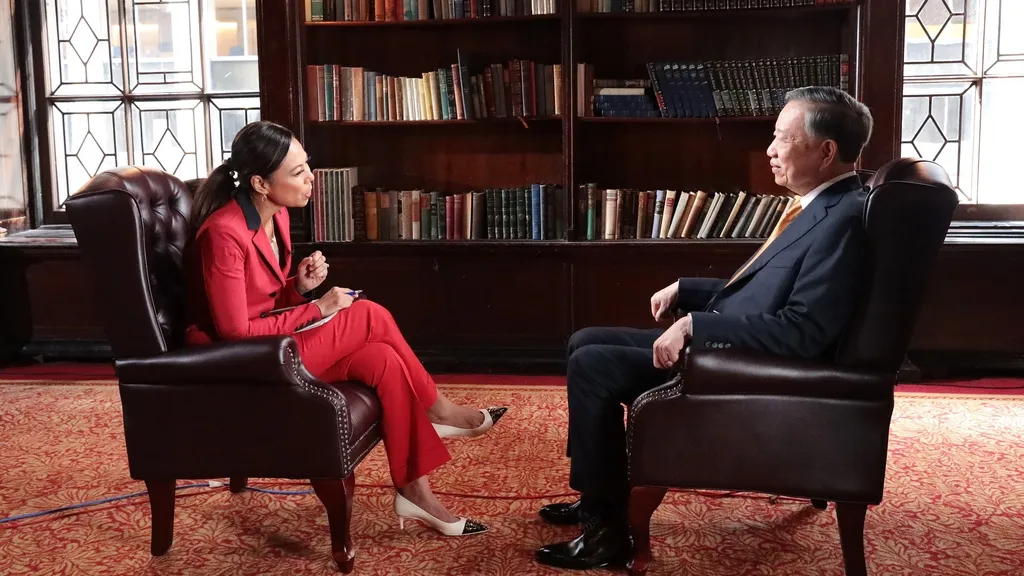 |
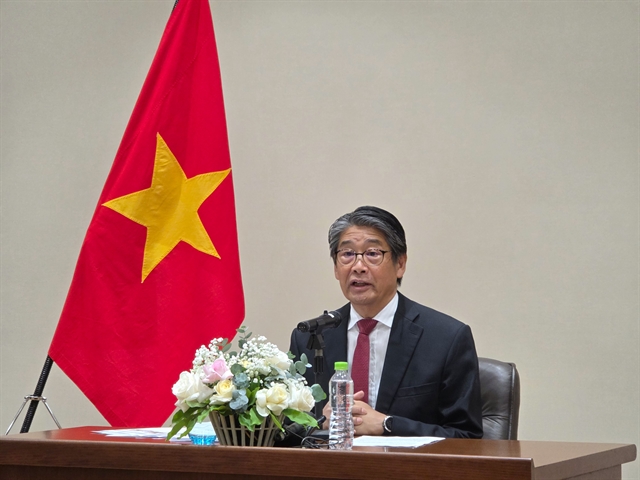
| Party General Secretary and President Tô Lâm speaks to Bloomberg TV. — VNA/VNS Photo |
NEW YORK — General Secretary of the Communist Party of Việt Nam Central Committee and President Tô Lâm has affirmed that Việt Nam is ready to make greater contributions to peace, development and international cooperation, while pursuing a new development model driven by science, technology, innovation and high-quality human resources.
In an interview with Bloomberg TV in New York on Monday (local time), on the occasion of his attendance at the High-Level General Debate of the 81st session of the United Nations General Assembly (UNGA 81), General Secretary and President Lâm said that the world is facing increasingly complex challenges, including conflicts, strategic competition, fragmentation, declining trust and the erosion of international law, while climate change and natural disasters continue to cause serious consequences.
At the same time, rapid advances in science and technology, particularly artificial intelligence (AI), are creating both major development opportunities and new challenges in governance, security and development gaps.
Against this backdrop, the leader said he considered the theme of UNGA 81, “Rebuilding trust and reigniting global solidarity: Accelerating action on the 2030 Agenda and its Sustainable Development Goals towards peace, prosperity, progress and sustainability for all,” as highly significant.
He stressed that countries should use multilateral cooperation to strengthen trust, engage in dialogue, bridge differences and work toward a fairer and more humane world order based on peace and cooperation.
All international commitments need to be translated into concrete action for the future of humanity. Global governance frameworks must stay ahead of the times, ensuring inclusiveness, safety and transparency, while ensuring that technology serves people and respecting digital sovereignty and each country’s right to pursue its own development path, he said.
Việt Nam, he shared, has entered a new stage of development after four decades of Đổi mới (Renewal), with stronger national potential, international stature and credibility. The country consistently pursues a foreign policy, self-strengthening and strategic autonomy, and a development model based on science and technology, innovation, digital transformation and high-quality human resources.
“Building on this foundation, we are ready to enter a new phase of contribution, not only fulfilling our commitments but also taking the initiative and playing an active role in developing solutions, and acting as a responsible member of the international community in promoting peace, sustainable development, climate change response and the shaping of new technology governance,” affirmed General Secretary and President Lâm.
Regarding Việt Nam-United States relationship, the leader said it has evolved from a history marked by war and differences into comprehensive cooperation founded on growing political trust, mutual respect and shared interests.
Việt Nam regards the US as one of its top strategic partners, while the latter continues to affirm its support for a strong, independent, self-reliant and prosperous Việt Nam. This provides an important foundation for the two countries to further strengthen political trust and elevate their Comprehensive Strategic Partnership to a new level.
Highlighting clear and substantive progress in bilateral ties, he said economic, trade and investment cooperation remains an important driver, while collaboration in science and technology, innovation, semiconductors, AI and education and training has continued to expand. Cooperation in addressing war legacies, including efforts to account for missing US servicemen, dioxin remediation, bomb and mine clearance and support for people with disabilities, has also contributed to building trust between the two nations.
Việt Nam values the US's support during the "500-day" campaign to search for, recover, and identify the remains of Vietnamese martyrs, he continued.
Regarding ongoing negotiations on an agreement on reciprocal trade (ART), he acknowledged that differences, particularly in economic and trade relations, are unavoidable in a relationship of such scale and growing interdependence. He stressed the need for the two sides to address them through frank and constructive dialogue, taking into account their broader strategic interests and the increasingly complementary nature of their economies.
Việt Nam is actively working with the US to conclude negotiations and sign the ART at an early date, with the aim of creating a stable and long-term framework for economic and trade cooperation and ensuring that such cooperation will serve as a driving force for the Comprehensive Strategic Partnership, he stated.
He also expressed his hope that building on fostered political trust, increasingly intertwined strategic interests, and the determination of the two countries' leaders, bilateral relations will continue to develop in a stable, substantive, effective and sustainable manner, for the benefit of the two peoples and contributing positively to peace, stability, cooperation and development in the region and the world.
On Việt Nam’s foreign policy priorities, General Secretary and President Lâm shared that the country will continue to pursue independence, self-reliance, self-strengthening, peace, friendship, cooperation, multilateralisation, and diversification of external relations. Foreign policy priorities will be determined by national interests and development requirements while being harmonised with peace, stability and development in the region and the world.
Việt Nam will continue deepening existing partnerships while expanding cooperation with new partners, sectors and stakeholders, including businesses, technology corporations, universities, research institutes and innovation centres. The country will seek to identify areas of common ground and complementary strengths with each partner in order to create new development opportunities and address emerging challenges.
He stressed that foreign relations need to deliver substantive results. Agreements already signed should be implemented, while opportunities created through upgraded relations should be translated into concrete programmes, projects and outcomes. Việt Nam will also improve institutions, prepare human resources, strengthen its capacity to absorb technology and enhance the investment and business environment and implemmentation capacity.
Regarding the average GDP growth target of more than 10 per cent annually during 2026-30, the General Secretary and President affirmed that the target had been carefully considered on the basis of Vietnam’s internal capacity, long-term development vision and the international situation. It reflects the country’s aspiration to catch up with global powers and become a developed, high-income country by 2045.
He further said that Việt Nam is addressing institutional bottlenecks and barriers to growth, including inefficient use of resources and limitations in labour productivity, in order to create a foundation for a new cycle of higher-quality and more productive growth.
The development model will focus on rapid growth alongside macroeconomic stability, improved growth quality and productivity, and a people-centred approach. Science and technology, innovation and digital transformation will serve as strategic breakthroughs and core drivers for developing new productive forces, enhancing national competitiveness and strengthening economic autonomy.
The top leader also expressed his confidence that with clear strategic orientations, strong determination and broad consensus across the country, Việt Nam will achieve its growth targets and turn its aspiration for prosperous development into reality. — VNA/VNS
Opinion
 Opinion
 Opinion
 Opinion
 Opinion
 Opinion
 Opinion
 Opinion
 Opinion
 Opinion
 Opinion
 Opinion
 Opinion
 Opinion
 Opinion