 Life & Style

Seven indicted over HiAnime piracy ring that collected VNĐ315 billion in ad revenue
1.
|
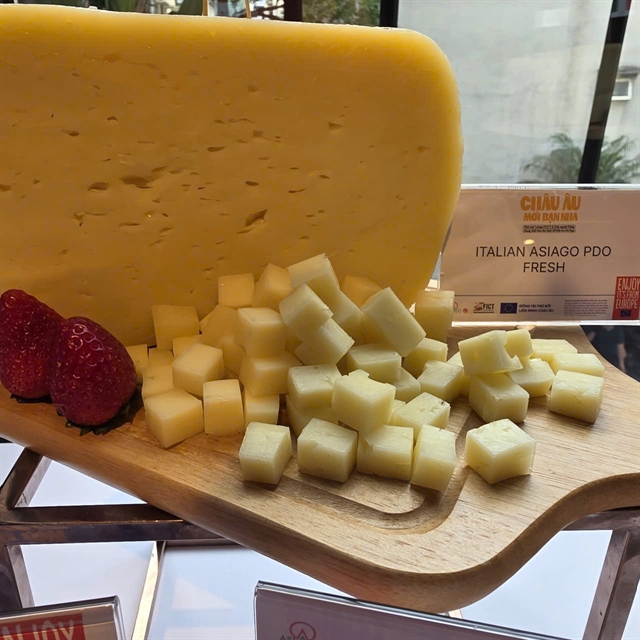
| Italian Asiago PDO is a soft, delicate cow's milk cheese from the alpine regions of Veneto and Trentino in northeastern Italy. It is one of a variety of products on display at the event. — VNS Photos Tố Như |
HÀ NỘI — Amid growing interest in food products with clear origins, Italian Asiago Protected Designation of Origin (PDO) cheese and French charcuterie are expected to gain greater access to Vietnamese consumers.
The EU-Việt Nam Free Trade Agreement (EVFTA) facilitates trade between the two sides, creating further market access opportunities for high-quality food products.
The Italian Consortium for the Protection of Asiago Cheese and the Federation of Charcuterie and Delicatessen Companies (FICT) have brought their products closer to Vietnamese customers through a recent press conference in Hà Nội.
Representative of the Italian Consortium Lisa Chilese said in her briefing about Asiago PDO cheese that the product's value lies not only in its flavour, but also in its production traditions, quality and traceability.
Chilese said her association operates within a legally defined zone across the Veneto and Trentino-Alto Adige regions. Its PDO supply chain encompasses 37 producing companies and six maturing or ripening facilities.
Each wheel of Asiago PDO cheese has specific weights, dimensions and identification features according to its maturity, in compliance with strict production regulations that ensure traceability and preserve the product’s quality and reputation across generations.
Italian cheese: cultural traditions, quality standards
Asiago PDO cheese is a quintessential product of the long-standing cheese-making heritage of northeastern Italy.
|
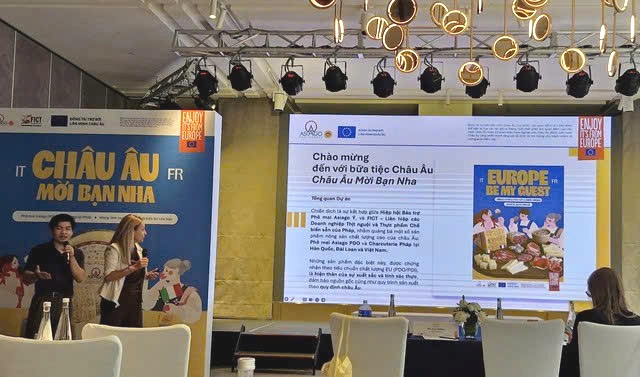
| Lisa Chilese from the Italian Consortium for the Protection of Asiago Cheese (right) speaks at the conference. |
Over time, production methods evolved and the cheese spread far and wide, becoming one of Italy’s best-known dairy products. But according to Chilese, Asiago PDO also represents an unbreakable bond with the land, its traditions and mountain life.
There are two main varieties: Aged Asiago PDO and Fresh Asiago PDO, providing their own unique flavour profile and texture.
Aged Asiago PDO is crafted from partially skimmed milk and matured from three to 15 months or longer. This ageing process results in a firm texture and a rich flavour. After six months of maturation, the cheese becomes naturally lactose-free. Throughout this period, experts carefully monitor the development of the rind, as well as the cheese’s aroma and flavour.
Aged Asiago PDO has a savoury taste, accompanied by fragrant notes of grass and hay.
Fresh Asiago PDO, meanwhile, is made from whole milk and aged for 20 to 40 days. It features a soft texture, a mild, creamy flavour, and the natural aroma of milk.
Maintaining traditional production methods alongside quality control processes allows Asiago PDO to establish a distinct identity in the cheese market, while also meeting the needs of consumers who care about the origin and quality of their food.
French charcuterie: diverse products, rich cultural value
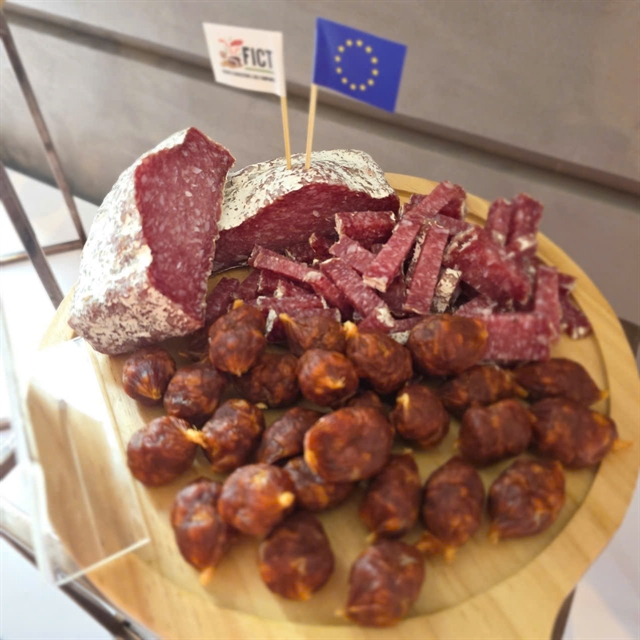
Established in 1924, FICT currently represents more than 310 businesses across France. The French charcuterie sector encompasses over 450 types of specialties, crafted using a variety of processing techniques such as salting, drying, smoking, cooking and curing.
|
| Dry sausages introduced at the event were made primarily from pork. |
In 15th-century France, the craft was formally organised into guilds of charcutiers, who used every part of the animal to minimise waste, creating pâtés, jambon, terrines, galantines, dry-cured ham and sausages. The art of charcuterie has become a narrative steeped in the country's culinary history.
The products vary in flavour and texture depending on the region. Some are recognised in Europe for their origin or traditional production methods, reflecting a link between the product, its geographical region and its specific processing techniques. This also enhances the value of traditional food products in the marketplace.
Strengthening Việt Nam-Europe trade
During the briefing, the Italian and French associations said they expect to bring more options from the premium food segment to the Vietnamese market.
Vietnamese businesses can diversify their product portfolios, enhance their brand image and cater to consumer trends that prioritise quality.
The EVFTA creates a more favourable framework for bilateral trade. However, the potential for market expansion still depends on consumer demand, distribution systems and compliance with regulations regarding food imports.
Earlier this year, the Food and Hospitality Vietnam expo served as an opportunity for Vietnamese businesses to connect with European producers, explore their products and foster long-term commercial partnerships.
It also helped promote the message of the three-year "Europe, Be My Guest" campaign, bringing the values of European culinary traditions closer to Vietnamese consumers. — VNS
Life & Style
 Life & Style
 Life & Style
 Life & Style
 Life & Style
 Life & Style
 Life & Style
 Life & Style
 Life & Style
 Life & Style
 Life & Style
 Life & Style
 Life & Style
 Life & Style
 Life & Style