 Life & Style
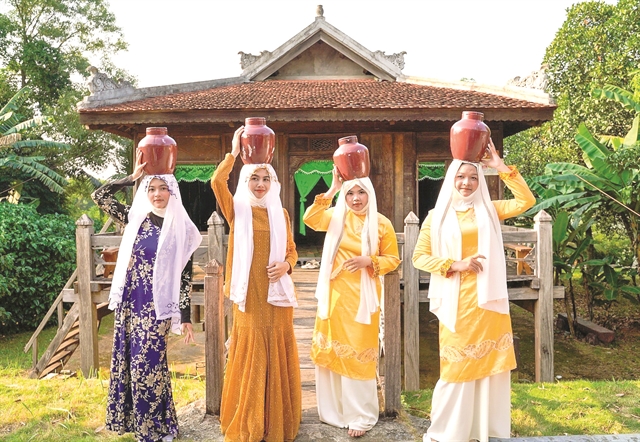
Chăm Muslim weaving craft reflects culture and history
1.
|
| REPRESENTING: Chăm Muslim women in An Giang Province prefer colourful outfits featuring a wide range of patterns. — VNA/VNS Photo Khánh Hòa |
The traditional handloom-weaving village of the Chăm Muslim community in Châu Phong Commune has been recognised by the People’s Committee of An Giang Province as a long-established traditional craft village in southern Việt Nam.
Women play a central role in the craft, weaving beautiful fabrics and producing a variety of items, including clothing. These textiles not only meet everyday needs but also reflect the rich history, cultural identity and distinctive craftsmanship of the Chăm Muslim community.
In the past, Chăm Muslims cultivated their own mulberry trees and raised silkworms to produce silk, which they then used to weave soft, finely crafted textiles. They also used natural materials to create dyes.
These traditional dyes were remarkably durable, resisting fading from washing or sun exposure, and gave the fabrics a distinct lustre that lent a unique character to Chăm textiles.
Today, as they no longer produce their own silk, Chăm Muslim weavers use synthetic threads for most of their products, reserving genuine silk mainly for ceremonial and wedding attire.
Men generally wear casual clothing in everyday life but dress in shirts paired with sarongs, available in a variety of patterns and colours, for special occasions. They traditionally wear the kapeak, a brimless cap, both when leaving the house and while indoors. They also have formal attire worn during religious rituals.
Women’s traditional attire includes a traditional headscarf known as the mispok, a long dress known as an aw kamei, a sarong and wide-leg trousers. Chăm Muslim women often wear colourful dresses and tops made from vibrant fabrics with intricate patterns, particularly during festivals and weddings. These long dresses, which extend below the knee, are often paired with matching skirts and decorated with shimmering beads.
The outfits are further adorned with red fabric tassels, iridescent beads around the neckline and vividly patterned waist sashes that accentuate the silhouette.
The headscarf, made from fine, sheer fabric, features intricate embroidery and metallic-thread edging, reflecting the exquisite craftsmanship of the Chăm Muslim people. — VNS
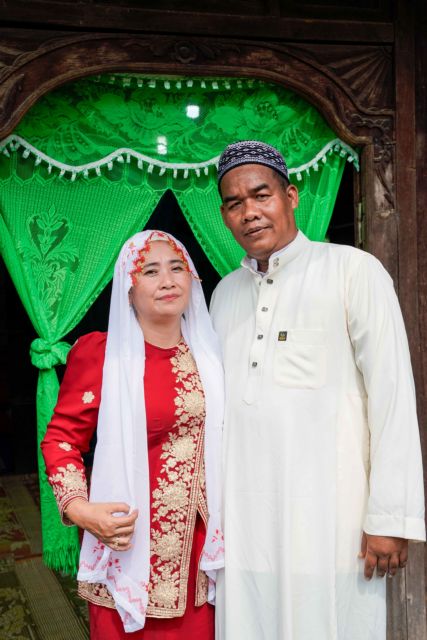 |
| IMPRINT: A Chăm Muslim couple in traditional attire that reflects Islamic traditions and local cultural influences, emphasising modesty, grace and elegance. |
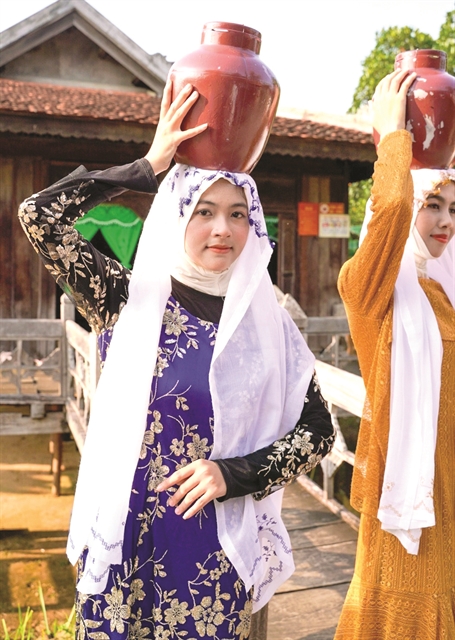 |
| RICH HERITAGE: A woman wearing a traditional 'mispok' and a long dress, both handwoven and intricately embroidered, showcases the Chăm people’s exquisite craftsmanship. |
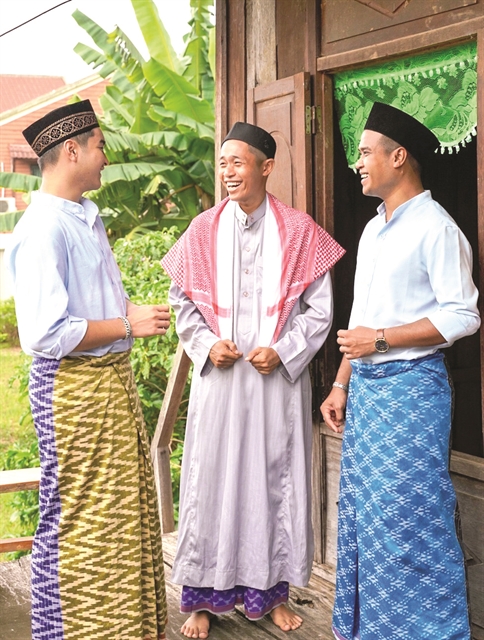 |
| SOUTHERN STYLE: Chăm Muslims in southern Việt Nam traditionally wear the kapeak, a traditional brimless cap. |
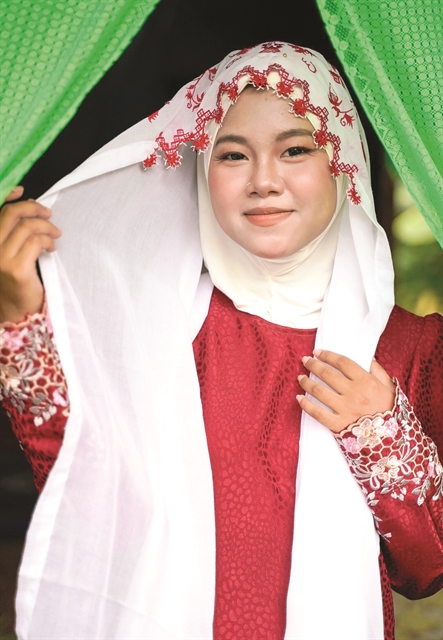 |
| DELICATE: The traditional 'mispok' scarf can feature intricate hand embroidery and shimmering trim along its edges. Making a single piece by hand requires considerable skill and can take weeks. |
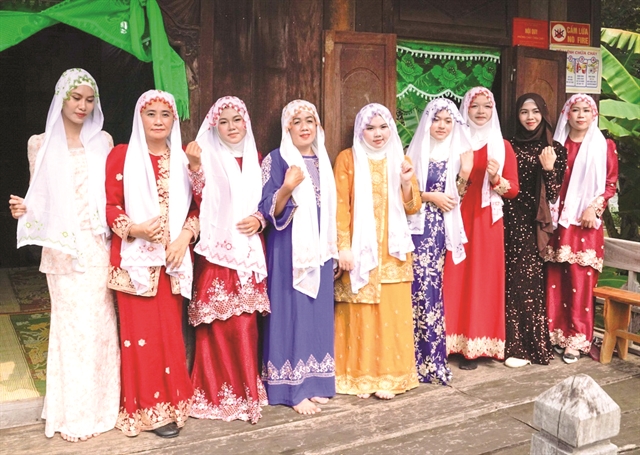 |
| COLOURFUL: During festivals and weddings, Chăm Muslim women wear traditional knee-length tunics paired with vibrantly coloured skirts. |
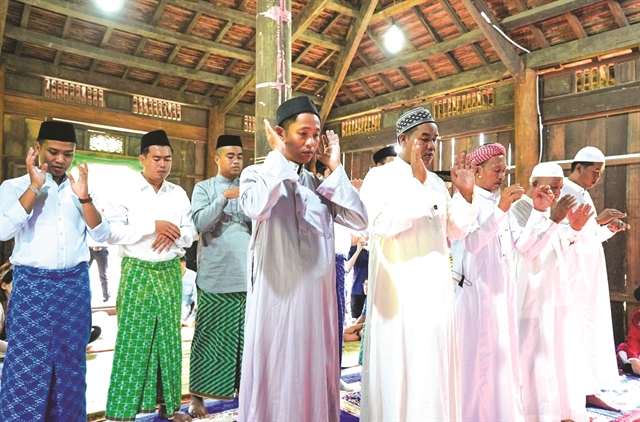 |
| PERSONALISED: Chăm Muslim men wear different styles of clothing for daily life and special occasions. |
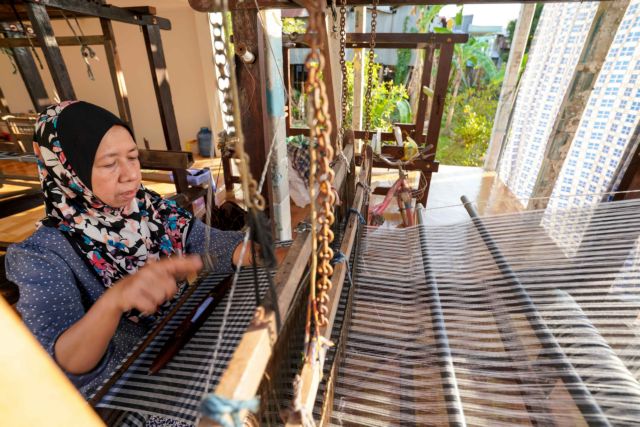 |
| RENOWNED: The traditional craft of handloom weaving initially met families’ clothing needs before evolving into a means of trading goods with other communities. |
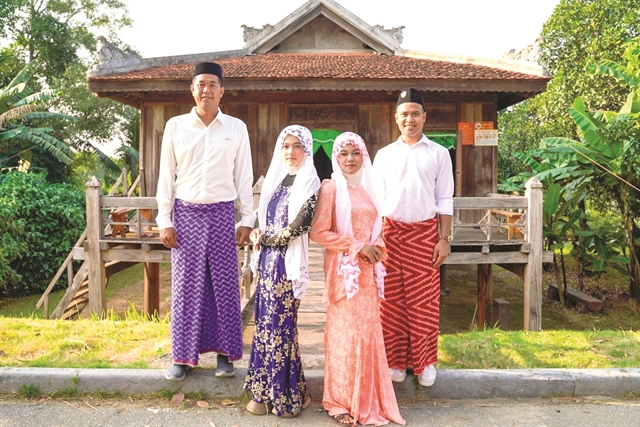 |
| TRADITIONAL: Traditional attire of Chăm Muslims in An Giang Province. |
Life & Style
 Life & Style
 Life & Style
 Life & Style
 Life & Style
 Life & Style
 Life & Style
 Life & Style
 Life & Style
 Life & Style
 Life & Style
 Life & Style
 Life & Style
 Life & Style
 Life & Style