 Life & Style
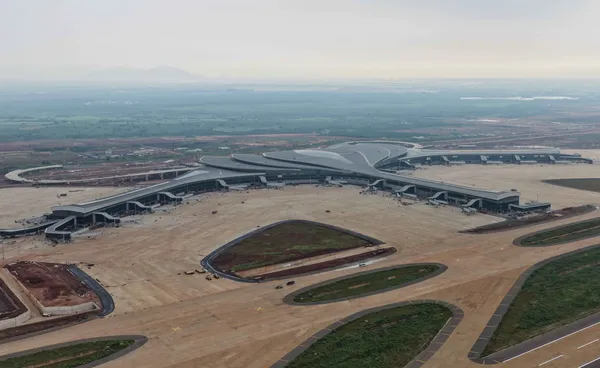
Long Thành International Airport set to begin commercial operations on December 24
1.
|
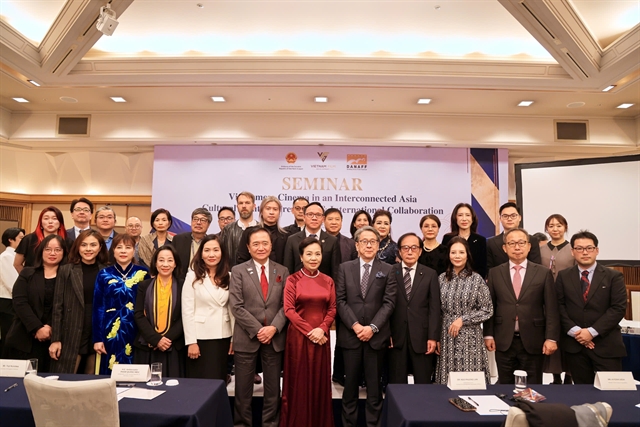
| Delegates at the seminar titled 'Vietnamese Cinema in an Interconnected Asia: Cultural Identity, Creativity and International Collaboration', held during the 2026 Tokyo International Film Festival (TIFF 2026). — Photos courtesy of VFDA |
TOKYO — Japanese film audiences are showing growing interest in movies from emerging markets, including Southeast Asia, with stories exploring cultural encounters, family life, customs and food offering opportunities to connect with viewers, according to a Japanese film distributor.
The issue was discussed at an international seminar titled Vietnamese Cinema in an Interconnected Asia: Cultural Identity, Creativity and International Collaboration, held during the 2026 Tokyo International Film Festival (TIFF 2026), where filmmakers and industry representatives explored ways to expand the international reach of Vietnamese films and strengthen cooperation with Japanese partners.
The event was organised by the Việt Nam Film Development Association (VFDA) in coordination with the Vietnamese Embassy in Japan.
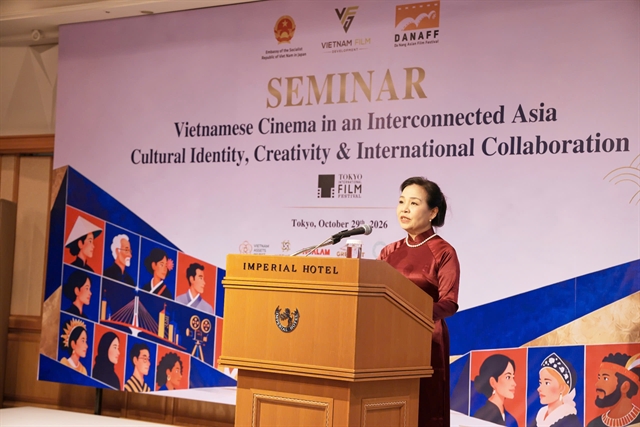
VFDA Chairwoman Ngô Phương Lan raised questions about the relationship between national identity and the development of Vietnamese cinema in the international arena. She said the challenge was not simply how to keep pace with the global film industry, but also how to preserve Việt Nam's identity and find stories that could resonate with international audiences.
Lan said: "Vietnamese identity is not just reflected in landscapes, costumes or customs. It is also found in how people love, face loss, and choose between personal desires and family responsibilities, in memories of the past that continue to weigh on people’s lives today."
Citing the film Bao Giờ Cho Đến Tháng Mười (When the Tenth Month Comes), she recalled how a woman conceals news of her husband’s death in the war to spare her elderly father-in-law further pain.
The family story, she said, also conveys the suffering caused by war, love and endurance. By delving deeply into an individual Vietnamese experience, the film reaches emotions shared by people everywhere.
She added that Việt Nam, Japan and other Asian countries shared experiences that could provide common ground for storytelling, including preserving memories amid change, maintaining family ties while pursuing individual paths and navigating the tensions between tradition and modern life.
|
| Ngô Phương Lan, Chairwoman of the Việt Nam Film Development Association (VFDA). — Photos courtesy of VFDA |
Vietnamese Ambassador to Japan Phạm Quang Hiệu said cinema could add a cultural and human dimension to the Việt Nam–Japan Comprehensive Strategic Partnership.
Beyond trade, investment, education and technology, films could connect the two peoples through stories and emotions, helping audiences understand one another beyond formal channels of communication.
Kuroiwa Yuji, Governor of Kanagawa Prefecture, highlighted the growing cultural ties between the prefecture and Việt Nam.
Vietnam Fest in Kanagawa was first held in 2015 and has since become an annual event, with its 10th edition taking place in September 2026. Since 2018, Kanagawa Festival in Việt Nam has also been held annually, with its seventh edition under preparation.
He also referred to the opera Anio Princess, which tells the love story of Princess Anio and Japanese merchant Araki Sotaro in the trading port of Hội An around 400 years ago. Staged to mark the 50th anniversary of diplomatic relations between Việt Nam and Japan, the work demonstrates how shared history and cultural exchanges can inspire artistic creation.
|
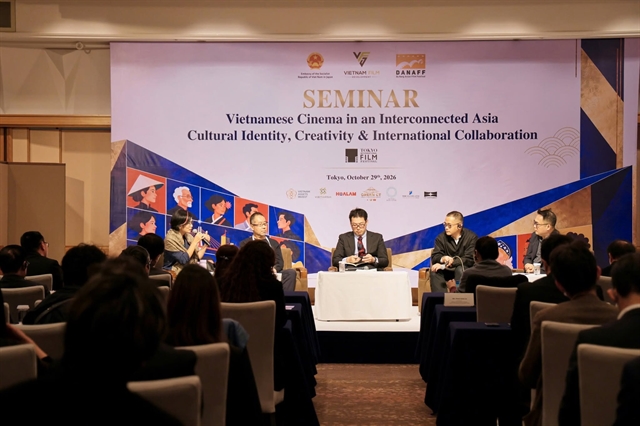
| Delegates at the first discussion session focused on Việt Nam–Japan exchanges and ways to promote Vietnamese films overseas. — Photos courtesy of VFDA |
Building international audiences for Vietnamese cinema
The first discussion session focused on Việt Nam–Japan exchanges and ways to promote Vietnamese films overseas.
Eijun Sugihara, curator of the Fukuoka City Public Library Film Archive, said the archive currently preserves 69 Vietnamese films made between the 1960s and the 2020s. Since 1991, Fukuoka has also organised the ASIA FOCUS film festival to introduce new works from across Asia.
He stressed that preservation should go hand in hand with bringing films to audiences. Works by director Đặng Nhật Minh, for example, had helped some Japanese viewers approach the Việt Nam War from perspectives different from those presented in American cinema.
Director Phan Đăng Di, who had visited the Fukuoka archive, said he recognised the value of having a specialised organisation with a strong understanding of cinema preserve, select and introduce Vietnamese films. He subsequently encouraged domestic filmmakers to contribute their works so the collection could reflect not only classic films but also emerging voices.
Over the past five to six years, around six or seven Vietnamese films have been submitted to the archive annually.
Di said working with organisations that had professional expertise and a genuine interest in cinema was an effective way to maintain the presence of Vietnamese films overseas and give international audiences a more comprehensive view of the country's film industry.
The session also explored commercial distribution as a more direct way of reaching foreign audiences.
Takashi Yoshida, in charge of international acquisitions at Sai Pro, said the company had decided to acquire Japanese distribution rights to Địa Đạo: Mặt Trời Trong Bóng Tối (Tunnel: Sun in the Dark) after the film was selected for last year's Tokyo International Film Festival.
He said Japanese audiences were increasingly interested in films from emerging markets, including Southeast Asia.
Beyond action and horror, he was particularly drawn to stories about encounters between cultures, as reflected in family life, wedding and funeral customs, and food.
Cultural differences in behaviour and values could create compelling situations through which audiences discover other societies in familiar, relatable ways.
|
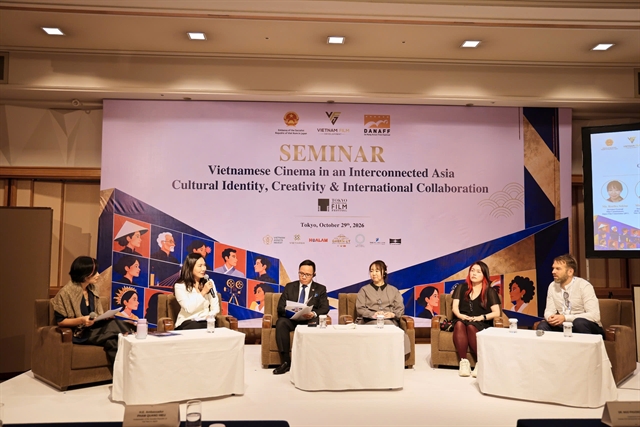
| Delegates at the second discussion examined the role of local authorities and film-support organisations in assisting productions. — Photos courtesy of VFDA |
Film commissions and local filming destinations
Ruriko Sekine, Secretary-General of the Japan Film Commission (JFC), said Japan had around 400 film commissions acting as intermediaries between filmmakers and local communities.
As filming often requires separate permits for individual locations, the commissions help production teams understand procedures, identify contacts, access locations and resolve issues during filming.
She said productions generated economic benefits for host localities even before a film was released, through demand for accommodation, food, transport, equipment rental and other services. Once a film reached audiences, locations featured on screen could also attract visitors and create opportunities for tourism development.
Around half of Japan's film commissions are affiliated with local government agencies, while the others may operate under tourism associations or promotional organisations. The JFC network helps local commissions connect regionally, share information, promote filming locations and train personnel to work more effectively with production teams.
Sekine stressed that production support should be followed by promotional activities. Localities could develop filming-location maps, organise film-themed tours and invite directors and actors to meet audiences.
The use of film footage and actors' images must comply with rights requirements, but when arrangements are made early, such activities can extend the benefits to local communities well beyond the filming period.
"We need not only the cooperation of film commissions but also the participation of local residents," she said, adding that producers should work with localities to promote the places that had supported their productions. Tangible benefits, she noted, were essential to maintaining public support for film crews over the long term.
Drawing on his experience of filming in Việt Nam, cinematographer and co-producer Sven Zellner praised the working spirit and adaptability of Vietnamese colleagues, as well as the light, colours and urban atmosphere of Hà Nội.
However, he cautioned that the positive experiences of small crews might not fully reflect the conditions faced by larger productions, which could require street closures and coordination among multiple agencies.
He also highlighted the need for a diverse film environment that supports artistic cinema alongside commercial productions.
Support, he added, should not be limited to foreign crews but should also benefit Vietnamese filmmakers, particularly young talent and those seeking alternative forms of storytelling. — VNS
Life & Style
 Life & Style
 Life & Style
 Life & Style
 Life & Style
 Life & Style
 Life & Style
 Life & Style
 Life & Style
 Life & Style
 Life & Style
 Life & Style
 Life & Style
 Life & Style
 Life & Style