 Life & Style
Việt Nam advances child development strategy towards 2045
1.
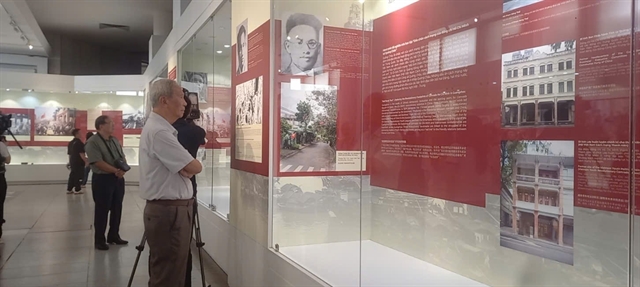 |
| Visitors at the Revolutionary Friendship - Vietnamese Comrades in the Guangzhou Uprising opens on October 28 in Hà Nội. — VNS Photo Thanh Hà |
HÀ NỘI — The Hồ Chí Minh Museum is presenting an exhibition to celebrate the relationship between Việt Nam and China and comrades of both sides who took part in the Guangzhou Uprising nearly 100 years ago.
The display Nghĩa Tình Cách Mạng – Những Đồng Chí Việt Nam Tham Gia Khởi Nghĩa Quảng Châu (Revolutionary Friendship - Vietnamnese Comrades in the Guangzhou Uprising) opens on October 28 in Hà Nội.
It is organised on the occasion of the 102nd anniversary of the arrival of Hồ Chí Minh - then known as young Nguyễn Ái Quốc - in Guangzhou, China (November 11, 1924-2026), and the 99th anniversary of the Guangzhou Uprising (December 11, 1927-2026).
This exhibition is a key initiative of profound humanistic significance, rooted in the vibrant spirit of the "Việt Nam-China Tourism Cooperation Year."
It aims to foster mutual understanding among the younger generations of both nations, infusing youthful energy into the endeavour of building a Việt Nam-China community with a shared future.
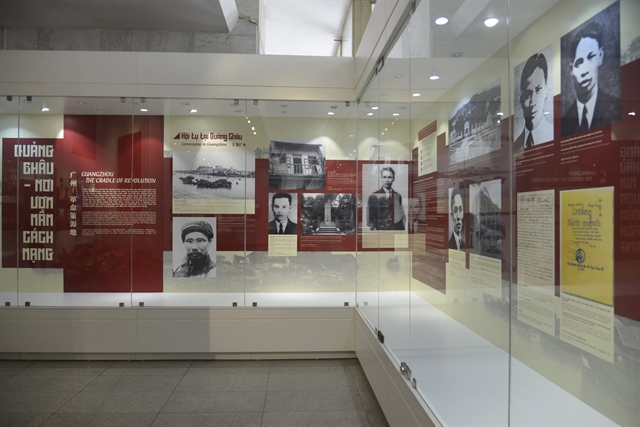 |
| A corner of the exhibition which will welcome visitors until next February. — Photos courtesy of the museum |
Furthermore, it serves to advance the 2024-28 cooperation agreement between the Hồ Chí Minh Museum and the Guangdong Museum of Revolutionary History, ensuring its continued strengthening and development.
More than 100 images of documents and images of artifacts are divided into three parts.
In the first part, Guangzhou – A Cradle of Revolution, visitors will learn about how Vietnamese patriots and revolutionaries came to Guangzhou, China to study and engage in revolutionary activities in response to the call of Nguyễn Ái Quốc in the 1920s.
In 1925, in Guangzhou, Nguyễn Ái Quốc established the Vietnamese Revolutionary Youth League and launched the Thanh Niên (Youth) newspaper. The association played a pivotal role in training cadres, disseminating Marxism-Leninism and laying the political, ideological, and organisational groundwork for the founding of the Communist Party of Việt Nam.
During their time in Guangzhou, these young Vietnamese revolutionaries forged close ties with Chinese communists, supporting one another and cultivating a revolutionary friendship.
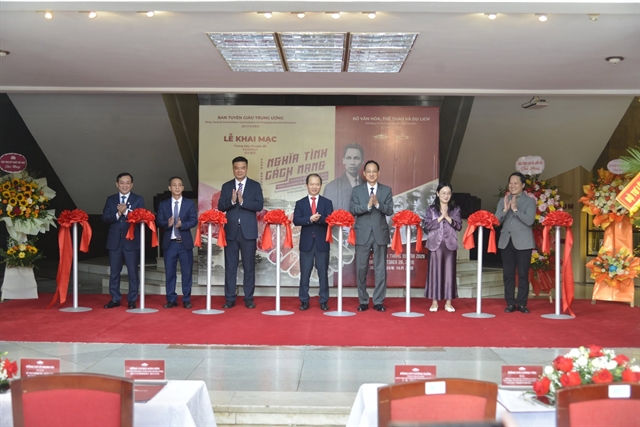 |
| Delegates cut the ribbon to open the exhibition on October 28 in Hà Nội. |
The second part, Guangzhou Uprising Participation, introduces the overview of the context and progression of the Guangzhou Uprising, along with the participation and contributions of Vietnamese revolutionaries.
The uprising broke out in December, 1927. It was a heroic counterattack by the Communist Party of China against the counter-revolutionary policies and massacres of the reactionary Kuomintang. Together with other uprisings, it marked the beginning of the Communist Party of China's independent leadership of the revolutionary war and the building of the people's army.
Many Vietnamese comrades such as Nguyễn Sơn (Hồng Thủy), Hồ Tùng Mậu and Lê Hồng Sơn fought shoulder to shoulder with the Chinese military and people, writing a glorious chapter in the history of the traditional friendship – comrades and brothers – between Việt Nam and China.
The third part, The Epic Still Continues, includes stories about Vietnamese comrades kept working in Guangzhou after the failure of the uprising and their important contribution to the founding of the Communist Party of Việt Nam, the building of the military, and the fostering of friendly relations between two countries.
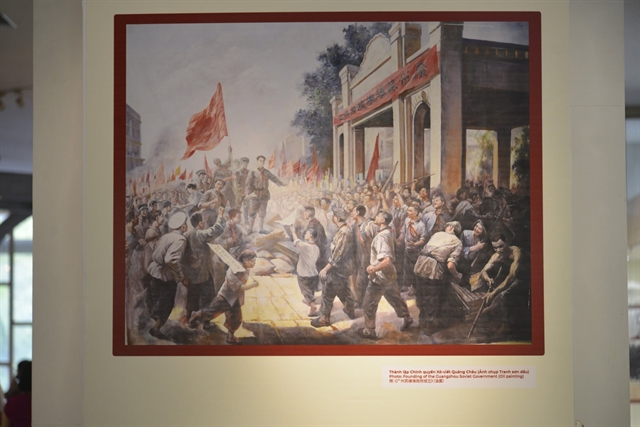 |
| A painting about the founding of the Guangzhou Soviet Goverment . |
Speaking at the opening ceremony, Assoc. Prof. Dr. Bùi Hoài Sơn, deputy head of the Party Central Committee's Commission for Information and Education, said: “Guangzhou holds a special place in the revolutionary journey of President Hồ Chí Minh and in the history of the Vietnamese revolution.
"Comrade Nguyễn Ái Quốc organised political training courses for the first generation of revolutionary cadres, laying ground for the establishment of the Communist Party of Việt Nam. The revolutionary seeds he nurtured grew and matured, becoming the core force in the struggle for national liberation.
"This exhibition contributes to enhancing people-to-people exchanges, fostering a tradition of friendship, and strengthening the social foundation of the relationship between the two countries. It also serves as an opportunity to connect historical and cultural sites, bringing stories of friendship closer to the public in both nations.”
The exhibition will last until February 28, 2027 at No 19 Ngọc Hà Street, Ba Đình Ward, Hà Nội. — VNS
Life & Style
 Life & Style
 Life & Style
 Life & Style
 Life & Style
 Life & Style
 Life & Style
 Life & Style
 Life & Style
 Life & Style
 Life & Style
 Life & Style
 Life & Style
 Life & Style
 Life & Style