 Life & Style
Inclusive art festival
1.
|
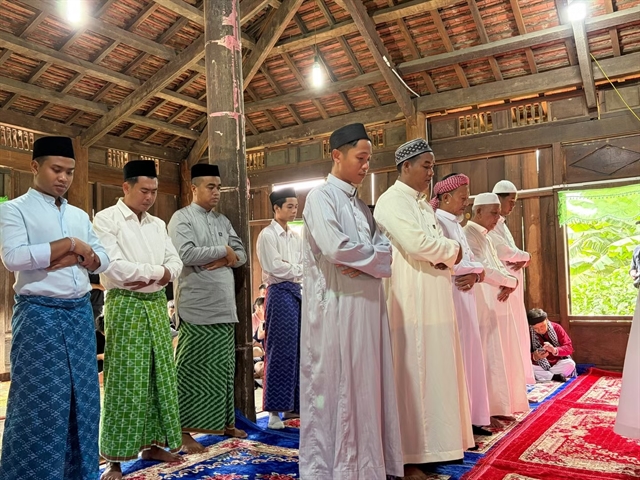
| Despite historical upheavals, the Chăm Muslim community has steadfastly preserved its values and traditions across generations. — VNA/VNS Photo |
AN GIANG — The Raya Aidilfitri festival of An Giang’s Chăm Muslim community offers a glimpse into the rich cultural heritage, religious traditions and strong community bonds preserved across generations.
At the southwestern tip of the country, along the gentle Hậu River that has nurtured prosperous villages for generations, a community has preserved and enriched a distinctive cultural heritage over centuries. This is the Chăm Muslim community of An Giang Province.
These cultural values were vividly and authentically brought to life at the Việt Nam National Village for Ethnic Culture and Tourism in Đồng Mô, Sơn Tây, Hà Nội, recently attracting considerable interest from visitors.
Among the community’s cultural traditions is a special festival eagerly awaited each year following the sacred month of Ramadan. Known as Raya Aidilfitri, the festival lasts three days, from the first to the third day of the tenth month in the Islamic calendar, with the latest one taking place on October 25.
To fully appreciate the profound significance of Raya, however, one must look beyond the morning when the festivities begin.
Behind the joy of the festival lies a long journey of fasting, prayer and self-discipline, encouraging people to become better versions of themselves.
For the Chăm Muslim community, Ramadan, the holy month of fasting, falls from the first to the 30th day of the ninth month in the Islamic calendar.
Throughout this sacred period, believers abstain from food and drink from dawn until sunset and observe the requirements of Islamic law.
Before daybreak, quiet activity begins in Chăm households. Mothers prepare meals, fathers wake their children, and families gather to share Suhoor, the pre-dawn meal.
Once breakfast is finished and the first light of day appears, the daily fast officially begins. Although they refrain from eating and drinking during daylight hours, community members continue with their everyday activities.
As the sun sinks below the horizon, families return to their homes after a long day of fasting, awaiting Iftar, the meal that breaks the fast. Every dish, every glass of water and the presence of loved ones take on special significance.
Day by day, Ramadan gradually draws to a close.
On the 29th day of the month, respected religious figures and community elders begin observing the sky for the new crescent moon. If the crescent is sighted, the following day marks the beginning of Raya Aidilfitri.
If it is not visible, another day of fasting is observed, completing the 30-day month, after which the festival begins.
Once the new crescent has been sighted, religious figures and respected elders discuss and confirm the date of Raya Aidilfitri.
The announcement is then conveyed to residents throughout the neighbourhood and village through the beating of traditional drums.
|
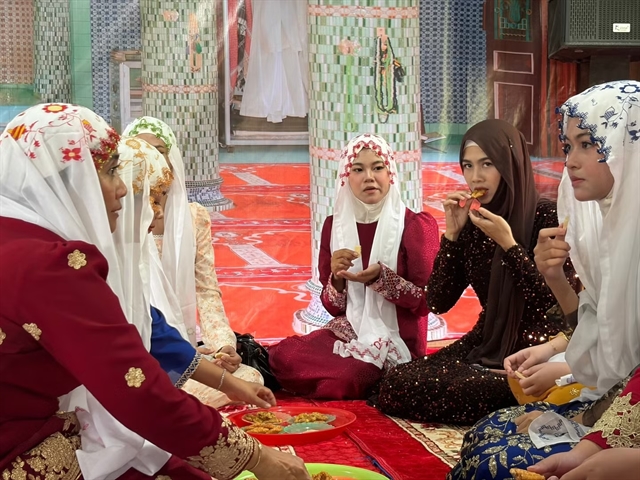
| Homes come alive with festive cheer after a month of Ramadan. — VNA/VNS Photo |
On the evening before Raya, families decorate their homes and prepare their finest clothes for the celebration.
Chăm women, renowned for their culinary skills, prepare fragrant curry and traditional cakes and pastries to share with their families during the festive days.
After a month of Ramadan, Raya finally arrives. People don their finest attire, homes take on a more festive atmosphere, and children eagerly await the celebrations.
Meanwhile, men make their way along familiar village paths towards the mosque to perform the festival’s religious rites, praying for peace and well-being for their families, community and loved ones.
At the mosque, the atmosphere becomes solemn and reverent. Worshippers arrange themselves in orderly rows in preparation for the prayers and rituals.
After completing the religious ceremonies, people seek one another out not merely to exchange Raya greetings, but also to share something more meaningful: Maaf, a request for forgiveness and an expression of willingness to forgive others.
This exchange may take the form of a simple handshake or a heartfelt embrace. Yet behind these seemingly ordinary gestures lies one of the festival’s most beautiful and distinctive values: reconciliation, mutual understanding and forgiveness.
Following the prayers, the Chăm village streets grow lively once again as people return home.
Trays of cakes and traditional dishes are laid out, while conversations and reunions unfold in households throughout the village.
Relatives visit one another, neighbours drop by, those who have been away return home, and visitors from afar are welcomed with the Chăm people’s characteristic warmth and sincerity.
In each household, Raya meals are served. Familiar family dishes sit alongside cakes prepared in advance, accompanied by heartfelt invitations to eat and conversations about everyday life.
These simple moments of togetherness are an essential part of the celebrations.
Another distinctive feature of Raya among the Chăm Muslim community in An Giang is the tradition of holding weddings during the three-day festival. These celebrations add to the festive atmosphere while strengthening bonds within the community.
|
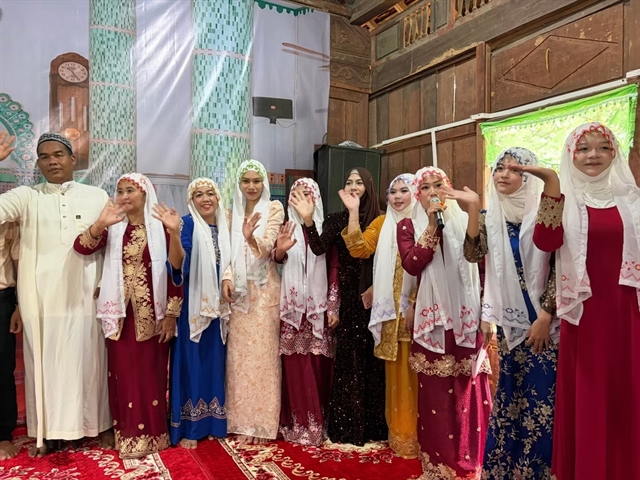
| Younger generations are encouraged to stay connected to their roots, embrace their cultural identity and preserve the traditions passed down by their ancestors. — VNA/VNS Photo |
Alongside the Raya reenactment, visitors were treated to a special artistic programme entitled A Love Song of the Chăm Village.
Folk songs, traditional dances and well-known musical pieces, including Visiting a Chăm Village Girl, The Chăm Village by the Hậu River, Moonlit Season and Raya of Love, transported audiences to the evocative landscapes of Vietnam’s southwestern region.
The cultural experience was further enriched by opportunities to admire the artistry of silk weaving under the moonlight, discover the vibrant colours of traditional costumes and sample the community’s distinctive cuisine.
From aromatic curry infused with spices to richly flavoured traditional cakes, the culinary offerings provided another window into the Chăm people’s cultural identity.
The Raya festival reenactment and the series of programmes under the theme A Love Song of the Chăm Village at the Việt Nam National Village for Ethnic Culture and Tourism were more than artistic performances.
They also served as a means of educating the public about and promoting the community’s cultural heritage.
Through these activities, younger generations are reminded of their roots, cultural identity and responsibility to preserve the valuable traditions passed down by their ancestors. — VNS
Life & Style
 Life & Style
 Life & Style
 Life & Style
 Life & Style
 Life & Style
 Life & Style
 Life & Style
 Life & Style
 Life & Style
 Life & Style
 Life & Style
 Life & Style
 Life & Style
 Life & Style