 Life & Style
AI promotes development of smart livestock farming in Việt Nam
1.
|
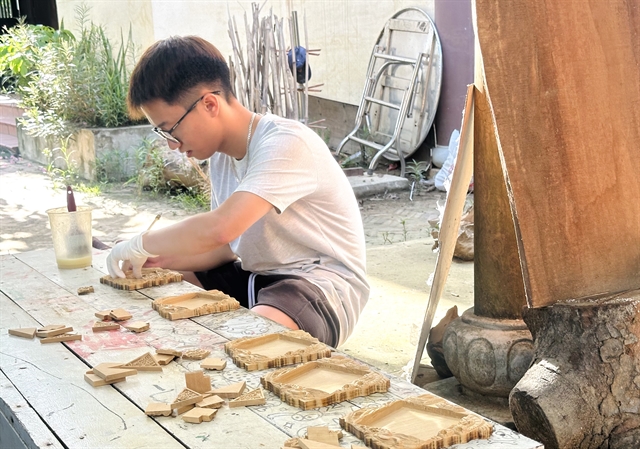
| Huỳnh Tấn Quốc, 22, works on a wooden carving at his family workshop in Kim Bồng carpentry village in Đà Nẵng City, combining graphic design training with ancestral techniques to craft contemporary interior pieces. — VNS Photos Nguyễn Diệp |
Nguyễn Diệp
ĐÀ NẴNG — Young craftspeople in central Việt Nam are combining ancestral skills with contemporary design and sustainable hospitality to keep local heritage alive.
Beyond the iconic yellow shopfronts and lantern-lit alleyways of Hội An in Đà Nẵng City, a new generation of young craftspeople is stepping forward.
They are working to ensure their ancestral heritage does not merely survive as museum relics, but thrives in modern life.
They integrate graphic design, contemporary techniques, and mindful hospitality partnerships, such as NHAAN Resort & Spa’s Meet the Artisan initiative.
Through these efforts, these young trailblazers are writing a fresh chapter for the central region’s living traditions.
For generations, the cultural identity of Hội An has been shaped by its historic craft villages.
Yet, like many traditional trades across Asia, these practices have faced mounting pressures from rapid urbanisation and changing youth aspirations.
Today, young locals returning to their roots are offering a fresh narrative, in which heritage preservation and modern lifestyle experiences seamlessly intersect.
|
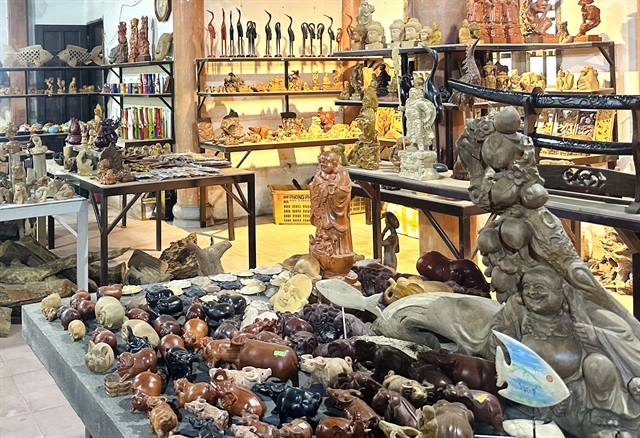
| Intricate wooden products crafted at Huỳnh Tấn Quốc's family workshop in Kim Bồng carpentry village reflect centuries of tradition seamlessly adapted for modern living. |
Inheriting the chisel: Digital design meets woodworking
In Kim Bồng carpentry village, famed since the late 16th century for its master carpenters who once built royal palaces in Huế, Huỳnh Tấn Quốc, 22, represents the 14th generation of a legendary woodworking family.
The grandson of the late People’s Artisan Huỳnh Ri and son of Meritorious Artisan Huỳnh Sướng, Quốc grew up amidst the rhythmic tap of chisels.
However, unlike his forebears who learned strictly through manual apprenticeship, Quốc pursued formal degree studies in Graphic Design at Văn Lang University in HCM City.
Upon graduating, Quốc returned to his riverside village, equipped with a modern design vocabulary.
"I wanted to combine contemporary design sensibilities with the deep technical mastery and historical depth of Kim Bồng woodworking," Quốc said.
"Preserving a tradition does not mean repeating the past endlessly. It means giving traditional techniques a meaningful purpose in today's aesthetic world," he added.
His approach reflects a broader movement among educated young Vietnamese who view ancestral crafts as authentic foundations for contemporary design innovation.
|
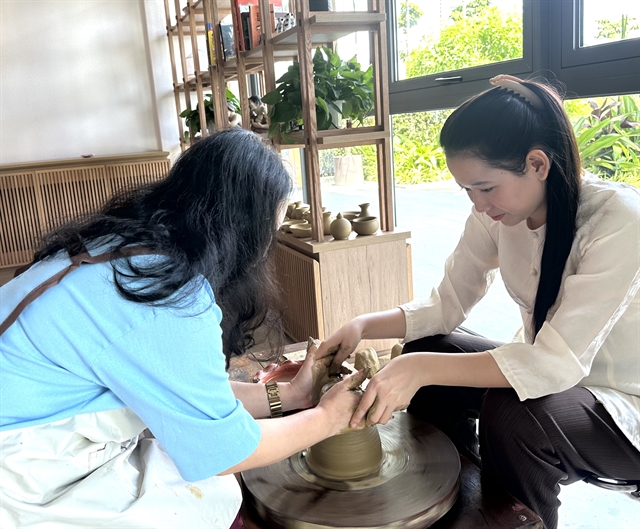
| Young craftswoman Xuân Hương (right) guides a visitor on a pottery kick-wheel at NHAAN Resort & Spa Hoi An in Đà Nẵng City, promoting sustainable heritage tourism through the Meet the Artisan initiative. |
Hands in the clay: a fifth generation at Thanh Hà pottery village
Across the Thu Bồn River in the 500-year-old Thanh Hà pottery village, a similar story unfolds at Gốm Vân, a local pottery workshop.
Here, Phan Duy and his wife Xuân Hương, both in their twenties, represent the fifth generation keeping the village’s terracotta heritage alive.
Duy, the great-grandson of celebrated master potter Nguyễn Thị Được, remembers a childhood spent playing near brick kilns and watching the women of his family shape raw river clay.
"Pottery was not a career choice I made in adulthood, because it was woven into the fabric of daily life," Duy said.
|
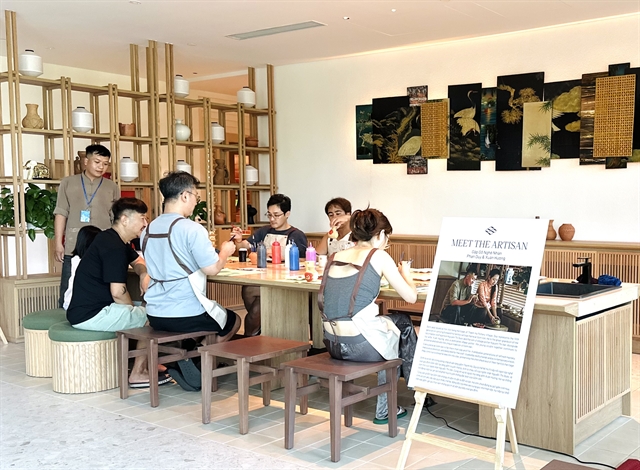
| Phan Duy, a fifth-generation representative at Gốm Vân pottery workshop in Thanh Hà pottery village in Đà Nẵng City, guides visitors in shaping and painting terracotta products. |
His mother, artisan Nguyễn Thị Vân, represents the fourth generation. "Watching her keep the fires burning inspired us to take up the mantle," he shared.
Rather than keeping their craft isolated, Duy and Hương actively engage with travelers.
They guide visitors through the tactile, meditative process of clay sculpting, emphasising patience over mass production.
This revival of local heritage is finding a powerful catalyst in mindful tourism. Hospitality brands operating in the region are increasingly moving away from passive cultural display.
Instead, they are choosing deep, respectful partnerships with local craftsmen.
A notable example is found at NHAAN Resort & Spa Hoi An, where the Meet the Artisan initiative brings master craftspeople and young successors directly into the guest experience through hands-on workshops.
|
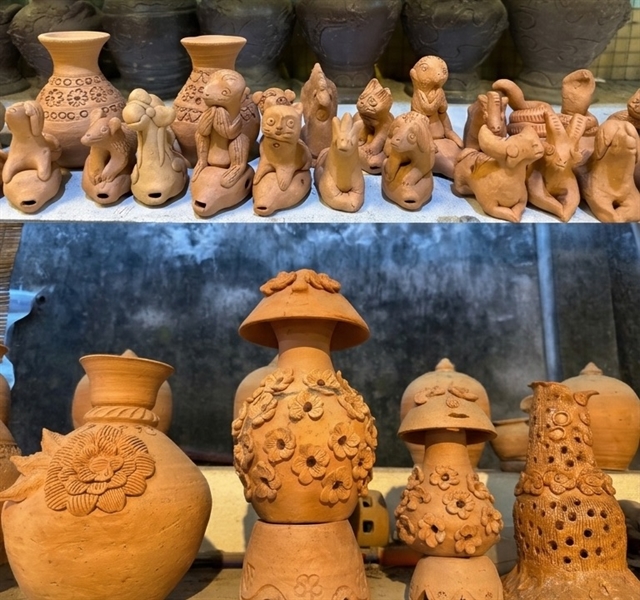
| Handcrafted terracotta pieces are displayed at the Gốm Vân pottery workshop in Thanh Hà pottery village in Đà Nẵng City. |
This living-heritage philosophy extends organically into regional gastronomy under Executive Chef Dương Danh Linh.
A native of the central region with two decades of expertise, Chef Linh translates regional heritage into modern dining by treating recipes with the same reverence as a craftsman treats wood or clay.
For instance, the chef’s signature baked fish draws direct inspiration from the terracotta techniques of Thanh Hà pottery village.
Fresh local catch is wrapped in local clay and roasted over charcoal, utilising the earth's natural heat-retention properties to lock in flavours.
|
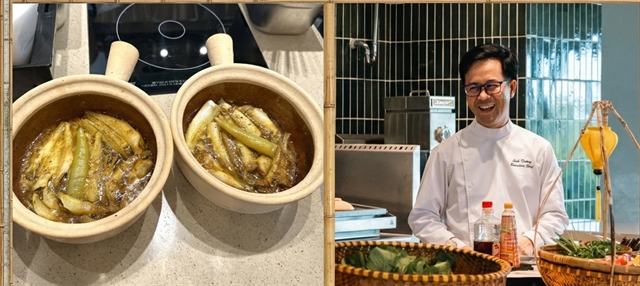
| Executive Chef Dương Danh Linh prepares local seafood in handcrafted clay pots, bringing the traditions of Thanh Hà pottery village to the dining table at NHAAN Resort & Spa Hoi An. |
This technique creates a dish that conceptually connects diners back to the soil of the former Quảng Nam Province.
"Preserving local food culture does not mean keeping everything frozen in time," Linh said.
"It is about honouring the roots, including the seasonal produce, the core spices, and the memories, while evolving the presentation so the world can appreciate the depth of Vietnamese gastronomy."
As the country navigates rapid urbanisation and global integration, the story unfolding in the craft villages surrounding Hội An offers an encouraging template for sustainable cultural preservation.
By bridging traditional mastery with contemporary design and thoughtful hospitality, young craftsmen like Quốc and Duy are proving that ancient crafts remain vibrant, relevant, and deeply alive. — VNS
Life & Style
 Life & Style
 Life & Style
 Life & Style
 Life & Style
 Life & Style
 Life & Style
 Life & Style
 Life & Style
 Life & Style
 Life & Style
 Life & Style
 Life & Style
 Life & Style
 Life & Style
.jpg)