 Opinion
Nuclear technology offers new growth opportunities for Đồng Nai
1.
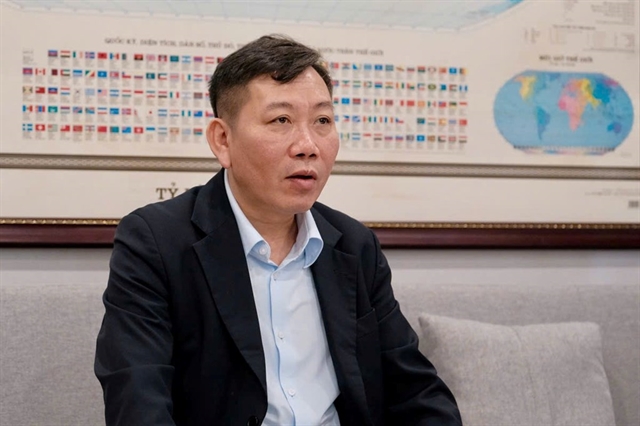 |
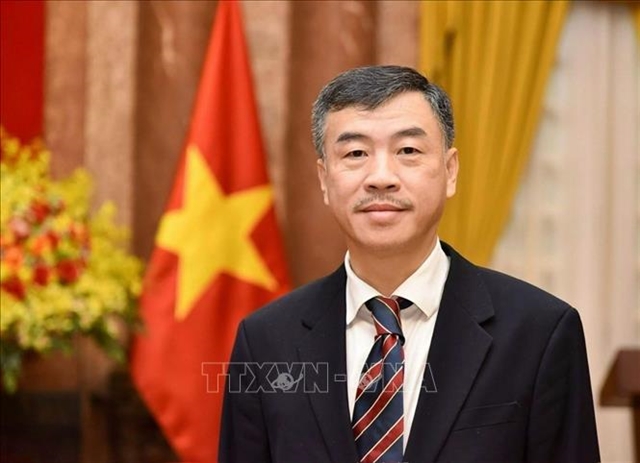
| Nguyễn Đỗ Anh Tuấn, head of the Ministry of Agriculture and Environment's International Cooperation Department. — VNA/VNS Photo |
APEC Summit 2027 is a chance for Việt Nam to promote cooperation in green agriculture, innovation and food security. Nguyễn Đỗ Anh Tuấn, head of the Ministry of Agriculture and Environment's International Cooperation Department, speaks with the Vietnam News Agency on this topic.
What are recent achievements in the development of green and low-emissions agriculture? What solutions will help support businesses, co-operatives and farmers in meeting international environmental protection and emissions standards?
In recent years, Việt Nam has gradually shifted its mindset from a focus on agricultural production to the development of an agricultural economy that is green, ecological, circular, low-emissions and resilient to climate change.
This transition is not only an environmental necessity, but also a prerequisite for enhancing the added value and competitiveness of Vietnamese agricultural products. A prime example is the project for the sustainable development of one million hectares of high-quality, low-emissions rice cultivation in the Mekong Delta by 2030, which aims to transform farming practices, ensure the efficient use of resources and increase incomes for rice farmers.
The forestry sector has promoted sustainable forest exploitation and management, while the marine economic sector has focused on responsible and sustainable aquaculture and sea ecosystem protection.
To support businesses, co-operatives and farmers in meeting increasingly high demands on the environment, the ministry continues to complete policies and technical guidelines as well as promote technological application, digital transformation and origin tracing, and improve the capabilities of emissions measurement, reporting and control.
What initiatives does Việt Nam expect to introduce at the summit to build a sustainable and safe food system?
Food security today is no longer just about ensuring sufficient production, but also about supplying safe, nutritious and affordable food while maintaining stability in the face of climate change, natural disasters, market shocks and supply chain disruptions.
At APEC 2027, Việt Nam plans to promote cooperation in innovation and digital transformation across agri-food systems, develop climate-resilient production that uses resources efficiently and reduces emissions, and cut food loss and waste.
It will also strengthen risk management, early warning systems and supply chain resilience and expand public-private partnerships while building the capacity of small-scale producers. These priorities build on the APEC Food Security Roadmap Towards 2030 and are consistent with the Joint Ministerial Statement of the 11th APEC Food Security Ministerial Meeting held in Hangzhou, China in August.
One key initiative Việt Nam is promoting is an APEC roadmap for innovative and resilient agri-food systems for shared prosperity in the region, entitled 'Innovative and Resilient Agri-Food Systems for Shared Prosperity'. The aim is to translate initiatives into concrete actions with measurable outcomes that can be scaled up and replicated.
To translate these priorities into action, the ministry will promote stronger links between sectoral cooperation mechanisms and expand joint research, technology transfer, expert training and public-private partnerships. It will also help build producers' capacity, promote sustainable production and reduce food loss and waste.
At APEC 2027, which areas of cooperation does the ministry hope to promote with member economies, particularly in biotechnology, precision agriculture and technology transfer, to improve the productivity, quality and sustainability of Việt Nam’s agriculture sector?
Science, technology, innovation and digital transformation are key drivers of improvements in productivity, resource-use efficiency, product quality and the capacity to adapt to climate change. At APEC 2027, the Ministry of Agriculture and Environment hopes to promote cooperation centred on the practical needs of producers and businesses.
A key priority is agricultural biotechnology, particularly research into and the application of technologies to develop crop varieties and livestock breeds with higher productivity and quality, as well as greater resilience. Việt Nam also hopes to advance precision and smart agriculture through the use of sensors, data, artificial intelligence and digital technologies to manage irrigation, fertilisers, pests and other agricultural inputs more efficiently.
The ministry also aims to strengthen joint research, expert training, data sharing and technology transfer, alongside the development of demonstration models that can be scaled up and replicated. A key requirement is that technologies must be practical, affordable and accessible to co-operatives, small businesses and farmers.
These issues are expected to be discussed through the Agricultural Technical Cooperation Working Group, the High-Level Policy Dialogue on Agricultural Biotechnology and thematic workshops at the third Senior Officials’ Meeting. We hope APEC cooperation will go beyond policy exchanges to gradually deliver practical research, application and technology transfer activities.
APEC 2027 is a great chance to market Vietnamese agricultural products. What does the ministry plan to do to grasp the opportunity and expand export markets?
The ministry has identified product promotion as an effort that must go hand in hand with improving quality, ensuring food safety, traceability and compliance with sustainable development requirements.
It plans to work with relevant agencies, local authorities and businesses to explore opportunities to showcase achievements, green production models, high-quality agricultural products, distinctive local produce and products under the One Commune, One Product (OCOP) programme at various events.
Within the framework of APEC 2027, dialogues on innovation in the rice sector, regenerative agriculture, and timber and rubber supply chains are also expected to create further opportunities for networking, cooperation and the development of sustainable supply chains. The long-term goal is not only to promote goods, but also to enhance the competitiveness and brand value of Vietnamese agricultural products. — VNS
Opinion
 Opinion
 Opinion
 Opinion
 Opinion
 Opinion
 Opinion
 Opinion
 Opinion
 Opinion
.jpg) Opinion
 Opinion
 Opinion
 Opinion