 Opinion
Việt Nam unveils youthful squad for AIMAG 2026 futsal campaign
1.
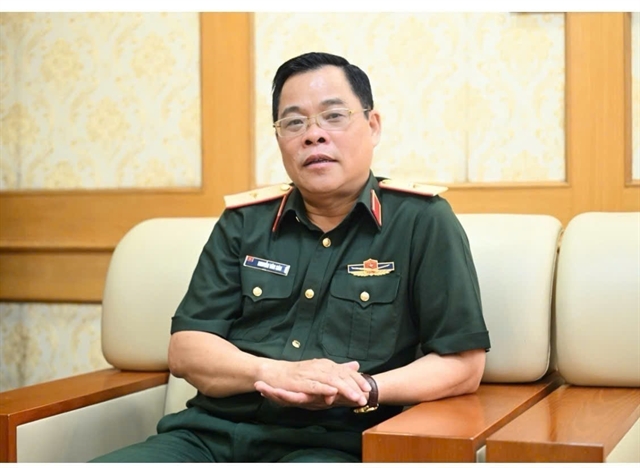 |
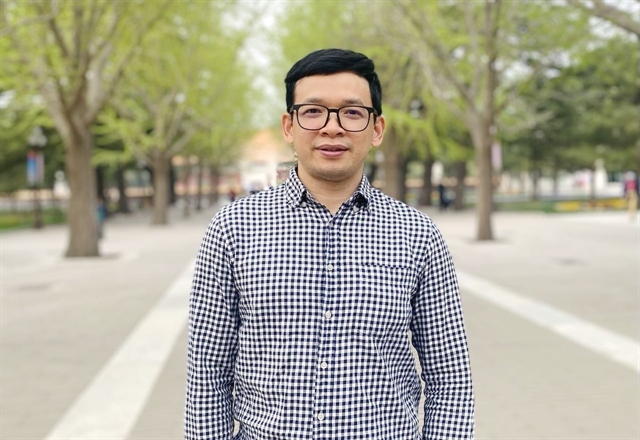
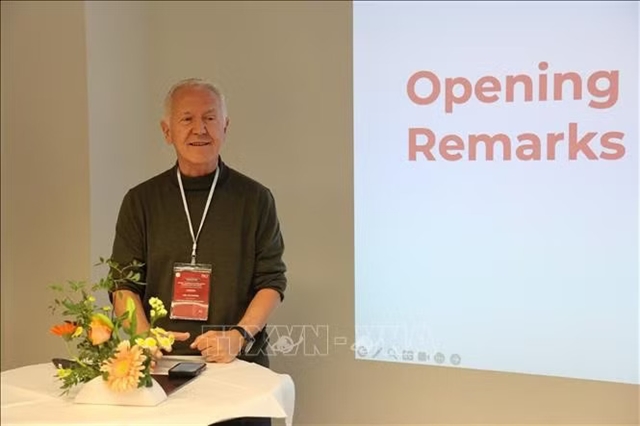
| Major General Nguyễn Văn Sáu, Deputy Director of the Institute for Defence Strategy and History under the Ministry of National Defence. — VNA/VNS Photo |
Major General Nguyễn Văn Sáu, Deputy Director of the Institute for Defence Strategy and History under the Ministry of National Defence, spoke to Vietnam News Agency about Party General Secretary and State President Tô Lâm’s call to shift from “employing talented people” to “employing proven talent”
Party General Secretary and State President Tô Lâm stressed in his opening remarks at the fourth Party Central Committee Plenum that cadre assessment must identify “proven talent” through actual performance, particularly the way officials handle difficult tasks. In your view, what is the most important and significant new element of this approach to cadre work today? How can “proven talent” be identified through substantive results rather than continuing to rely mainly on CVs, qualifications, procedures or past achievements?
The most important new element is to shift the focus of cadre assessment from 'what is on the CV' to 'what can be delivered in practice'. This means moving from assessments centred heavily on qualifications, degrees and procedures to ones that measure outputs, results and the ability to tackle difficult, new and complex problems.
Proven talent is not primarily reflected in words or recorded achievements, but in actions and results. An official with genuine ability must demonstrate the capacity to identify problems correctly, make sound decisions, take responsibility, organise implementation effectively and deliver tangible improvements. Difficult tasks are the clearest test. Under favourable conditions, many people can complete their duties. But when faced with new, difficult and sensitive issues for which there is no precedent, requiring coordination among multiple forces and involving considerable pressure, an individual’s true competence, resolve and sense of responsibility become apparent.
To assess proven talent through substantive results, the first requirement is to assign specific and challenging tasks, together with commensurate authority, rather than giving officials only safe assignments and then assessing them in general terms. Each position and task should have clearly defined, verifiable outputs, timelines, quality standards and social impact. Assessment should be based on what an official has actually achieved, the problems they have solved, the resources they have used and the practical value they have created.
Both the process and the outcome must be assessed. It is necessary to distinguish results generated by an individual’s own ability from those made possible by favourable conditions. At the same time, a few mistakes made in the course of innovation and taking the initiative should not be allowed to overshadow an official’s overall capabilities. Particular importance should be attached to those willing to take on difficult assignments, accept responsibility and see tasks through to completion.
The practice of 'closed-loop assessment' must be addressed. Work results should be assessed from multiple perspectives by superiors, peers, subordinates and coordinating agencies and, most importantly, based on their actual effectiveness for organisations, completing assigned tasks and serving the people.
Qualifications are a prerequisite, a CV is a reference point, and procedures are a requirement, but outputs and results are the key measures for identifying proven talent.
To select the right people, cadre work must make a decisive shift from assessing people through their CVs to “testing people through their work". This also means moving from assessing what they already have to assessing their ability to create new value. This translates into putting the right people in the right positions, giving them the right tasks and the right authority, on the one hand, whilst creating the conditions for officials with genuine ability, resolve and a desire to contribute to realise their full potential.
What changes are needed in cadre work to move from 'employing talented people' to 'employing proven talent'?
The key is to establish a full process through which people’s abilities can be tested, authority delegated, results delivered and contributions properly recognised.
Talent should be identified through practical performance, particularly on new, difficult and unexpected tasks, rather than through personnel planning and CVs alone.
Assessments should focus on qualities, capabilities, outputs, effectiveness, credibility and contributions. Results must be considered in relation to the authority and resources officials have been given, whilst distinguishing responsible innovation from violations or irresponsibility.
Officials with outstanding capabilities should be placed in positions where they can make the best use of their strengths. Personnel appointments should aim to create value rather than merely complete administrative procedures.
Assigning tasks must go hand in hand with granting authority, resources, data and tools. Officials cannot be held responsible for results without having sufficient authority and conditions to deliver them. This is particularly important because practice has shown that, in some areas, authority has not been fully matched by responsibility, while decentralisation has not always been adequately accompanied by the necessary resources and tools.
Power must be controlled alongside the delegation of authority. Granting authority does not mean relinquishing oversight. Clear objectives, defined areas of authority, performance criteria, supervision mechanisms and accountability must be established. Control must address both the abuse of authority and the avoidance of exercising authority or assuming responsibility. At the same time, officials who act with integrity and take the initiative to innovate for the common good must be protected.
Therefore, the shift from 'employing talented people' to 'employing proven talent' essentially means moving from selecting people to putting people to work, and from assigning positions to assigning tasks. This means shifting from giving titles to giving authority, and from assessing CVs to assessing contributions.
The ultimate goal is not merely to build a capable cadre, but to ensure that every official is placed in the right position, given the right authority and adequate conditions to act, and required to demonstrate their value through substantive results.
How should the requirement for “proven talent” be applied as the country tackles unprecedented challenges?
Proven talent should not simply mean advanced qualifications or extensive experience. It must be demonstrated through the ability to solve new and complex problems and deliver tangible results.
Officials need innovative thinking, the ability to identify the nature of problems and the capacity to use new knowledge, science and technology, data and modern governance methods to find effective solutions. A truly capable official must not only know how to “follow procedures correctly”, but also recognise when existing procedures and mechanisms are no longer appropriate and proactively propose solutions that comply with the law and serve the common interest.
Proven talent must go hand in hand with resolve and responsibility. At the same time, daring to think and daring to act do not mean acting recklessly. Officials must be willing to take on difficult tasks, make decisions within their authority, accept responsibility and correct mistakes when necessary. A clear distinction must be made between mistakes made in responsible innovation and violations arising from self-interest or deliberate wrongdoing.
It must be measured through outputs and the ability to deliver change. Capable officials should be tested through concrete assignments of removing institutional bottlenecks, shortening a procedure, mobilising a new source of resources, promoting a new technology or resolving a long-standing problem. In this way, capability is no longer measured primarily through words, CVs or past achievements, but through the new value created.
If officials are expected to have the confidence to act, the institutional framework must give them sufficient assurance to do so. Major assignments must go hand in hand with authority and resources. Assessments must be based on results. Those who innovate for the common good must be protected. At the same time, power must be controlled through clear objectives, standards, accountability and transparent oversight.
Ultimately, proven talent combines intelligence, resolve, the ability to act, innovation and responsibility for results. Officials should not wait for precedents before acting, but create new approaches based on principles and practical realities. They should see difficult tasks as opportunities to demonstrate their capabilities and help the country develop more rapidly and effectively. — VNS
Opinion
 Opinion
.jpg) Opinion
 Opinion
 Opinion
 Opinion
 Opinion
 Opinion
 Opinion
 Opinion
 Opinion
 Opinion
 Opinion
 Opinion
 Opinion