 Society

Real estate bond interest rates hit 13 per cent per annum
1.
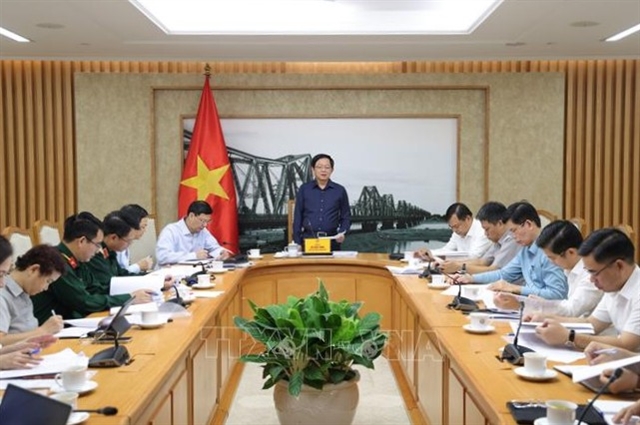 |
| Deputy Prime Minister Hồ Quốc Dũng (standing) chairs a meeting to review a draft National Natural Disaster Prevention and Control Plan for the 2026-30 period in Hà Nội on Thursday. — VNA/VNS Photo Diệp Trương |
HÀ NỘI — Deputy Prime Minister Hồ Quốc Dũng has directed the Ministry of Agriculture and Rural Development to lead the preparation of response plans for storms, tropical depressions and heavy rainfall expected in the final months of the year, with the main goal of minimising life losses and property damage.
He made the orders while chairing a meeting to review a draft National Natural Disaster Prevention and Control Plan for the 2026-30 period held in Hà Nội on Thursday morning, after it was presented by Deputy Minister of Agriculture and Rural Development Nguyễn Hoàng Hiệp with eight key focus areas.
Deputy Minister of Construction Lê Anh Tuấn, Deputy Chief of the General Staff of the People's Army Phạm Trường Sơn also attended the meeting, together with representatives from the ministries of finance, justice, industry and trade, and the National Civil Defence Steering Committee.
According to the agriculture ministry, from 2021 to 2025, Việt Nam was affected by 21 out of 22 types of natural disasters, which resulted in 1,455 deaths and missing persons and caused economic losses exceeding VNĐ230 trillion (US$8.9 billion).
Damage decreased significantly in the first nine months of 2026, but as the final months of the year mark the peak of the rainy and flood season in the central region, the Deputy PM Dũng asked ministries and local authorities to remain fully vigilant and proactively implement prevention and response measures.
He commended the agriculture ministry's efforts to develop the disaster control draft plan until 2030, saying it aligns with the Government’s directives and incorporates feedback from various ministries, local authorities and experts.
He stressed: “Finalising and implementing this plan is of critical importance, given that the geography and natural conditions of our country expose us to nearly every type of natural disaster found worldwide – a situation exacerbated by climate change, which is driving increasingly extreme and severe events that cause significant loss of life and property.”
He directed the ministries to focus on addressing six key issues in disaster control.
First, they must identify existing shortcomings and challenges and clarify the duties of grassroot-level authorities.
They must also upgrade the monitoring and forecasting systems to ensure the timely delivery of accurate information, enabling the public to take proactive response measures.
Existing inadequacies and conflicts in transport infrastructure planning must be resolved to ensure they align with flood drainage and disaster prevention requirements, specifically, new infrastructure should not increase risks, Dũng added.
Ministries must clearly delineate between specialised, semi-specialised, and local on-site disaster response forces, and build a core, highly capable rapid-response unit that's ready to assist when disasters strike, he said.
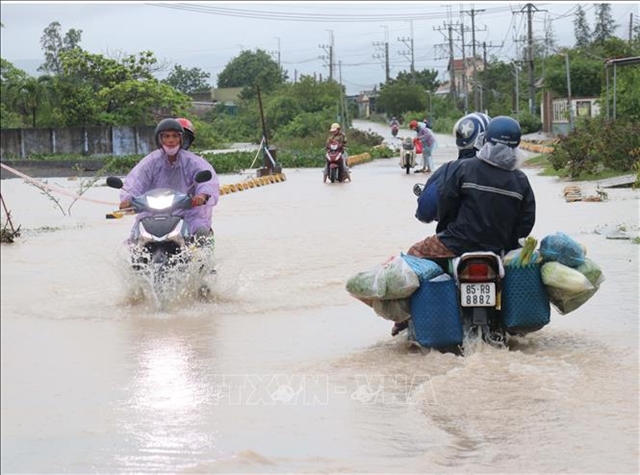 |
| Heavy rainfall floods a section of Provincial Road 709 that leads to villages in Thuận Nam Commune in the southcentral province of Khánh Hòa in late September. — VNA/VNS Photo Công Thử |
In addition, they must make sure that infrastructure such as reservoirs, dikes and storm shelters serve disaster prevention and response mandates, and use modern technology such as unmanned aerial vehicles (UAVs) to support search and rescue operations and food supplies to isolated areas that are difficult for helicopters to reach.
Finally, they must improve communication efforts to enhance public awareness of disasters, making warnings concise, intuitive and easy to understand so the public can understand the level of danger and take proactive prevention measures.
The Government leader directed agriculture ministry to collaborate with other ministries to assess and identify disaster risks specific to each region and area, rather than providing a generic list of disaster types.
Specifically, the central region should focus on severe storms, heavy rainfall and deep flooding, while the northern mountainous region should prioritise flash floods, debris flows and landslides.
The southern region and the Mekong Delta should concentrate on drought, saltwater intrusion, as well as riverbank and coastal erosion and land subsidence.
"Response scenarios must outline clear action plans for each type of disaster, covering three distinct phases of prevention, response and post-disaster recovery," he said.
With the 2026-30 draft plan, the Deputy PM requested the agriculture ministry to incorporate feedback from the Ministry of Justice to ensure that only the laws and decrees directly related to disaster prevention and response are included.
It should also collaborate with the Ministry of Industry and Trade to conduct a comprehensive review of the status of irrigation and hydropower reservoirs to develop early warning systems and operational protocols for interconnected reservoir networks, which will help to balance power generation and irrigation water storage with the critical need for flood mitigation and the safety of downstream areas. — VNS
Society
 Society
 Society
 Society
 Society
 Society
 Society
 Society
 Society
 Society
 Society
 Society
 Society
 Society
 Society