 Society

Việt Nam unveils youthful squad for AIMAG 2026 futsal campaign
1.
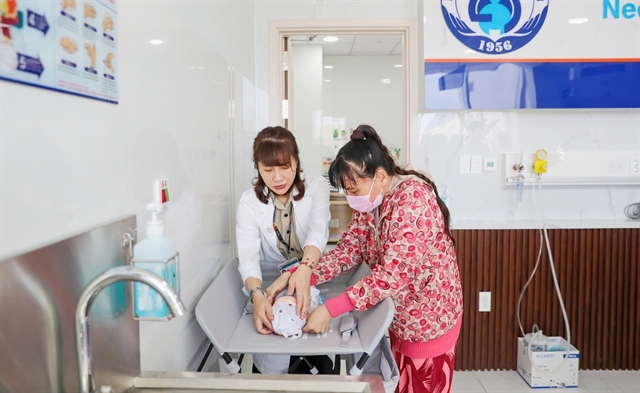 |
| Dr Nguyễn Thị Thanh Hương examines a baby. She devotes great passion to children with rare diseases. — VNA/VNS Photo Đinh Hằng |
HCM CITY — For years, Dr Nguyễn Thị Thanh Hương watched some young patients die without ever knowing what illness had taken them. That sense of helplessness drove her to spend more than two decades in one of medicine's least-charted fields: rare diseases.
Hương joined Children's Hospital 1 in HCM City in 2001 after completing her paediatric residency. Now deputy director of the hospital and head of its Neonatology 2–Metabolism–Genetics Division, she said rare diseases remain a challenging field: reaching an accurate diagnosis can take a long time, and many conditions still have no specific treatment.
Although rare diseases are nothing new, they were once little understood in Việt Nam and regarded as an "underserved area" of the country's healthcare system, she said.
"In the past, some children deteriorated rapidly and died, and even after they had passed away, we still could not determine what disease they had. In other cases, we treated children for a long time without ever finding the cause, and had to watch them die as their families despaired. I felt helpless and at a loss. The field felt like uncharted territory, so I set out to learn more," she said.
With no established path to follow, Hương proactively researched and deepened her expertise.
In 2018, the Children’s Hospital 1 decided to establish the Metabolic Disorders Unit, with an initial team of just five doctors.
At that time, it was the only unit in southern Việt Nam that received and treated children with rare diseases. Today, the unit remains a specialised centre for the diagnosis, treatment and follow-up of children with rare diseases, with nearly 500 paediatric patients being managed, monitored and treated at the hospital.
Challenges
Worldwide, around 6,000 conditions are classified as rare diseases, affecting approximately 300 million people; about 80 per cent of rare diseases have a genetic cause.
In Việt Nam, there are currently around 100 rare diseases affecting approximately six million people. About 30 per cent of children with rare diseases die before the age of five due to limited access to treatment.
“Some diseases are caused by gene mutations, and when the results come back, it can feel like a ‘death sentence’ for the child and their family because there is no treatment available. There were times when the parents and I hugged each other and wept, overwhelmed by results that were so devastating for the child and the family,” Hương said.
Yet there are also moments when doctors and families are overcome with joy when a disease is finally identified and an appropriate course of intervention is found. For them, that is the moment hope is kindled, because one more child has the chance to receive treatment and continue living.
More chances at life
Hồ Thị Thanh Bình, who lives in HCM City, has two children who suffered from muscle weakness, difficulty moving, respiratory failure and the need for ventilator support from an early age. She once had to carry her children everywhere in search of answers about the illness affecting them.
It was only after bringing them to Children’s Hospital 1, and after a series of tests, that she learned both children had Pompe disease – a rare genetic disorder worldwide.
During those difficult days, Bình received not only professional support but also encouragement and compassion from Dr Hương. The hand-holding, the shared tears and laughter became a source of emotional strength for her family.
That support also inspired Bình’s daughter, Huỳnh Hoàng Anh Thư, to apply to the University of Medicine and Pharmacy at HCM City, with the dream of healing the sick and saving lives.
For Hương, the cases of children who could not be saved remain a pain that is difficult to ease. She remembers their innocent faces, their tiny hands, and the sense of helplessness of standing beside a hospital bed and witnessing a child pass away. Those losses brought many tears to the doctor, but they also became the motivation for her to continue seeking opportunities for diagnosis and treatment for other young patients.
“I hope that with better early diagnosis and wider newborn screening, the time between a child's first symptoms and their diagnosis and treatment can be shortened even further," Hương said.
In addition, she proposed building a national database on rare diseases, which would enable coordinated information management, optimise patient referrals between hospitals, and facilitate the sharing of treatment experience.
Commenting on Hương, Dr Ngô Ngọc Quang Minh, director of Children’s Hospital 1, said that in addition to her leadership and management role, she was a highly capable professional who is always dedicated to her patients.
In particular, Hương has devoted great passion to children with rare diseases and was one of the founding core members of the Inherited Metabolic Disorders Unit, now part of the Neonatology 2–Metabolism–Genetics Ward.
Although she has never called herself the mother of her young patients, with nearly 500 children with rare diseases being managed, monitored and treated at Children’s Hospital 1, Hương has become a second mother to them. — VNS
Society
 Society
 Society
 Society
 Society
 Society
 Society
 Society
 Society
 Society
 Society
 Society
 Society
 Society
 Society