 Opinion
Tech sector growth opens up opportunities for Việt Nam to go global
1.
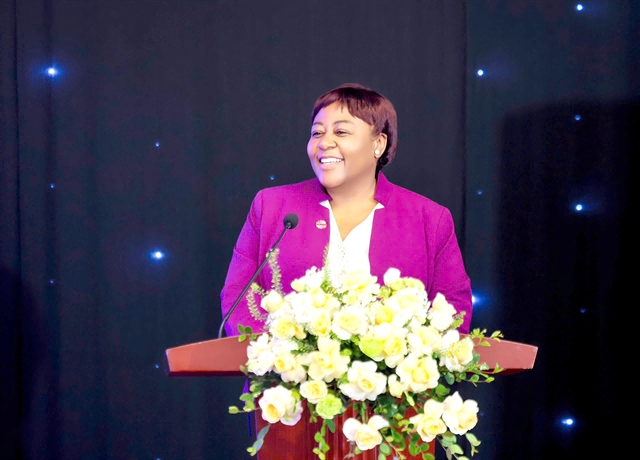 |
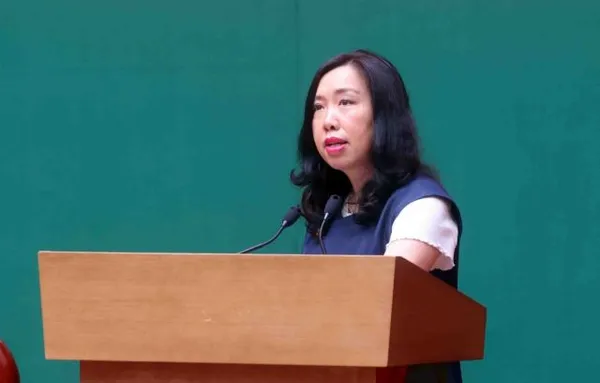
| Caroline Nyamayemombe, UN Women Country Representative in Việt Nam. — VNS Photo Thu Trang |
Caroline Nyamayemombe, UN Women Country Representative in Việt Nam, speaks to Việt Nam News reporter Thu Trang about women’s growing role in politics and the economy, empowering women and girls, on the occasion of Việt Nam Women’s Day (October 20).
On Việt Nam Women’s Day, what message would you like to send to women, girls and gender-equality partners in Việt Nam and in recent years, what has impressed you most about the progress of Vietnamese women, and what challenges remain?
My message is simple: Women have powered Việt Nam’s progress- invest in their ambitions for the future. Vietnamese women are driving the country’s growth, innovation and community resilience. Their opportunities should match their contributions.
Women are serving and leading: Politically, women’s representation at the commune level has risen to 31.48 per cent of People’s Council deputies (up 2.5 per cent) and 27.4 per cent of Party committee members for the 2025–2030 term (up 6.4 per cent), while in the National Assembly it has remained at around 30 per cent across two successive elections. As of 2025, among 1,600 joining UN Peacekeeping Operations, over 16 per cent were women, above the UN average. The share of women owned businesses has risen to 26 per cent and 63 per cent of women are part of the country’s labour force.
Women are the backbone of the country’s agrifood systems: 2026 is International Year of the Woman Farmer. We join the FAO and Ministry of Agriculture and Environment to celebrate Việt Nam’s Women Heroes in Agrifood Systems and Rural Development. Among them is Nguyễn Phạm Cẩm Tú, whose AgriSolar model combines farming with solar power and has created more than 200 green jobs.
Vietnamese women are resilient: When Typhoon Yagi’s landslides swept away her home and the family’s buffalo, Lý Thị Xùa, a Mông mother of six in Lào Cai, joined Women’s Union livelihood training and used a small grant from UN Women to restart her pig herd with a resilient local breed. Nearby, 26-year-old Thào Thị Tá leads one of 12 safe spaces set up with the Provincial Women’s Union, where 35 women share livelihood knowledge and solutions to support each other’s recovery.
These examples of Vietnamese women’s progress, courage and resilience, inspire me.
The challenge is to ensure more women enjoy equal opportunities in everyday life. Many women still work in informal, insecure and lower-paid jobs. Women in Việt Nam spend an average twice more time a week on unpaid care and domestic work than men – leaving less time for learning, growing a business or advancing their careers. Women entrepreneurs also face barriers in accessing finance, technology, networks and markets. Women remain underrepresented in sectors that attract green investment, such as renewable energy and solar value chains, yet overrepresented in climate-vulnerable sectors such as agriculture and informal services.
On Vietnamese Women’s Day, we celebrate women’s achievements and the possibilities ahead. Every woman deserves the opportunity to go further.
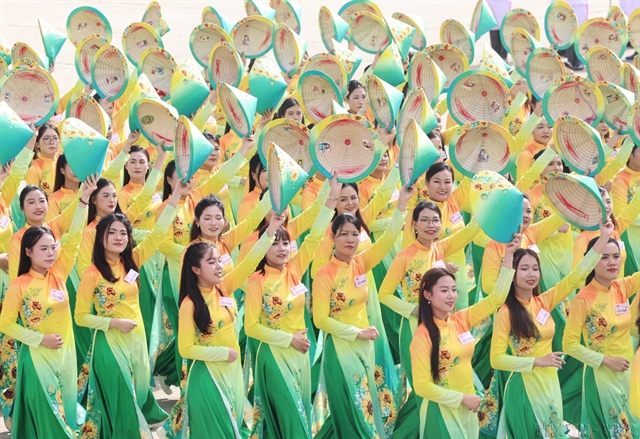 |
| Vietnamese women join the military parade and march marking the 80th anniversary of the August Revolution’s success and Việt Nam’s National Day. — VNA/VNS Photo Thống Nhất |
Việt Nam has around 45 per cent of candidates for the 16th National Assembly who are women. What mechanisms, resources and changes in social attitudes are needed to turn women’s growing political representation into substantive influence in policy-making and decision-making?
This is an encouraging sign. The next step is to ensure that growing representation translates into meaningful opportunities for them to lead and influence the decisions that affects people’s lives, while building a society that values equality and diversity.
First, connect representation with real opportunities for the elected women to exercise true leadership. Women elected to the National Assembly should have equal opportunities to chair committees, lead legislative work and shape priorities across all policy areas – from public finance to technology, economic development, climate resilience and national security. Access to research, budget analysis and the skills to use digital tools and AI responsibly can strengthen their effectiveness and efficiency.
Second, invest in the next generation of diverse women leaders. Việt Nam needs to maintain the momentum by building pipelines of leaders from diverse backgrounds. Professional experience, mentoring and opportunities to take on responsibilities across public institutions, businesses, academia and communities. Transparent selection and promotion criteria can help recognise talent and enable more women from diverse backgrounds to progress into decision-making roles.
Third, create conditions that make leadership sustainable. Affordable care services, parental leave and working arrangements compatible with family responsibilities benefit both women and men to manage the demands of leadership. Safe, inclusive, and respectful workplaces, including protection from online harassment and harms, are essential. Alongside these measures, institutions, the media and society can help challenge stereotypes and recognise women’s leadership through their competence and contributions.
Looking ahead, success will be reflected in both the number of women at the table and their ability to shape the agenda. Creating those opportunities is a shared institutional responsibility – and an investment in more responsive, inclusive and effective governance for Việt Nam’s future.
Which policies should Việt Nam prioritise so that women – especially those in informal employment, women entrepreneurs and ethnic women – benefit more equitably from economic growth?
Việt Nam has adopted progressive policies for women’s economic participation- implementation and enforcement is more important. Three areas to strengthen women’s income security and economic opportunities.
First, a stronger pathway to decent work and social protection for women in informal employment such as street vendors, home-based workers, waste collectors, small household businesses and farmers: simplified and affordable social insurance, safer working conditions, skills upgrading, and recognition of their associations and networks so they can have a voice in policies that affect their livelihoods.
Simplified registration and licensing procedures, targeted skills training and job-matching services, and support to micro and household businesses to gradually move into the formal economy. Incentives for enterprises to hire, retain and promote women in formal jobs – alongside equal pay, safe working conditions and family-friendly workplaces – are also essential. Formalisation should not only mean compliance; it should mean better protection, higher and more stable incomes, and stronger voice for women workers.
Second, invest in quality care services. Affordable childcare, elder care and disability support give women more time to work, train and grow businesses. These services also create jobs. Care workers need recognised qualifications, fair wages and social protection.
Third, women entrepreneurs need more than training. They need finance, digital tools, business advisory services, market information and access to buyers. Public institutions and larger companies can help by opening purchasing opportunities to women-owned businesses. For women farmers and cooperatives, extension services, land-use rights, climate-smart technologies and e-commerce – including for OCOP products – can help increase incomes and support the green and digital transitions.
Across these priorities, our choices must reflect local realities. Ethnic women’s knowledge of farming, forests and water management can strengthen climate adaptation. Services, financing and green digital technologies must be accessible and suited to local livelihoods, with women helping shape the programmes intended to support them.
Eventually, women’s empowerment means better jobs, higher-value enterprises and stronger economic leadership. When Việt Nam invests in women’s skills, care services, social protection and market access, it is not only closing gender gaps – it is strengthening the foundations for more sustainable and inclusive growth.
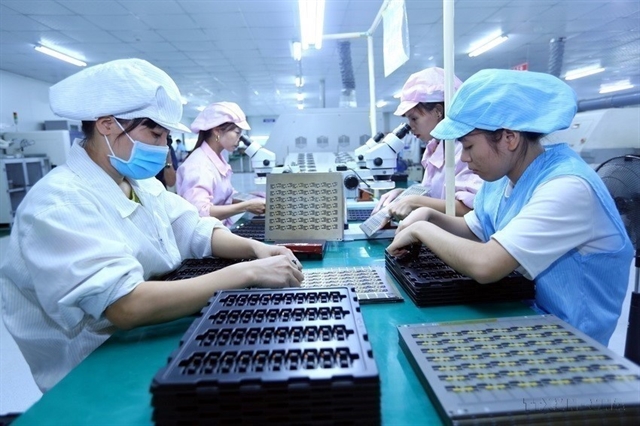 |
| Female workers assemble electronic components at the Bao Sen Co Ltd in Bắc Ninh City. At businesses in Việt Nam today, female workers play a very important role, especially in fields requiring dexterity, perseverance, precision and flexibility. — VNA/VNS Photo Danh Lam |
In the digital age, what solutions are needed to protect women and girls from online violence and digital harassment?
The digital world should expand opportunities for women and girls, not create new spaces for violence. Protecting women online therefore needs to be treated as an integral part of our broader efforts to end violence against women and girls.
First, perpetrators and institutions must be held accountable. Clear laws and trained police and justice personnel are essential to investigate abuse, handle digital evidence and respond sensitively. Safety and privacy should be built into technology and platforms from the design stage with accessible reporting mechanisms and prompt action to address abusive content.
Employers should also ensure that workers are protected from job related online harassment, threats, impersonation and other forms of digital abuse. This is also relevant to women deployed in international peace operations, where digital safety should be considered part of professional preparedness and protection.
Second, survivors need accessible and coordinated support, whether violence occurs online or offline. Support must be easy to reach. One-stop services bring medical care, counselling, legal assistance and protection together. Survivors should not have to navigate multiple offices or repeatedly tell their story. Clear referrals and coordination between police, health services, social workers and legal-aid providers can make assistance faster and more effective.
Third, awareness is key. Stronger digital literacy can help women and girls recognise abuse, protect their privacy and know where to seek help. Education on consent and respectful behaviour is equally important, alongside challenging victim-blaming and making clear that responsibility lies with those committing the abuse.
Through our cooperation programmes with Australia and Canada, UN Women works with the Ministries of Public Security, Defence, Home Affairs and Health, Women’s Union and provincial authorities to raise awareness, build capacities of frontline responders, design service models and strengthen multisectoral coordination.
Việt Nam is accelerating digital transformation, artificial intelligence and green transition. How can women be protected from the risks of these processes while also becoming creators and beneficiaries of them?
Việt Nam’s digital and green transitions offer an important opportunity to expand women’s economic choices and leadership. The ambition should be for women to help shape these transformations, with safety, equal opportunity and shared benefits built in from the outset.
I would like to highlight three priorities.
Invest in women’s digital literacy and up-skilling. A smartphone can become a shopfront, knowing how to use AI can free up time for more productive work and expand the opportunities for jobs. For rural and ethnic women, this means accessible learning in appropriate languages. For women whose jobs are changing, it means timely opportunities to retrain, alongside affordable and accessible care services and social protection that make that transition to, for example, high tech industry, or smart agriculture possible.
Second, make safety and fairness part of how technology is designed and governed. Women need the confidence to not only maximse the use of AI, but also to check AI-generated information, recognise scams and protect their data. Governments and businesses also have responsibilities to address bias in AI systems, prevent and respond to online violence, and provide accessible ways to report harm and seek remedies.
Third, invest in women as creators and leaders of the future technology and AI-based economy. Women’s participation in designing these systems can help ensure they respond to a wider range of needs and experiences. This includes helping women scientists and entrepreneurs turn ideas into solutions that can reach markets. It also means recognising and rewarding women’s existing contributions to the green economy.
We must also start early. Girls need opportunities to experiment, build and solve problems, supported by mentors, and practical experience and nourish their early dreams and ambitions to lead the future of work.
Ultimately, we should always keep in mind and ask: Who designs these transformations, who benefits, and who bears the risks? Bringing women’s voices and expertise into those decisions will help Việt Nam build a more innovative, inclusive and resilient economy.
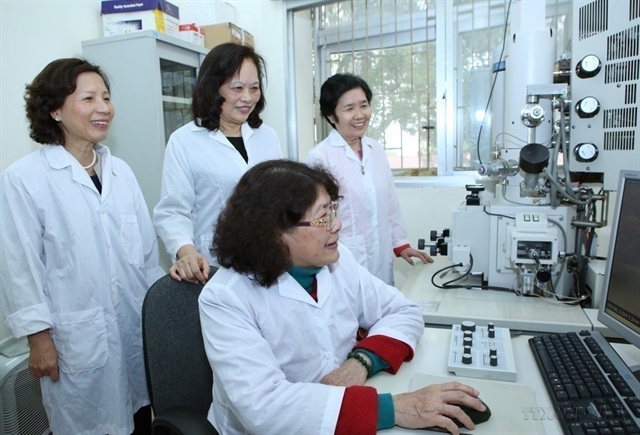 |
| Female scientists at the Việt Nam Academy of Science and Technology. Women have great contribution to the nation’s development. — VNA/VNS Photo Phương Hoa |
Looking ahead to the 2027–2031 cooperation period, which priorities in the partnership between UN Women and Việt Nam do you expect to be further strengthened?
Looking ahead to 2027–2031, we see an important opportunity to deepen our partnership with Việt Nam as the country advances its ambitions for sustained growth. Our shared ambition is for women to help shape this progress and benefit fully from it. Our priorities are aligned to Việt Nam’s socio-economic development plan, 2026-2030.
The first is women’s economic empowerment through digital, green and care system transformations. We envisage stronger support that connects women to the technologies, innovations and finance to increase productivity and competitiveness to access markets. For rural and ethnic women, it means strengthening opportunities in climate-resilient agriculture and agri-food value chains. For women to succeed as workers, entrepreneurs, scientists and leaders in the digital and green economies, their unpaid care responsibility needs to be reduced and redistributed through investment in quality, affordable care services that create decent jobs and opportunities for entrepreneurship and give women greater choice over their time and economic participation. We will accompany government to translate the existing enabling laws and policies through data analysis for planning and investment, models of services and private and public partnerships.
The second is strengthening policies and institutions to turn gender equality commitments into lasting results. Building on Việt Nam’s progress, we look forward to supporting gender responsive policies and programmes that support Việt Nam to further fulfil its international commitments in gender equality and women empowerment.
As Việt Nam progresses towards high income status, strengthening systems for gender-responsive budgeting and financing, and the data for evidence informed planning and accountability will be a priority. Our cooperation in women’s peace and security includes ensuring accessible; survivor-centered support services to prevent and respond to offline and online gender-based violence, alongside women’s meaningful participation in leadership and decision-making.
Across both priorities, tackling the social norms that fuel discrimination and stereotypes will remain central. We will ensure that no one is left behind. Rural and ethnic women, women with disabilities and women in informal employment should have a meaningful voice in shaping solutions that build on their knowledge and respond to their circumstances.
Ultimately, we hope this next phase of cooperation will help make gender equality remain an integral part of Việt Nam’s development investments and institutional practice. That is how progress can endure and expand – strengthening women’s rights and opportunities while contributing to a more prosperous, inclusive and resilient Việt Nam. — VNS
Opinion
 Opinion
 Opinion
 Opinion
 Opinion
 Opinion
 Opinion
 Opinion
 Opinion
 Opinion
 Opinion
 Opinion
 Opinion
 Opinion
 Opinion