 Sci-Tech

Symphony of the Sea Season 3: Bigger, bolder and more spectacular for Phú Quốc visitors
1.
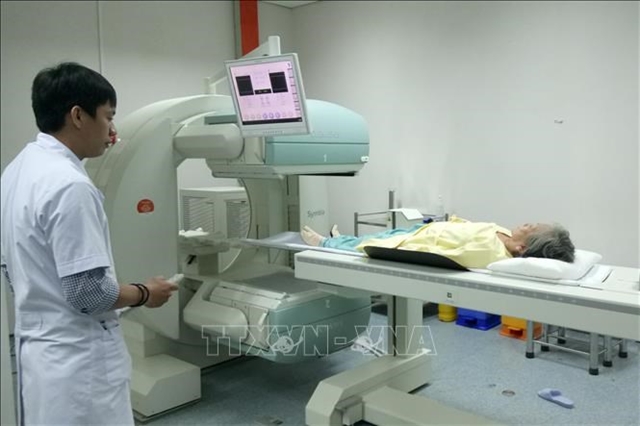 |
| Đồng Nai General Hospital applies nuclear technology to diagnose cancer and detect metastasis at an early stage. — VNA/VNS File Photo |
ĐỒNG NAI — The southern city of Đồng Nai is stepping up efforts to harness nuclear technology to support socio-economic development, with a focus on industrial production, healthcare, agriculture and scientific research, while strengthening safety measures and developing a skilled workforce.
Associate Professor Phạm Đình Khang, an adviser to the Nuclear Engineering training programme at Đồng Nai University, said the city had tasked the university with developing a nuclear engineering programme to meet growing demand for skilled personnel, particularly in industry, agriculture and healthcare.
The four-year programme covers general education, basic physics, nuclear fundamentals and specialised subjects. It places a strong emphasis on practical training and internships, giving students opportunities to work with equipment, learn operational procedures and gain hands-on experience in nuclear technology applications.
The curriculum is expected to include more than 100 practical sessions covering electronics, nuclear electronics and nuclear physics, helping students develop the skills needed to meet workplace requirements after graduation, Khang said.
Associate Professor Nguyễn Tuấn Khải, Deputy Director of the Việt Nam Atomic Energy Institute, said atomic energy and radiation applications had advanced significantly over the past two decades, making practical contributions to economic and social development across a range of sectors, including industry, healthcare, agriculture, natural resource management, environmental protection and scientific research.
As a major industrial centre, Đồng Nai City has considerable potential to expand the use of nuclear technology, particularly in product quality inspection and control, material testing and industrial production, he said.
In healthcare, radiation technologies are creating opportunities to improve medical services, especially in cancer diagnosis and treatment. Nuclear techniques also offer considerable potential in agriculture, natural resource management, environmental monitoring and scientific research, helping address the city's development needs.
A major boost is expected from the planned Nuclear Science and Technology Centre in Đồng Nai, which is set to include a 10-megawatt research reactor and is tentatively scheduled to begin operation in 2030–32.
Once operational, the centre is expected to strengthen the country's research and training capacity and expand the practical application of nuclear technology across multiple sectors. It will also help the city develop a skilled workforce, master advanced technologies and build its capacity for nuclear research and innovation, Khải said.
Deputy Director of Đồng Nai City's Department of Science and Technology, Nguyễn Văn Viện, said the Nuclear Science and Technology Research Centre was a key project receiving particular attention from the city's leadership.
Beyond serving as a specialised research facility, the centre is expected to bridge the gap between scientific research and practical applications, translating advances in nuclear science and technology into tangible benefits for socio-economic development.
To prepare for the project, Đồng Nai has developed an implementation plan for 2026–30, with a vision extending to 2035. The plan focuses on three priorities: developing response scenarios for potential incidents; establishing a security perimeter and strengthening healthcare infrastructure; and training and attracting highly qualified personnel.
Comprehensive preparations in safety, security, healthcare and human resources will provide the foundation for the centre's effective operation and help ensure that nuclear technology is applied safely and in line with practical needs, Viện said.
The city aims to capitalise on nuclear technology to improve industrial productivity, advance agricultural practices, enhance healthcare services and strengthen natural resource management, environmental protection and scientific research. These efforts are expected to reinforce the city's scientific and technological capabilities while contributing to broader socio-economic development. — VNS
Sci-Tech
 Sci-Tech
 Sci-Tech
 Sci-Tech
 Sci-Tech
 Sci-Tech
 Sci-Tech
 Sci-Tech
 Sci-Tech
 Sci-Tech
 Sci-Tech
 Sci-Tech
 Sci-Tech
 Sci-Tech
 Sci-Tech