 Sci-Tech

Vietnam Hardware & Hand Tools Expo 2026 to return to HCM City
1.
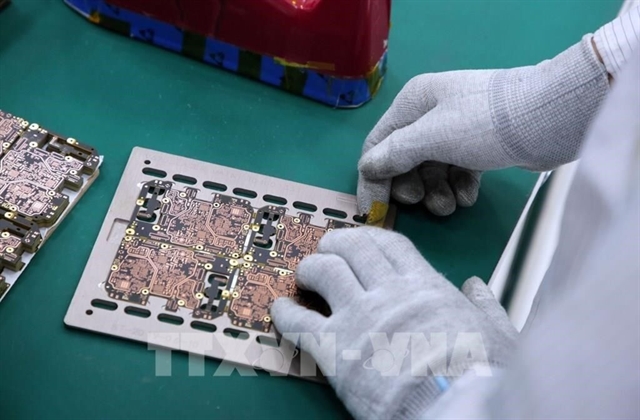 |
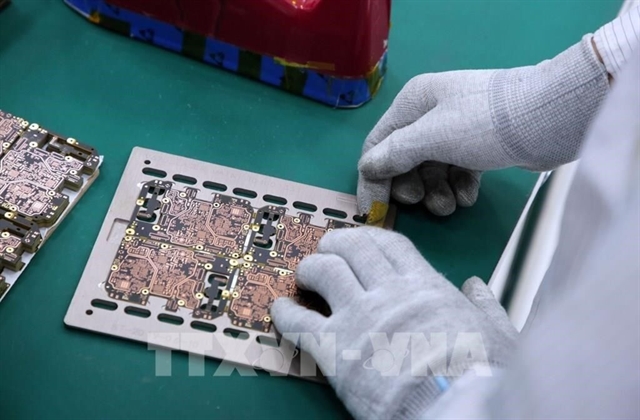
| Việt Nam is becoming an increasingly important part of APAC’s semiconductor ecosystem, with more semiconductor and high-tech companies expanding their operations in the country. — VNA/VNS photo |
HCM CITY — Rising demand for artificial intelligence, high-performance computing, electric vehicles, and advanced communications technologies is boosting semiconductor production and investment in the digital infrastructure needed to support AI.
The resulting regional and global supply chains are increasingly complex, making fast, reliable transport and shipment tracking more important, a new report by FedEx and research firm Frost & Sullivan says.
'From AI to EVs: How APAC Semiconductors Drive the Global Innovation Map' describes the Asia-Pacific as the centre of the global semiconductor industry, accounting for some 58 per cent of its revenues.
As industries increasingly rely on advanced chips for AI applications, data centres, connected devices, and next-generation vehicles, moving semiconductors and related technologies efficiently between markets has become critical.
These shifts are creating opportunities for Việt Nam as it becomes more closely integrated into regional semiconductor supply chains.
The report says the country’s semiconductor exports grew at a compounded annual rate of 31.8 per cent between 2006 and 2025, while imports grew by 30 per cent a year during the same period.
Việt Nam exported US$32.4 billion worth of integrated circuits in 2023, reflecting its growing role in regional and global semiconductor trade.
Ee-Hui Tan, managing director of FedEx Vietnam and Cambodia, says: “Việt Nam is becoming an increasingly important part of APAC’s semiconductor ecosystem, as more semiconductor and high-tech companies expand their presence in the country.
“As this growth accelerates, reliable and efficient connectivity to key markets will become increasingly important.”
The report identifies AI and high-performance computing as major drivers of semiconductor demand, with more than 2,000 new data centres expected to be built worldwide between 2026 and 2035.
Beyond semiconductors, AI is also increasing demand for supporting infrastructure, including high-density servers, networking equipment, cooling systems, and power supplies.
These technologies often pass through several manufacturing, assembly, and testing hubs before being installed in AI data centres worldwide, creating increasingly interconnected supply chains.
The growth of electric vehicles, which generally require more semiconductors than conventional vehicles, together with 5G, IoT, consumer electronics, medical devices and industrial automation are further expanding semiconductor demand across industries.
These trends are increasing the need for logistics services that offer fast delivery, shipment tracking, and reliable cross-border transport for high-value goods whose delivery is time-sensitive.
Asia-Pacific powers global semiconductor industry
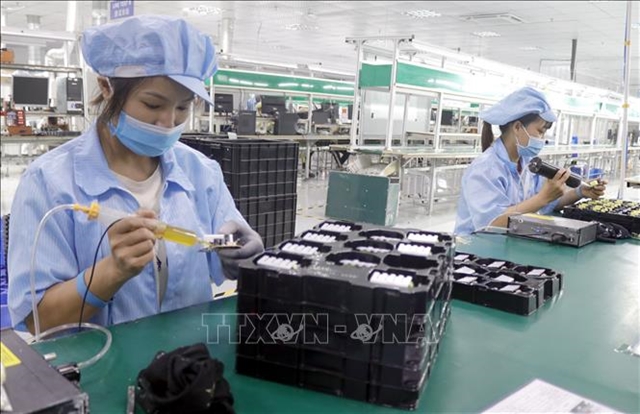 |
| Việt Nam, along with other Southeast Asian countries, is emerging as a hub for semiconductor assembly and testing. — VNA/VNS Photo |
The report describes Asia-Pacific as a network of specialised semiconductor hubs, with production spread across several markets.
China is a major supplier of materials and a large consumer market, Taiwan is a leading centre for advanced semiconductor manufacturing, South Korea specialises in memory chips and advanced chip fabrication, and Japan supplies semiconductor equipment, materials, and other manufacturing inputs.
Việt Nam, along with other Southeast Asian countries, is emerging as a hub for semiconductor assembly and testing. Its strong electronics manufacturing base is driving demand for chips and related technologies, while its skilled workforce and competitive costs are attracting investment from major global firms.
This specialisation means semiconductor design, fabrication, packaging, testing, and use in finished products often span several countries before those products reach the market.
Alongside large cloud computing companies, small- and medium-sized businesses also play an important role, benefiting from growing opportunities in high-value niche markets.
As semiconductor supply chains become more complex and interconnected, the survey findings suggest that delivery speed and shipment tracking are central to logistics strategies in an uncertain business environment.
Thirty per cent of respondents cited geopolitical disruption as the biggest challenge to growth, ahead of rising operating costs and the complexity of cross-border trade and customs procedures.
Faster international shipping was the most important consideration for 44 per cent when choosing logistics and supply chain partners.
For Việt Nam, transport links with major semiconductor and technology centres across Asia are becoming increasingly important as the country expands its role in regional production networks.
In September 2025, FedEx added an outbound flight from Nội Bài International Airport, improving connections to Asia and Europe, and enabling shipments to reach these markets one day sooner.
The company says the additional service also improved delivery reliability for exports to destinations across the Pacific, including the United States and Canada.
The report examines how the growth of AI and semiconductor production is reshaping supply chains across the Asia-Pacific, identifying business opportunities and the logistics services needed to support further expansion. — VNS
Sci-Tech
 Sci-Tech
 Sci-Tech
 Sci-Tech
 Sci-Tech
 Sci-Tech
 Sci-Tech
 Sci-Tech
 Sci-Tech
 Sci-Tech
 Sci-Tech
 Sci-Tech
 Sci-Tech
 Sci-Tech
 Sci-Tech