 Politics & Law
Việt Nam promotes int'l cooperation in science, technology and innovation
1.

|
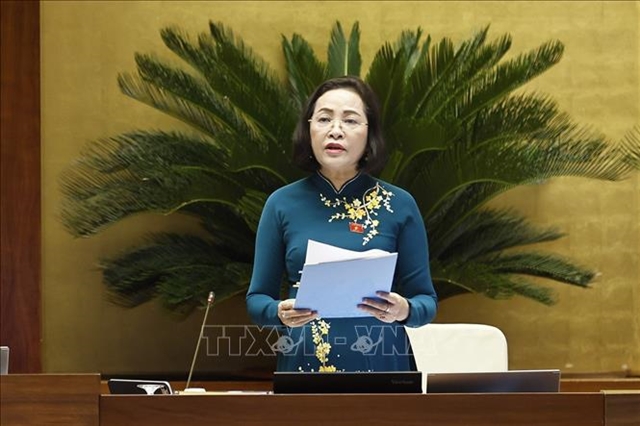
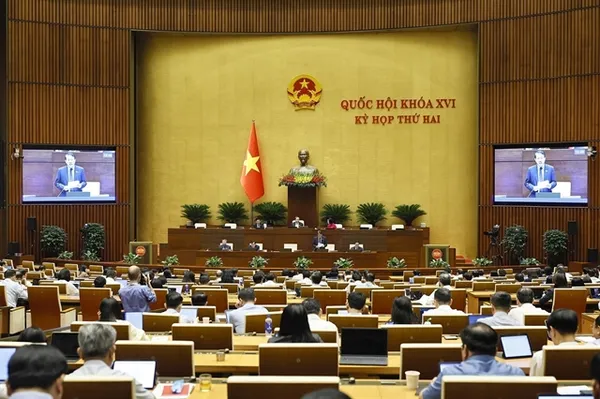
| General Lương Tam Quang, Minister of Public Security, speaking at the National Assembly. — VNA/VNS Photo |
HÀ NỘI — The National Assembly (NA) deputies, on Thursday's session, heard the proposal and the review report regarding the investment policy for the National Target Programme on Crime Prevention and Control for the 2026-35 period.
Presenting the proposal, General Lương Tam Quang, Minister of Public Security, said that the programme had been developed based on Conclusion No. 56 by the Politburo, which calls for the urgent development and effective implementation of a National Target Programme on Crime and Drug Prevention and Control for the 2026–35 period.
From a practical standpoint, the initiative addresses the highly complex nature of crime and drug-related issues both domestically and globally. New, sophisticated, and unprecedented methods and tactics have emerged, alongside various non-traditional risks and challenges that affect efforts to combat crime and drugs.
The programme is structured into two phases, of which phase 1 from 2026 to 2030 has a total investment of VNĐ45.3 trillion (US$1.75 billion) and phase 2 from 2031 to 2035 has an allocated budget of VNĐ18.1 trillion ($701 million).
The overall objective of the programme aims to bring the whole political system and society in preventing and controlling drugs and crimes, placing citizens at the centre and focuses on the commune level as its foundation.
The programme emphasises the application of science and technology, investment in equipment, and the implementation of comprehensive measures to enhance the effectiveness and efficiency of anti-drug and anti-crime efforts.
Prioritising prevention – proactively addressing threats early, from a distance, and at the grassroots level – the programme aims to achieve a sustainable reduction in crime, decrease the supply and demand for drugs, and mitigate the harm caused by them, Quang said.
The programme sets out six solutions: completing mechanisms and laws; mobilising and using resources; effectively organising apparatus; enhancing inspection and monitoring; promoting information dissemination on drug and crime prevention and control; and applying high technology and enhancing international co-operation in anti-drug and anti-crime efforts.
The goal is to ensure that, by 2030, at least 50 per cent of all communes, wards, and special administrative-economic units nationwide are free from drugs. Efforts will be directed toward identifying and eliminating 100 per cent of complex drug-related hotspots, high-risk locations, and individual retail-level drug dealers, as well as eradicating 100 per cent of areas where plants containing narcotic substances are illegally cultivated.
Furthermore, over 80 per cent of the specialised anti-drug units – and the officers and personnel serving within them – under the Border Guard and the Coast Guard are to be equipped with modern weaponry, support tools, and technical operational equipment, ensuring they are fully capable of fulfilling their anti-drug missions.
Presenting the evaluation report on the programme, Phan Chí Hiếu, chairman of the NA Committee on Law and Justice, said that the committee and other NA agencies agreed with the necessity of investing in the programme, noting that it serves to concretise the Party’s guidelines and directives on strengthening crime prevention and control in the new context.
The committee requested a review and clarification of the basis for determining the funding for each individual project and sub-project and has proposed a provision allowing the Government to adjust the public investment capital structure for the programme during its implementation.
NA agenda approved
Also on the morning session, with all 444 deputies present voting in favour, the NA approved an addition to the agenda of the second session of the 16th-tenure NA.
The revised agenda includes consideration and approval of an NA resolution on special mechanisms and policies for tourism development under fast-track procedures and consideration of investment policy decisions for three expressway projects: the Bảo Hà–Lai Châu Expressway, specifically the Bảo Hà–Tân Phong section; the Quảng Ngãi–Kon Tum Expressway; and the Mộc Châu–Sơn La–Điện Biên Expressway section running through Sơn La Province.
The NA will also consider, discuss and incorporate two issues into the session's resolution. The first is the Government's report on issues arising from the restructuring of the organisational apparatus, the promotion of decentralisation and delegation of authority, and the removal of obstacles arising from legal regulations.
The second concerns the assignment of the NA Standing Committee to specify the regimes, policies and conditions necessary to ensure the activities of People's Council deputies at all levels. — VNS
Politics & Law
 Politics & Law
 Politics & Law
 Politics & Law
 Politics & Law
 Politics & Law
 Politics & Law
 Politics & Law
 Politics & Law
 Politics & Law
 Politics & Law
 Politics & Law
 Politics & Law
 Politics & Law